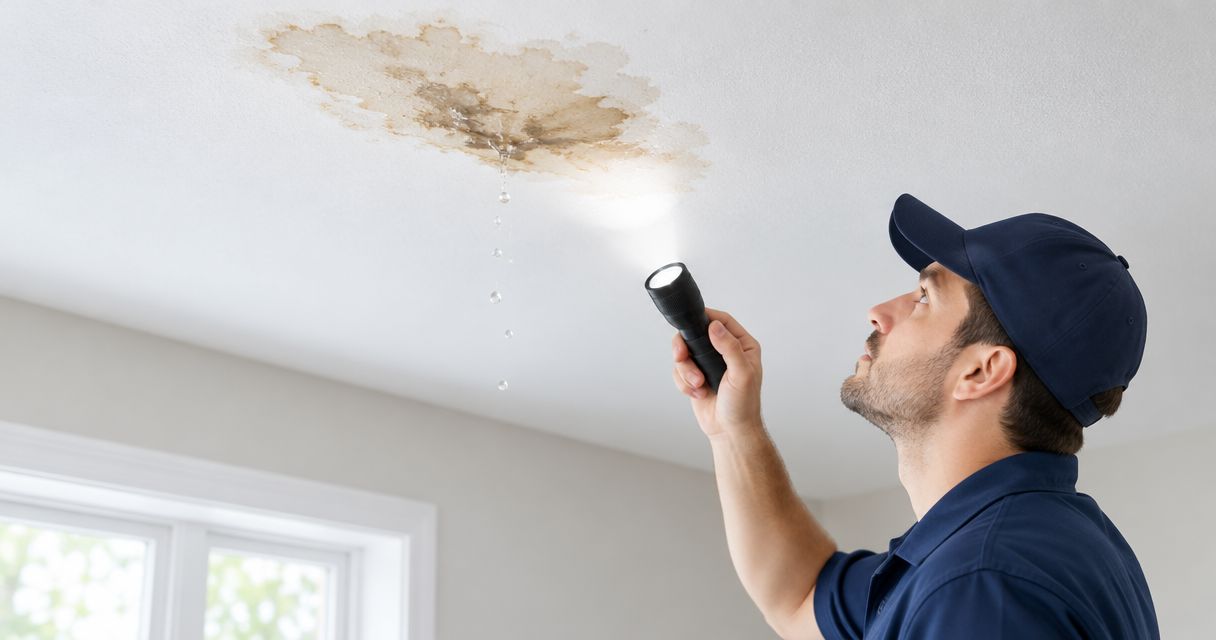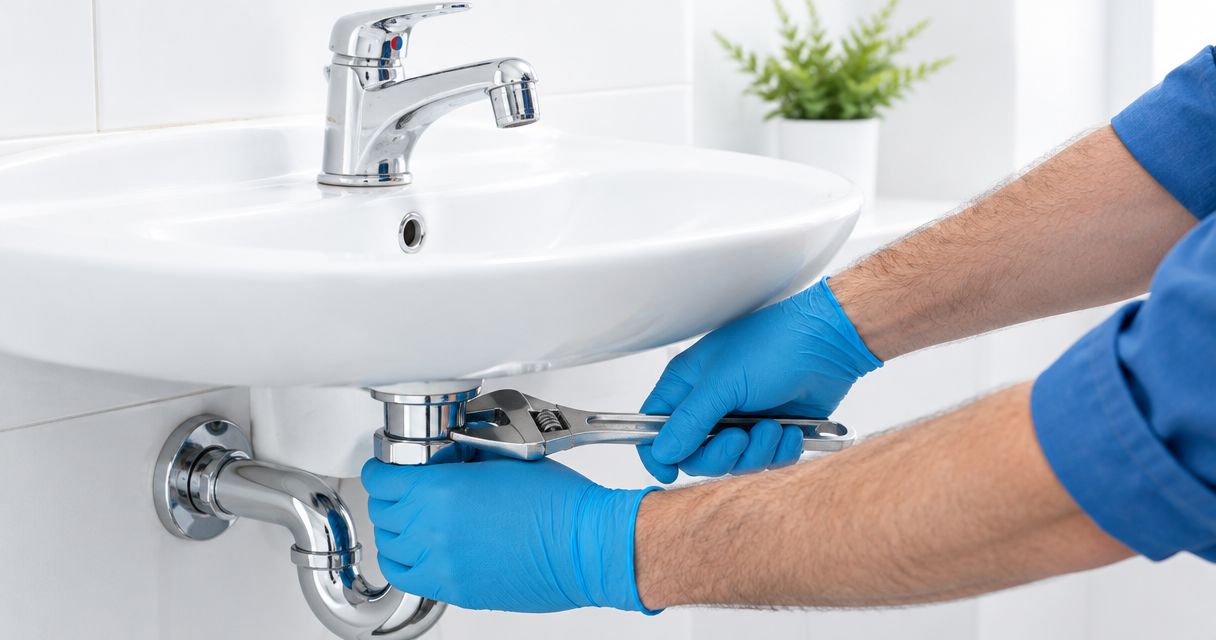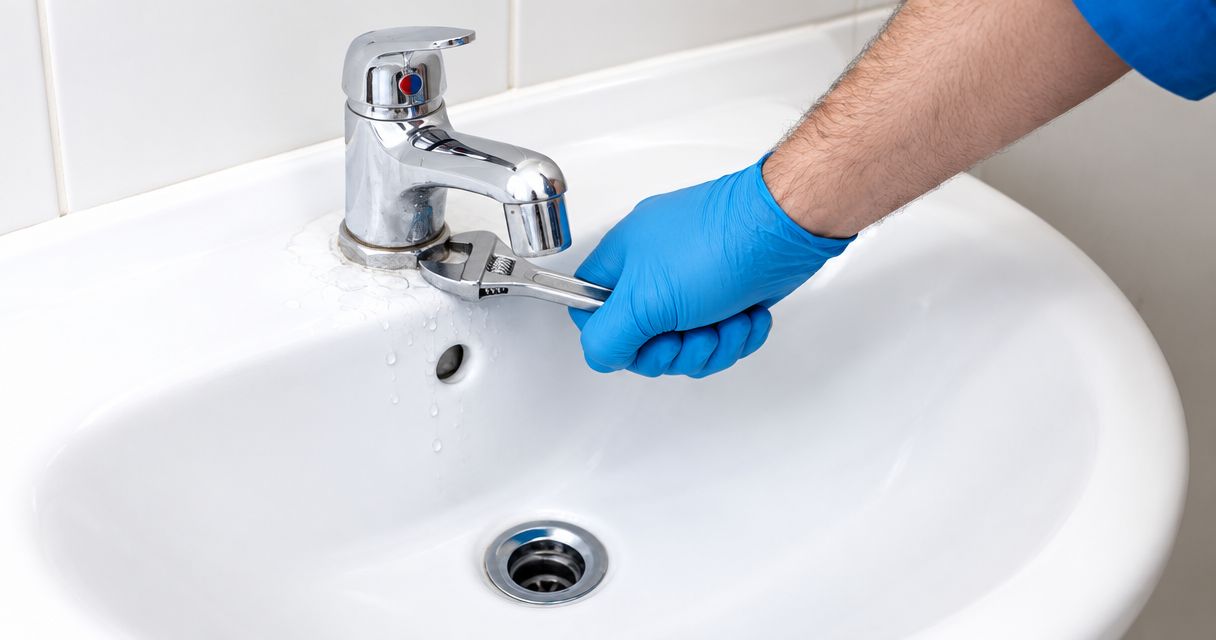
Water around a faucet base can come from worn seals inside the faucet, splash water passing beneath the mounting base, or a nearby leak that runs toward the faucet. Dry the area and check whether water returns while the faucet runs, while it sits unused, or only after splashing; that distinction helps identify the source. If water is collecting inside the cabinet, stop using the fixture and arrange a faucet repair service rather than assuming the problem is only on the countertop.
- Water at a faucet base does not prove the mounting seal has failed; trace where the moisture starts.
- Check the countertop and cabinet separately before deciding whether faucet repair service is urgent.
- Worry-less handles scheduled plumbing repairs and late-night plumbing emergencies; explain whether the leak remains active.
- For your 2026 maintenance record, photograph the leak and note whether it appears during use or while idle.
Why is water leaking around the base of a faucet?
The visible puddle is often the end of the water's path, not its starting point. Water can travel down the faucet body, along a supply connection, or underneath a mounting plate before you notice it.
For scheduled repairs or a late-night plumbing problem, Worry-less offers plumbing service calls with clear explanations and practical repair advice. First, gather the observations below so you can describe the problem accurately.
| Where water first appears | What it points toward | Best next step | Limitation of this check |
|---|---|---|---|
| Around a handle or rotating spout during use | A worn internal seal or another faucet-body leak | Identify the faucet and arrange inspection | Water can travel before becoming visible |
| Beneath the mounting plate after splashing | Water entering around the base or countertop opening | Dry the surface and compare normal use with splashing | This does not rule out a separate internal leak |
| At a supply connection inside the cabinet | A connection, supply line, or nearby plumbing leak | Stop use and isolate the water if safe | A wet connection still needs its exact source traced |
| At the spout outlet while the faucet is off | A shutoff component inside the faucet not sealing | Arrange faucet repair | A dripping outlet alone does not explain a base puddle |
Trace the first wet spot before replacing parts or adding sealant. A repair aimed at the wrong location can leave the actual leak untouched.
Why this matters
A wet countertop and a wet cabinet require different responses. Surface water needs a source check; water entering the cabinet also needs containment and an assessment of whether the supply must be shut off.
For Cincinnati tri-state homeowners, landlords, and property managers, a useful 2026 maintenance note records the fixture, the first wet location, and whether the leak is active. That description is more useful than reporting only that the faucet is leaking.
Do not assume a small visible puddle reflects the full leak. Open the cabinet and inspect the area beneath the faucet before deciding that a scheduled appointment is appropriate.
Water appears while the faucet is running
Water that emerges around the handle, the rotating spout joint, or the faucet body during use can indicate worn seals or damage within the assembly. The exact repair depends on the faucet's construction and the location of the leak.
Dry the faucet body, base, and countertop before a brief observation. Watch where moisture appears first without removing handles, loosening fittings, or reaching near electrical equipment.
Best for this situation: source identification followed by the correct internal repair. Replacing a seal can address a failed seal, but it will not repair a cracked component or a separate supply connection. A photo of the whole faucet and a close view of the wet area help explain the problem.
Water appears only after splashing or cleaning
If the area stays dry during normal operation but becomes wet after water splashes behind the faucet, water might be entering around the mounting base. A loose mounting assembly, a damaged gasket, or an unsuitable seal at the countertop opening needs inspection.
Avoid treating every base leak with a bead of caulk. Faucet installation requirements differ, and covering the outside does not establish whether water is also escaping inside the fixture.
Best for this situation: checking the mounting arrangement against the faucet's installation instructions. Correcting the base seal addresses surface-water entry; it does not fix an internal faucet leak. Check the cabinet again after any repair rather than judging the result from the countertop alone.
Water appears inside the cabinet
A leak beneath the sink can involve the faucet's supply connections, supply lines, shutoff valves, or nearby drain plumbing. Water running down a hose or pipe can make a lower fitting look like the source.
Stop using the fixture if water is collecting below. If you can safely reach and identify the fixture's water shutoff valves, close them gently; do not force a stuck or corroded valve.
Best for this situation: containing the leak and tracing the source before further use. Closing the faucet handle does not isolate every leak in the supply plumbing. If water continues after the fixture supply is closed, seek prompt plumbing help and explain what remains wet.
Keep away from water near outlets, wiring, or powered equipment. Do not reach through standing water to unplug a device or operate a switch.
How do you check a faucet-base leak safely?
Use these 5 steps to gather information, not to dismantle the faucet. Stop the check whenever water spreads, the source becomes inaccessible, or an electrical hazard is present.
- Clear the area. Remove stored items from the cabinet if you can do so safely. Leave the plumbing connections undisturbed so you do not change the leak or damage a weakened fitting.
- Dry the surfaces. Wipe the faucet body, mounting base, countertop, and visible cabinet surfaces. Separate old moisture from water that appears during the check.
- Observe at rest. With the faucet off, look for new moisture above and below the sink. An active leak while the fixture is unused deserves attention before another test.
- Observe during use. If the area is safe and no uncontrolled leak is present, run the faucet briefly and watch the first wet spot. Stop as soon as you have enough information.
- Record the source. Photograph the area and note whether water appeared at rest, during use, or after splashing. Record any shutoff action and whether it stopped the water.
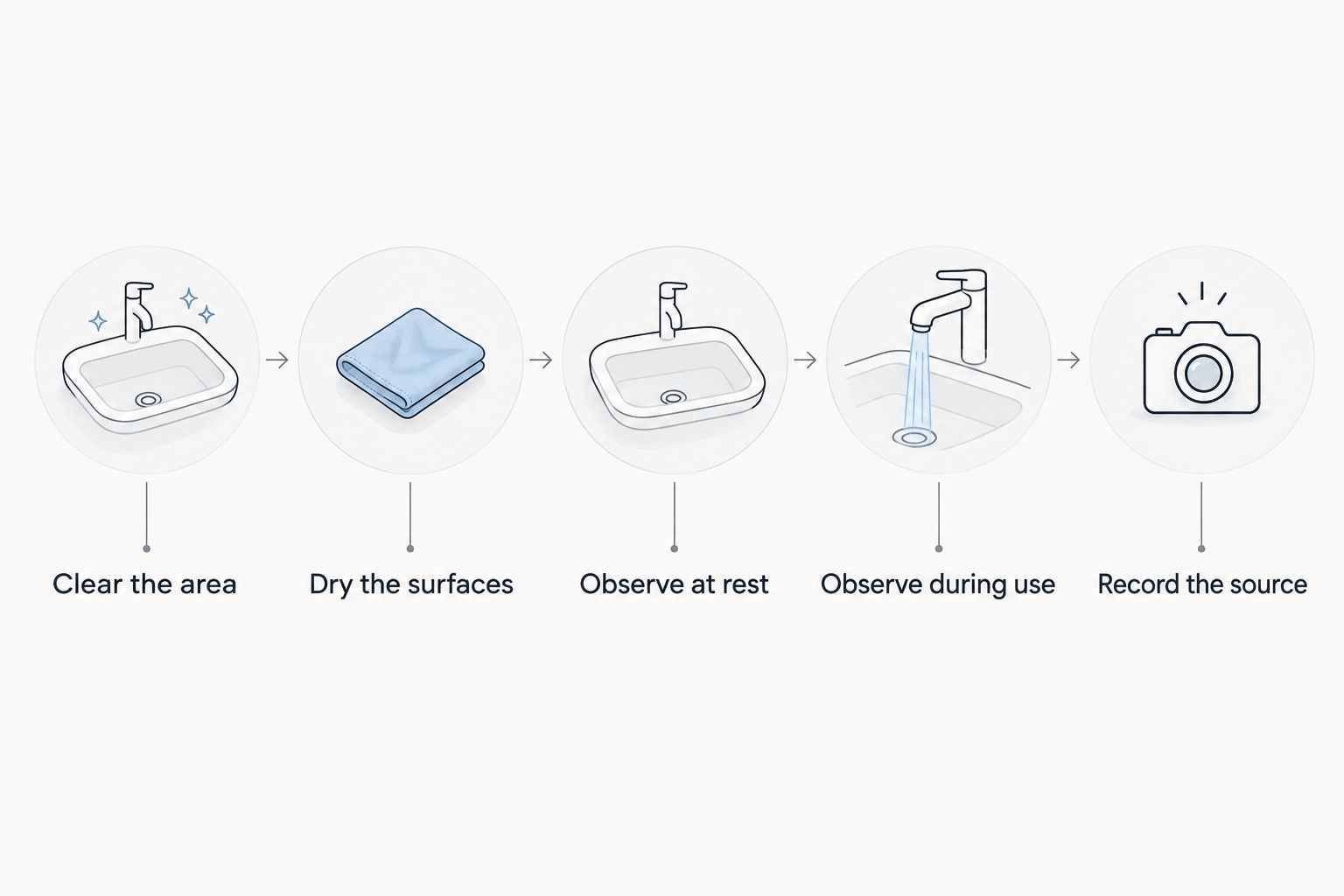
These 5 steps give a plumber a clearer starting point, but they do not prove which replacement part is needed. Keep the observations with your 2026 repair request, especially when someone other than the person reporting the leak will coordinate the appointment.
Why the cause and repair approach vary
The same-looking puddle can require different work. These factors determine what needs checking:
- Leak timing: Water appearing during operation points the inspection toward different areas than water appearing while the fixture is idle.
- First wet location: A handle, mounting plate, supply connection, and drain connection are separate inspection points.
- Faucet construction: Internal seals, cartridges, mounting hardware, and disassembly instructions depend on the model.
- Component condition: A worn replaceable seal presents a different repair question from a damaged faucet body or deteriorated supply line.
- Water control: A working shutoff makes isolation possible; a leaking or stuck shutoff adds another problem to address.
- Access: A crowded cabinet or an inaccessible connection changes how the source can be inspected safely.
Do not order a replacement part from the symptom alone. Find the manufacturer's identification and installation information when available, without taking the fixture apart simply to look for a label.
Should you schedule a repair or request emergency help?
Choose urgency based on whether you can control the water, not the time on the clock. An isolated faucet problem belongs in a different category from water spreading through a cabinet or toward electrical equipment.
| Repair route | Best for | Benefit | Limitation |
|---|---|---|---|
| Scheduled faucet repair | A contained problem with the water safely controlled | Lets you coordinate the visit and share fixture details | Waiting is inappropriate if water continues spreading |
| Late-night or weekend plumbing help | An active leak you cannot safely control | Gets the uncontrolled leak into the repair conversation promptly | An emergency request does not establish arrival time or availability |
Worry-less provides faucet repair service calls as part of general plumbing repairs, including help with late-night emergencies. Worry-less is a fit for homeowners and rental-property managers who need scheduled plumbing repairs or help with late-night plumbing emergencies. Confirm the service location and appointment timing directly; an after-hours or same-day search is not a booking confirmation.
Discuss your faucet leak
Describe where water starts, whether it continues, and whether you have safely isolated the fixture.
What should a landlord or property manager send with the repair request?
Send 3 observations: where water first appears, whether the faucet is running when it happens, and whether the water is now controlled. Add photographs of the faucet and cabinet when they can be taken safely.
Record who observed the leak and when. A tenant's report of water around the base can describe anything from splash water to an active supply leak, so preserve the original description alongside the photographs.
For a 2026 maintenance log, separate the reported symptom from the confirmed repair. Write that water appeared near the faucet base until inspection establishes the cause; do not record a failed cartridge or gasket as fact before diagnosis.
Coordinate the visit through your property's existing arrangements. Give the plumber relevant fixture details without assuming a particular access process, account service, or ongoing maintenance agreement exists.
Can you keep using a faucet that leaks around the base?
Keep the faucet out of use if water reaches the cabinet, spreads beyond the sink area, or creates an electrical concern. If the apparent moisture is surface splashing, dry the area and verify that no active plumbing leak remains before resuming normal use.
Do not rely on a towel as the repair. A towel can conceal whether new water is still appearing, particularly inside a cabinet that stays closed.
Does the whole faucet need replacing?
A base leak does not automatically require faucet replacement. A replaceable seal or serviceable internal component can make repair appropriate, while damage to the faucet body or difficulty identifying suitable parts changes the decision.
Ask for the reason behind either recommendation. A useful explanation identifies the failed area, describes the proposed repair, and distinguishes that work from any separate problem beneath the sink.
FAQ
Why does water collect around my faucet base when I turn it on?
Water appearing during use can come from a worn internal seal or another leak in the faucet body. Dry the fixture and watch where moisture appears first, then check underneath the sink as well.
Can a loose faucet cause water to leak underneath the sink?
A loose mounting assembly can allow splash water to enter around the countertop opening. It does not establish the source of every under-sink leak, so supply and drain connections also need checking.
Should I put caulk around a leaking faucet base?
Do not use caulk as a substitute for finding the leak. Check the faucet's installation requirements because an exterior seal will not repair a leak inside the faucet or at a supply connection.
Is a faucet-base leak an emergency at night?
A faucet-base leak needs urgent attention when water is uncontrolled, spreading, or creating an electrical hazard. A safely isolated problem can be discussed as a scheduled repair, with timing confirmed directly.
Can I fix a leaking faucet without turning off the water?
Do not loosen faucet parts or supply connections without safely isolating the water. Surface observation is different from repair; stop if a shutoff is stuck, leaking, or unsafe to reach.
What should I tell a faucet repair service before the visit?
Tell the faucet repair service where water first appears, when it appears, and whether the leak is controlled. Photographs and the faucet's manufacturer or model information help describe the fixture.
Does Worry-less handle scheduled repairs as well as late-night leaks?
Worry-less handles scheduled plumbing repairs and late-night plumbing emergencies. Confirm location and appointment timing directly rather than assuming guaranteed same-day or after-hours availability.
One last thing
Check the cabinet after the countertop looks dry. Water can follow a surface and collect somewhere other than the first visible puddle, so a dry faucet base alone does not confirm that the problem is resolved.
After the repair, update your 2026 maintenance record with the confirmed cause and work completed. That keeps the next repair request from starting with an old, unverified diagnosis.