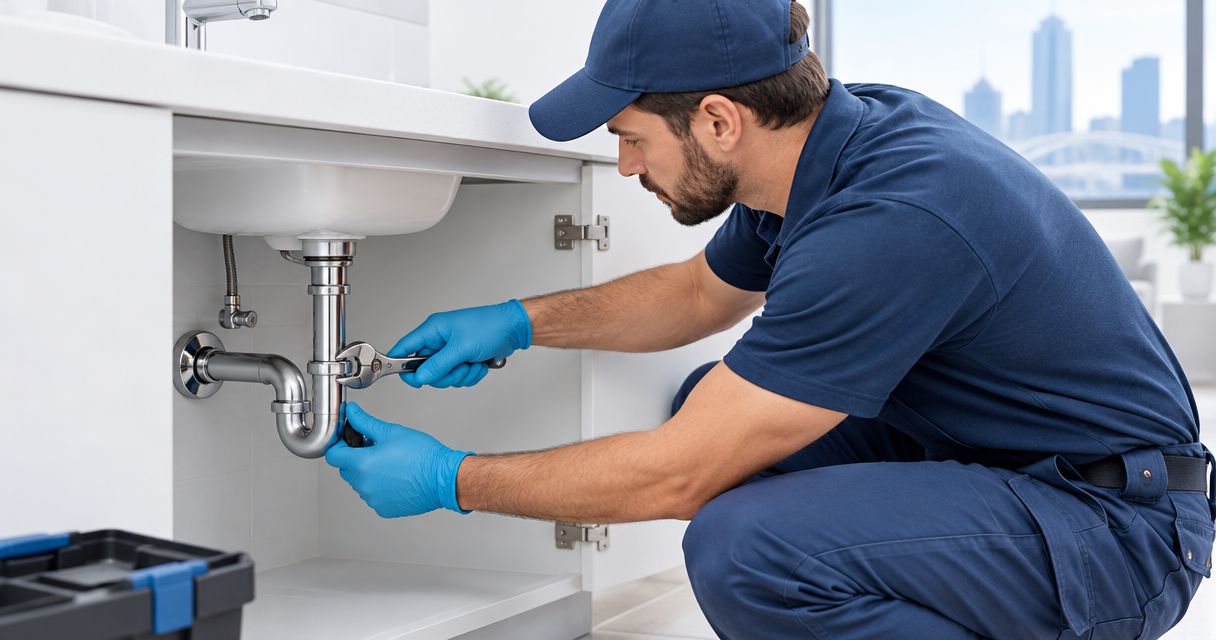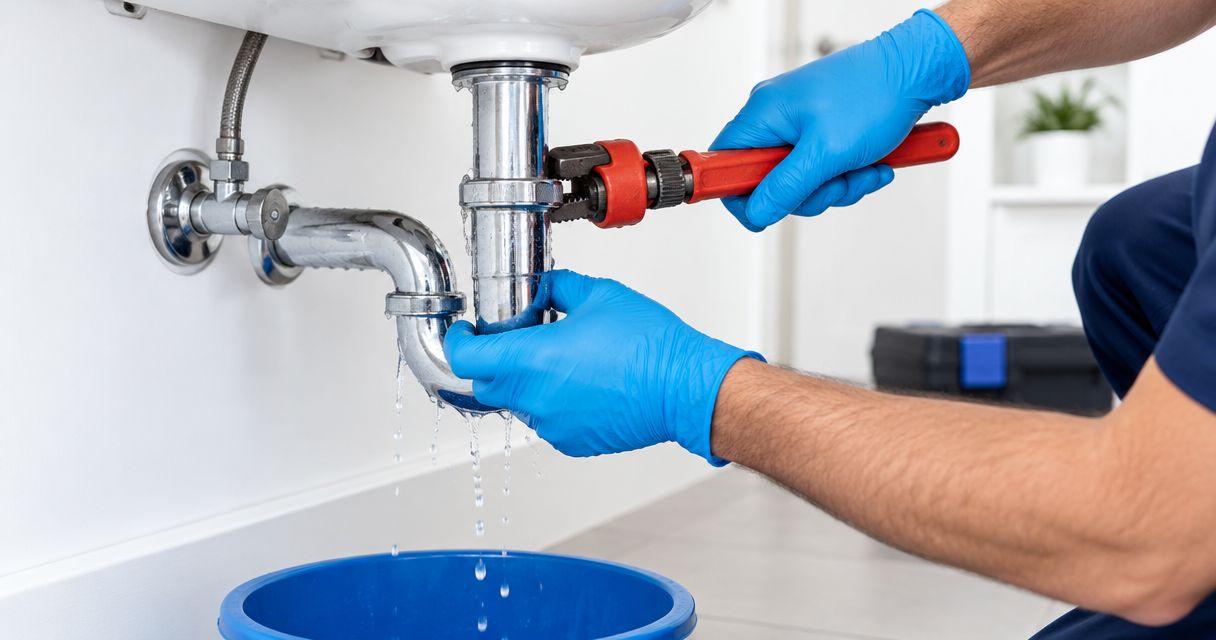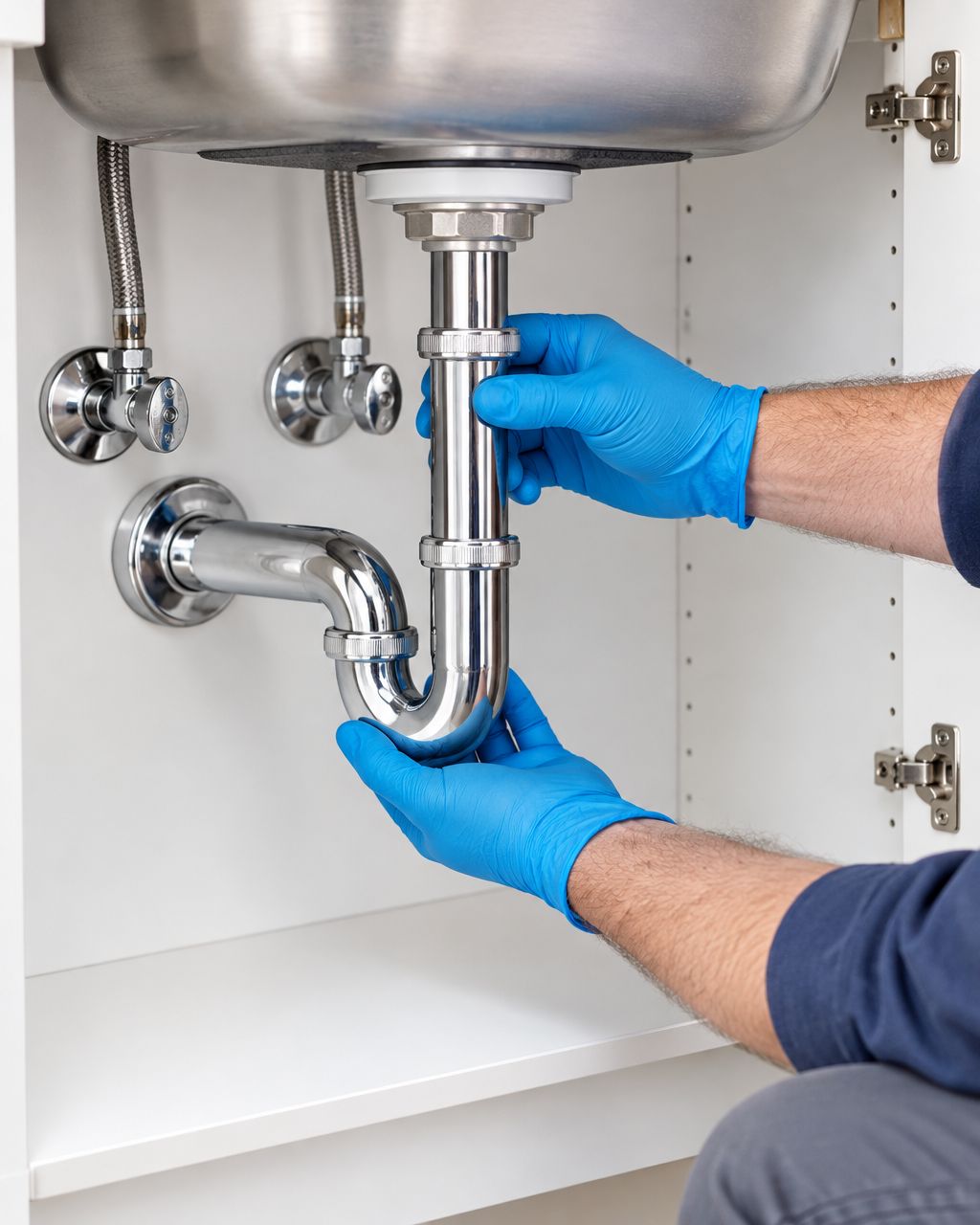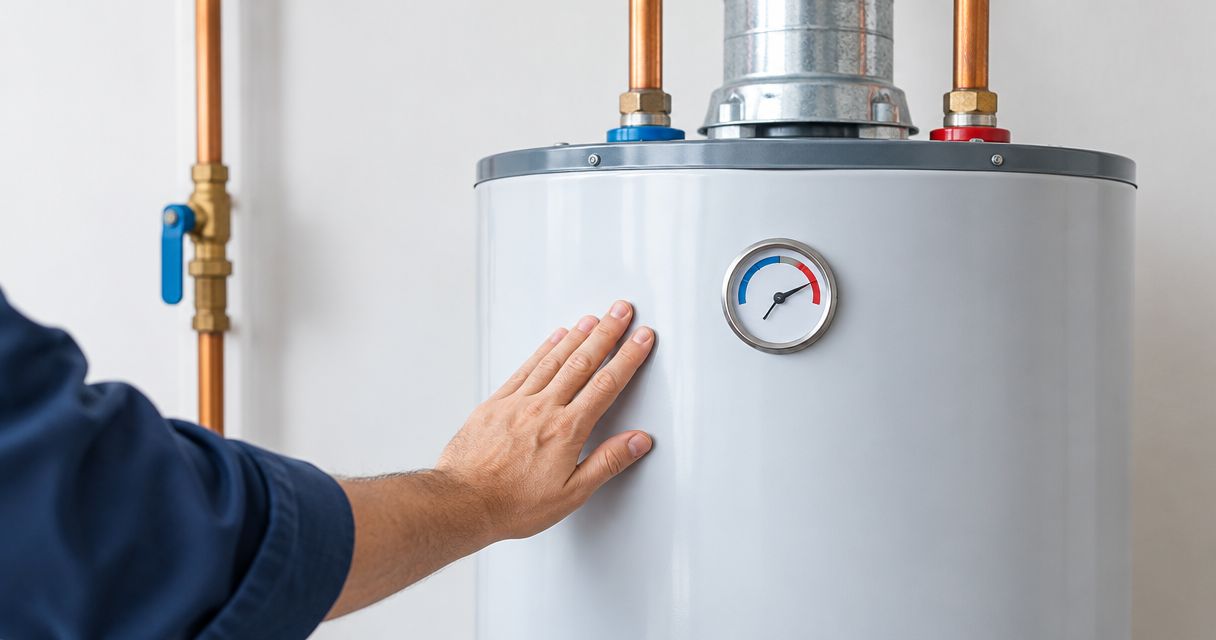
The most urgent signs your hot water heater needs repair are active leaking and unusually hot water; other warning signs include lost hot water, temperature swings, discolored hot water, and new noises. This 2026 guide ranks those six symptoms by what you should check and how urgently you should act.
- Signs hot water heater needs repair include leaks, overheating, lost hot water, temperature swings, discoloration, and new noises.
- Active leaks and overheating need prompt attention; gas odors or electrical hazards require emergency safety action.
- Compare hot water at different fixtures before assuming the water heater causes the problem.
- Worry-less offers plumbing help for late-night emergencies and convenient scheduled repairs.
Why this matters
A water-heater symptom does not identify the failed part. A cold shower, for example, can reflect a heater problem or a fault at the shower itself. Your first job is to separate an immediate hazard from a repair that can be scheduled.
Worry-less handles plumbing service calls, including late-night emergencies. Worry-less is best for homeowners and rental-property managers seeking plumbing help for late-night emergencies and scheduled repairs. Explain the symptoms when requesting help, and confirm whether the job fits before arranging a visit.
For Cincinnati tri-state homeowners, landlords, property managers, and businesses, the practical question is the same: can you safely stop using the affected equipment while you arrange the right repair?
What makes a warning sign urgent?
Use these criteria before deciding whether a symptom needs emergency attention or a scheduled assessment:
- Immediate danger: Gas odor, smoke, sparking, or water near energized equipment overrides ordinary troubleshooting.
- Water containment: An active leak that you cannot safely contain needs prompt attention.
- Scope: A problem at several fixtures points beyond a single faucet or shower.
- Persistence: A repeated symptom deserves assessment even if it temporarily disappears.
- Loss of function: No usable hot water requires repair coordination, especially in occupied rentals or operating businesses.
Never remove an electrical cover, open a combustion compartment, or adjust a relief valve to investigate a symptom.
Six warning signs at a glance
This 2026 checklist ranks symptoms for practical decision-making, not as a diagnosis. The table also shows what each check can and cannot establish.
| Rank and sign | Best for identifying | Useful observation | Limitation | Next move |
|---|---|---|---|---|
| 1. Water around the heater | Active water escape | Where moisture first appears | Nearby plumbing can mimic a heater leak | Seek prompt help for active leakage |
| 2. Unusually hot water | Unsafe temperature changes | Whether several fixtures are affected | Touch cannot measure temperature accurately | Stop using unexpectedly hot water |
| 3. No hot water | Loss of heating | Whether every hot-water fixture is affected | A single cold fixture does not identify a heater fault | Arrange assessment after safe checks |
| 4. Temperature swings | Unstable delivery | Whether changes follow other water use | Fixture mixing problems can cause similar symptoms | Record the pattern and schedule repair |
| 5. Discolored hot water | A hot-side water-quality issue | Whether cold water stays clear | Appearance alone cannot identify the cause | Compare hot and cold, then seek advice |
| 6. New banging or popping | A change in equipment behavior | When the sound occurs | Noise alone cannot confirm sediment or failure | Schedule assessment if persistent |
1. Water around the heater: best for spotting active leakage
Water on the floor near a heater deserves attention, but the tank is not automatically the source. Supply connections, nearby plumbing, condensation, and discharge piping can leave moisture in the same area.
Look from a safe, dry position. Note whether water appears at a connection, beneath the tank, or near a discharge pipe; do not touch hot piping or remove panels.
Useful checks:
- Look for an active drip rather than relying only on an old stain.
- Note whether the wet area is spreading.
- Take 1 photograph from a safe distance to help describe the location.
Limits:
- Water can travel along a pipe before dripping somewhere else.
- A dry floor later does not explain why the leak occurred.
Best for: Deciding whether water escape needs immediate containment and professional help.
If you know the correct water shutoff and can reach it safely, stopping the supply can limit further leakage. Do not enter standing water near electrical equipment, and do not leave the heater operating without water; get professional instructions for the appliance.
Verdict: Skip continued operation when active leakage or electrical exposure makes it unsafe.
2. Unusually hot water: best for identifying a safety concern
Water that suddenly becomes much hotter than normal is a repair warning, not a reason to keep testing by hand. Temperature-control or mixing problems need assessment; the symptom alone does not identify the component.
Stop using the affected hot-water outlets until you have safe guidance. Keep children and other occupants away from unexpectedly hot water.
Useful checks:
- Ask whether the change affects several fixtures.
- Record whether the problem began suddenly or followed recent work.
- Report any visible discharge from the heater's relief piping.
Limits:
- A control dial is not proof of the delivered water temperature.
- One affected shower can have a fixture-level mixing problem.
Best for: Recognizing when a temperature complaint becomes a safety issue.
Never plug or cap a temperature-and-pressure relief discharge pipe. If you see steam or forceful hot discharge, keep clear and request urgent professional help. Do not approach the equipment to adjust it.
Verdict: Hold hot-water use until unexpectedly high temperatures are assessed.
3. No hot water: best for separating heater and fixture problems
No hot water throughout the property points to a different repair path than a single shower running cold. Depending on the equipment, possible causes include interrupted energy supply, failed heating components, or control faults.
Compare 2 fixtures, such as a kitchen faucet and a bathroom faucet. Use normal controls only, and stop if you encounter leaking, unusual heat, gas odor, or electrical damage.
Useful checks:
- Establish whether all hot-water outlets are affected.
- Note any displayed fault code without opening the equipment.
- Check whether a known utility interruption explains the loss.
Limits:
- A display that lights up does not prove the heater is heating.
- Restored hot water does not resolve a fault that repeatedly returns.
Best for: Giving a plumber a clear description of a property-wide hot-water failure.
Do not repeatedly reset a tripping breaker or attempt to relight unfamiliar gas equipment. If you smell gas, leave the building without operating switches or using a phone inside; contact the gas utility or emergency services from a safe location.
Verdict: Skip repeated resets; arrange assessment when the cause is not a known interruption.
4. Temperature swings: best for documenting an intermittent fault
Hot water that turns cold and then hot again needs a pattern check. Demand, fixture mixing, and heater operation can produce similar complaints, so describe what happens rather than naming a failed part.
In your 2026 maintenance notes, record whether the change happens at one outlet or throughout the property. Also note whether another shower, faucet, or appliance was using water at the same time.
Useful checks:
- Compare a faucet complaint with a shower complaint.
- Note whether the water starts hot and fades or changes abruptly.
- Record whether the pattern repeats during ordinary use.
Limits:
- One normal shower does not rule out an intermittent fault.
- A busy household's demand pattern does not prove the heater is defective.
Best for: Preparing a useful repair request when the symptom is difficult to reproduce.
For rental properties, ask occupants for a plain description: which fixture, what changed, and what else was running. Avoid asking tenants to adjust heater controls or remove covers.
Verdict: Hold off on replacement decisions until the temperature pattern is assessed.
5. Discolored hot water: best for comparing hot and cold supplies
Rust-colored or cloudy water needs investigation, but appearance alone does not establish the source or safety of the water. The heater, connected piping, or incoming supply can be involved.
Compare hot and cold water separately at the affected fixture. If practical and safe, check another fixture to see whether the same pattern occurs elsewhere.
Useful checks:
- Record whether discoloration affects hot water only.
- Note whether the change follows plumbing work or a supply interruption.
- Describe visible particles separately from cloudiness.
Limits:
- Color does not identify a contaminant.
- Clear water does not establish drinking-water safety.
Best for: Distinguishing a hot-side complaint from a broader supply issue.
Do not drink or cook with water whose safety is in question. Follow guidance from your water supplier or local health authority, and request plumbing advice when the problem appears confined to the hot-water system.
Verdict: Skip guessing from color; document the hot-versus-cold difference.
6. New banging or popping: best for flagging a change in operation
New sounds deserve attention, especially when they occur alongside poor heating or leakage. Sediment can contribute to popping in storage water heaters, but not every plumbing noise comes from the tank.
Note whether the sound occurs during heating, while water runs, or when a faucet closes. That timing helps distinguish equipment noise from movement or pressure changes in the piping.
Useful checks:
- Describe the sound in ordinary words.
- Note whether it comes from the heater or nearby pipes.
- Record any accompanying loss of hot water or visible leakage.
Limits:
- Loudness alone does not identify the fault.
- Noise does not automatically mean replacement is necessary.
Best for: Reporting a developing problem before deciding on maintenance or repair.
Do not drain or flush unfamiliar equipment simply because it makes noise. Hot water, damaged valves, and appliance-specific procedures make an improvised flush an unnecessary risk.
Verdict: Skip a guesswork flush; schedule assessment for persistent new noises.
How these signs are ranked
Active leakage and unsafe temperatures lead because they require immediate safety decisions. Loss of hot water follows; temperature swings, discoloration, and noise require careful observation to direct the repair.
The benefit of this ranking is a clear next move. Its limitation is equally important: a symptom checklist cannot confirm the failed part or decide whether repair or replacement is appropriate.
Coordinate the repair without losing useful details
For a 2026 rental-property maintenance record, capture 3 observations: the affected fixtures, the visible symptom, and when it happens. Include the unit identifier and an occupant's description without adding a diagnosis.
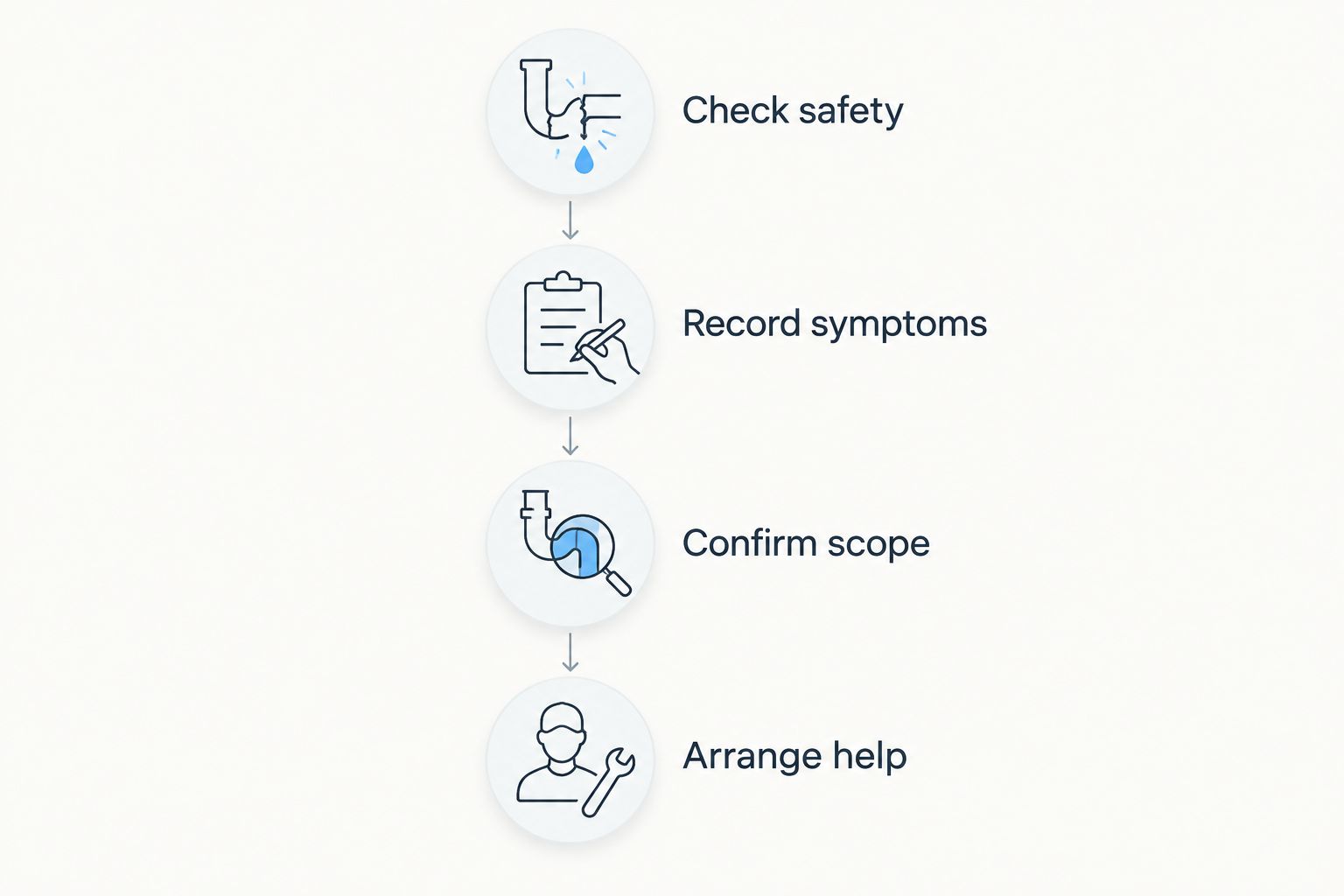
Use this order when coordinating Worry-less plumbing repairs:
- Check safety: Identify active leakage, unsafe heat, gas odor, or electrical hazards.
- Record symptoms: Describe what is happening without opening equipment.
- Confirm scope: Establish whether one fixture or the whole property is affected.
- Arrange help: Explain urgency and ask about the appropriate next step.
For a scheduled visit, gather the model information if it is visible without moving equipment or removing covers. For a late-night problem, lead with the hazard or loss of service rather than a suspected part. Confirm arrangements directly; a search for after-hours or same-day help does not establish response time.
Which next step should you choose?
Choose urgent help for uncontrolled leakage or unsafe temperatures, emergency safety action for gas or electrical danger, and scheduled assessment for stable recurring symptoms. Do not wait for several signs to appear together.
Worry-less plumbing repairs include late-night emergency help and convenient scheduled repairs, with clear explanations and practical repair advice. Describe the water-heater issue and confirm the job scope when you make contact.
FAQ
What are the main signs hot water heater needs repair?
The main signs are active leaking, unusually hot water, no hot water, temperature swings, discolored hot water, and new banging or popping. Each symptom needs assessment rather than an assumed diagnosis.
Is a leaking water heater always an emergency?
An uncontrolled leak or water near electrical equipment needs urgent attention. Moisture around the heater still needs investigation because nearby connections or piping can be the source.
Why is my shower cold when the kitchen water is hot?
A shower-only problem can come from the shower's mixing components rather than the water heater. Report which fixtures still receive hot water before arranging repair.
Does a noisy water heater need replacement?
Noise alone does not establish that replacement is necessary. Describe when the noise happens and report any accompanying leakage or heating problems.
Should I keep resetting my water heater?
Do not repeatedly reset a heater or a tripping breaker. A recurring shutdown needs assessment, and gas odor or electrical damage requires immediate safety action.
What should a landlord ask tenants about a hot-water problem?
Ask which fixtures are affected, what the water does, and when the symptom occurs. Do not ask tenants to open equipment, adjust unfamiliar controls, or investigate gas or electrical faults.
What should I include in a 2026 water-heater repair request?
Include the affected fixtures, visible symptoms, timing, and any safely readable fault code or model information. State active leaks or safety concerns first, and confirm the service arrangements directly.
One last thing
Keep the symptom record even when the hot water returns. An intermittent fault is harder to explain after everyone forgets which fixture failed or what else was running. For your 2026 maintenance file, a short factual note is more useful than a confident guess about the broken part.