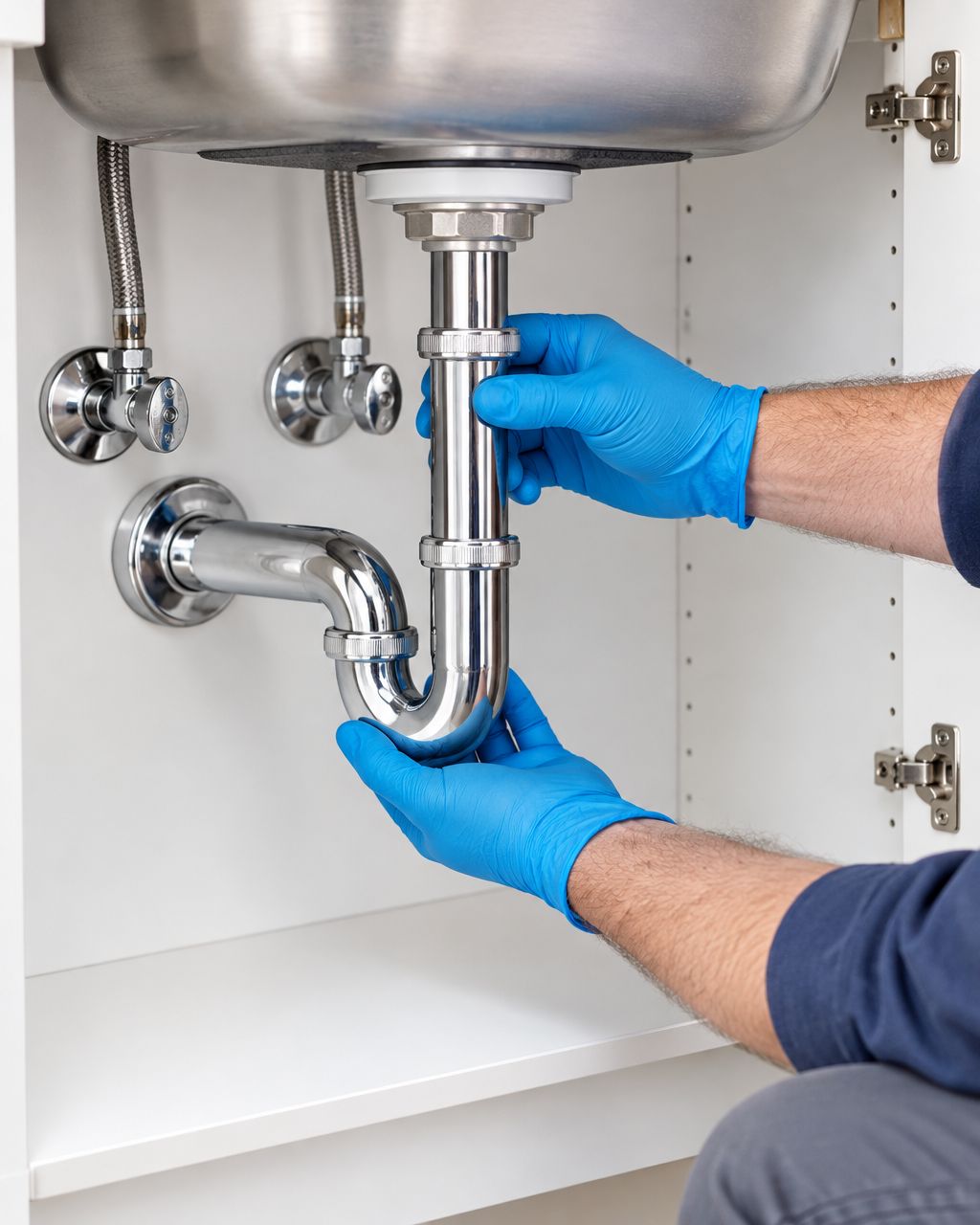
Rental-property after-hours plumbing is urgent repair coordination outside a plumber’s normal working hours, with the aim of protecting residents and limiting property damage. You need more than a repair: someone must describe the problem, arrange lawful access, authorize the work, and keep the owner and tenant informed.
- Call an after hours plumber when an active leak or sewage backup needs urgent professional assessment.
- Keep tenants away from electrical hazards, contaminated water, and unstable ceilings.
- Give the plumber the address, unit, symptoms, access contact, and repair authorization details.
- Worry-less offers plumbing help for late-night emergencies and convenient scheduled repairs.
Why after-hours plumbing matters for rental properties
A tenant reports water on the floor. The property manager is elsewhere, the owner wants to understand the work, and nobody knows whether the leak affects another unit. The immediate problem is plumbing, but the job also depends on clear decisions.
Treat the condition of the property as the priority, not the hour on the clock. An active leak needs a different response from a dripping faucet that has been safely isolated. Do not promise a tenant that a problem can wait without understanding what is happening.
For your 2026 maintenance instructions, separate emergency reporting from routine work requests. Explain whom tenants should contact, what information to provide, and what they should avoid doing. A short, usable instruction sheet is more helpful during a late-night call than a long document nobody can find.
This guide is for Cincinnati tri-state landlords and property managers. It is practical coordination advice, not a statement of local landlord-tenant law or a substitute for an on-site assessment.
How to arrange an after-hours plumber for a rental
1. Establish whether anyone is in danger
Start by asking whether the tenant can stay in a dry, safe area. Do not ask them to enter standing water, open equipment, reach through a leak, or work near wet electrical fittings to take a better photograph.
If there is an immediate threat to life, contact emergency services. A plumber is not a substitute for the emergency response needed for an electrical hazard, structural danger, or suspected gas leak. Keep people away from the affected area while the appropriate professionals assess it.
Use these questions to organize the first conversation:
- Is water still entering the room?
- Is any water near electrical equipment or outlets?
- Is wastewater coming up through a drain?
- Is a ceiling sagging, bulging, or shedding material?
- Can everyone remain safely away from the problem?
2. Gather observations without asking the tenant to diagnose
Ask what the tenant can see, hear, or smell from a safe position. “Water is coming from the cabinet beneath the kitchen sink” is useful. “The main pipe has failed” is a diagnosis that has not been confirmed.
Record the time of the report and whether the condition is changing. A photograph can help a plumber prepare, but it should never delay a call or require a tenant to enter an unsafe space. If no photograph is safe to obtain, say that plainly.
For your 2026 work-order form, include separate fields for observations and confirmed findings. That prevents a tenant’s initial guess from becoming the permanent repair record.
Collect these details:
- The full street address and unit identifier.
- The room or fixture where the problem appears.
- Whether water is flowing, dripping, or backing up.
- Whether other fixtures or neighboring units are affected.
- Any earlier repair to the same fixture or area.
3. Ask about safe isolation, not improvised repairs
If a tenant already knows a fixture’s shutoff location and can reach it safely, tell the plumber what has been turned off. Do not ask a tenant to force a stuck valve, dismantle fittings, or experiment with equipment they do not recognize.
In a shared building, a valve can affect more than the reporting unit. Confirm which supply it controls before arranging any action. If the supply cannot be safely isolated, give that information to the plumber rather than treating the leak as contained.
Worry-less provides plumbing help with late-night emergencies and scheduled repairs. When contacting Worry-less about a rental, describe the condition first, then confirm whether the property’s exact address and the required work can be handled.
Keep the initial instructions bounded:
- Stay out of unsafe or contaminated areas.
- Stop using a fixture that is backing up.
- Report any valve already closed and whether flow changed.
- Do not force valves or open plumbing connections.
- Tell the plumber immediately if the situation worsens.
4. Give the plumber a useful callout brief
A clear brief helps avoid repeated calls between the tenant, manager, owner, and technician. Name the person who can authorize work and the person who will provide access. They are not always the same person.
Ask the plumber to explain the proposed scope before work starts when circumstances allow. Distinguish between making the situation safe, restoring essential use, and completing a permanent repair. Those can be separate decisions; do not assume that a temporary stop means the underlying problem is resolved.
Worry-less’s stated emphasis is clear explanations and practical repair advice. Ask Worry-less to explain the immediate plumbing finding and what, if anything, needs a scheduled follow-up. Confirm the actual arrangement rather than assuming an ongoing maintenance agreement exists.
Include these points in the callout brief:
- The property and unit address.
- The observed symptoms and any safe isolation already completed.
- The tenant or on-site contact’s telephone number.
- The manager or owner’s authorization contact.
- Known access restrictions or shared-building impacts.
- The information you need in the completion report.
5. Arrange tenant access and communication
Confirm who will meet the plumber and how the tenant will recognize the person attending. Share only the access information needed for that visit. Avoid putting permanent entry codes in broadly circulated messages or an unrestricted repair log.
Follow the lease and applicable local requirements for access, notices, and emergency entry. Rules are not identical across the Cincinnati tri-state area. This guide does not establish a right to enter or decide who is responsible for a charge.
For your 2026 contact list, check that the owner’s authorization contact and the tenant’s preferred contact method are current. A record that names a former employee or an old telephone number is not an emergency plan.
Confirm the practical details:
- Who is expecting the visit.
- Who can lawfully provide access.
- Which unit and entrance the plumber should use.
- Whether pets or other access obstacles need attention.
- Who will receive updates if the plan changes.
6. Record the finding and book any remaining work
Ask what failed, what was done, and whether the repair is temporary or complete. Keep the technician’s finding separate from your own interpretation. “Leak stopped after isolation” does not mean “pipe repaired.”
If another trade is needed for drying, electrical assessment, or building repairs, record that separately. Do not assume the plumbing visit includes those services. Ask the relevant professional what must happen before the affected area is used again.
Worry-less also handles convenient scheduled plumbing repairs. That makes a follow-up conversation appropriate when an emergency visit identifies non-urgent plumbing work, but confirm the scope and timing rather than promising a slot to the tenant.
Close the work order with these records:
- The reported problem and confirmed plumbing finding.
- The work completed and any temporary measures.
- Areas or fixtures that remain out of use.
- Follow-up work and the person responsible for arranging it.
- Owner and tenant updates, including unanswered questions.
Emergency callout or scheduled repair?
The right route depends on the observed condition and professional advice. It is not a choice between being cautious and being economical: the aim is to match the response to the actual problem.
| Route | Best for | Main benefit | Limitation |
|---|---|---|---|
| After-hours assessment | An active leak, wastewater backup, or other urgent plumbing concern | Starts professional assessment outside normal hours | Attendance and repair scope must be confirmed directly |
| Scheduled repair | A non-urgent defect that can safely await an appointment | Allows planned access and coordination | Not appropriate for an uncontrolled or worsening condition |
| Immediate stabilization followed by scheduled work | A problem that needs containment before a permanent repair | Separates immediate protection from remaining work | Requires a clear handoff so temporary measures are not forgotten |
When you cannot tell whether a leak is contained, ask for professional guidance instead of declaring it routine. Provide observations, explain any loss of essential facilities, and report changes promptly.
Avoid giving tenants an arrival time that the plumber has not confirmed. An unanswered message, a booking request, and a confirmed appointment are different things. Keep those distinctions in the work order so nobody assumes a visit is already arranged.
Build repeatable coordination across your properties
For ongoing landlord and property-management work, consistency matters. You want each report to produce a clear record rather than a fresh chain of incomplete messages.
A simple property sheet can hold the address, unit identifiers, authorized contacts, known access arrangements, and previous plumbing findings. Keep sensitive information restricted to people who need it. Review the sheet when a tenant moves, a manager changes, or plumbing work changes the building’s layout.
Your 2026 property records should also distinguish a recurring symptom from a confirmed cause. Repeated clogs, for example, should prompt a discussion about assessment; they do not prove the tenant caused the blockage or identify a specific pipe defect.
Use the same completion questions after each visit:
- What was found?
- What was completed?
- What remains unresolved?
- Who needs to act next?
- What should the tenant report if it happens again?
Worry-less is a plumbing option for customers seeking late-night emergency help, scheduled repairs, and clear explanations. Property managers should confirm address coverage, job scope, and working arrangements before relying on any provider for multiple properties.
Common mistakes in rental-property callouts
Passing along a diagnosis as fact
A tenant’s report is the starting point, not a plumbing inspection. Record “water visible below the bathroom” rather than asserting a burst pipe before a professional confirms the source. This keeps the brief useful and avoids steering the visit toward an unverified repair.
Leaving authorization unclear
A tenant can describe the issue without having authority to approve every proposed repair. Name the decision-maker before the visit and explain how that person can be reached. Do not make assumptions about payment responsibility or lease obligations during an urgent phone call.
Treating a temporary measure as closure
A closed valve or temporary repair can stop the immediate symptom while leaving a fixture unusable or a permanent repair outstanding. Record the limitation, assign the follow-up, and tell the tenant what remains unresolved.
Forgetting neighboring units
A leak can appear somewhere other than its source, and a shared drain or water supply can affect several occupants. Tell the plumber about any connected reports. Do not enter other units or shut shared supplies without appropriate authority and professional guidance.
Writing instructions nobody can use
A maintenance document should make the next action obvious. In your 2026 tenant information, put the reporting contact and urgent safety instructions where residents can find them. Keep repair advice within safe limits rather than asking tenants to become emergency technicians.
FAQ
When should a landlord call an after hours plumber?
A landlord should seek urgent plumbing guidance for an active leak, wastewater backup, or another condition that cannot safely await routine scheduling. Describe the observed condition and any immediate hazards; do not rely on the time of day alone.
What information does an after-hours plumber need for a rental?
Provide the property address, unit, symptoms, access contact, and authorization contact. Explain whether water is still flowing, whether any supply has been safely isolated, and whether other units are affected.
Should a tenant try to repair a leaking pipe before help arrives?
Do not ask a tenant to dismantle plumbing or improvise a repair. Keep them away from hazards and ask the attending professional for safe instructions appropriate to the situation.
Can a property manager enter a rental for a plumbing emergency?
Access depends on the applicable law, lease, and circumstances. Confirm the correct process for the property's jurisdiction rather than assuming one rule applies throughout the Cincinnati tri-state area.
Does an emergency visit always include a permanent repair?
No. Ask the plumber whether the work is temporary stabilization or a completed repair, and record any follow-up needed before closing the work order.
Can Worry-less help with ongoing rental-property plumbing work?
Worry-less handles plumbing service calls, including late-night emergencies and scheduled repairs. Discuss your property addresses and recurring needs directly to confirm coverage, scope, and working arrangements.
One last thing
Before closing the call, ask the plumber to state what remains unresolved. That question is often more useful than asking only whether the water has stopped. A clear handoff tells the owner what to authorize, the tenant what to avoid, and the manager what to schedule next.