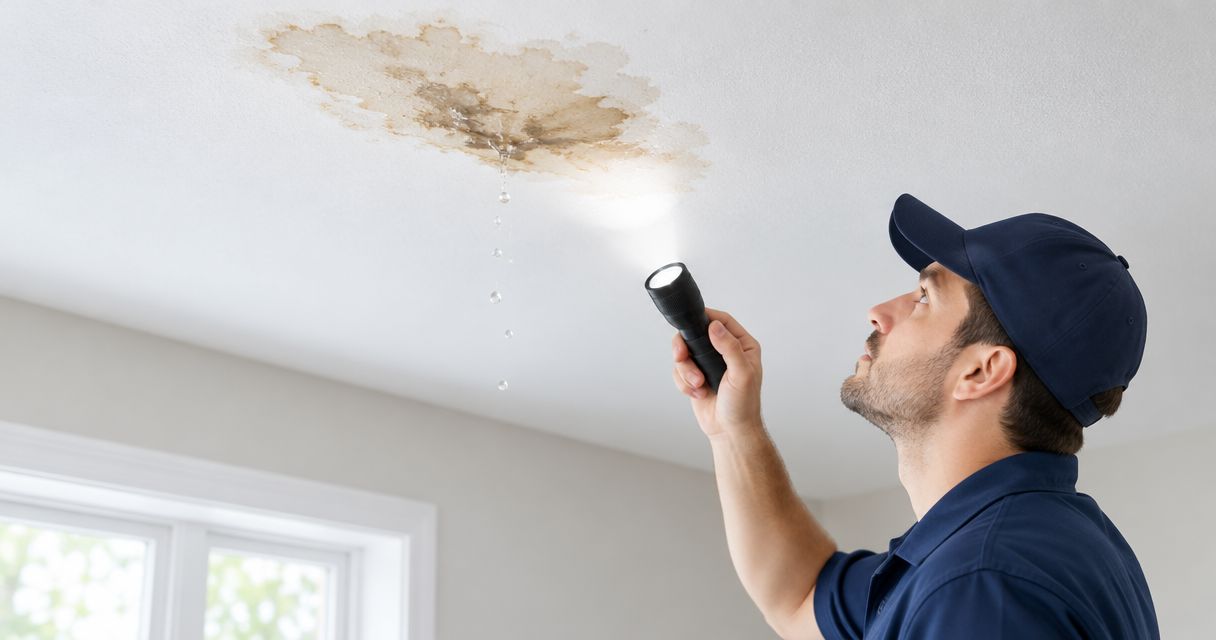
A damp ceiling can come from a plumbing leak, rain entering through the roof, condensation, or an air-conditioning drainage problem; the stain alone does not identify the source. Leaking pipe repair is appropriate only after the water is traced to a pipe, and the wet patch can sit away from the actual leak because water travels along framing and other surfaces.
- Leaking pipe repair requires a confirmed pipe leak; a ceiling stain alone does not establish the source.
- Rain, fixture use, and air-conditioning operation provide useful clues, not a final diagnosis.
- Worry-less handles plumbing service calls, including late-night emergencies; confirm scheduling when you contact the business.
- Keep people away from a sagging ceiling or wet electrical fittings before investigating the cause.
Is a damp ceiling a plumbing leak or another problem?
The strongest clue is when the ceiling gets wet, not simply where the stain appears. Water appearing after a shower points toward the bathroom above, but the fault could involve a supply pipe, drain, fixture seal, or shower waterproofing. Rain-linked dampness calls for a different investigation.
For plumbing-related concerns, Worry-less provides plumbing service calls, including help with late-night emergencies. Describe the pattern before asking for a particular repair.
| Possible source | Useful clue | Best for investigating | What the clue cannot establish |
|---|---|---|---|
| Water supply pipe | Dampness continues without recent fixture use | A plumber tracing supply plumbing | Whether a concealed pipe is actually responsible |
| Drain or fixture leak | Dampness appears after a nearby fixture drains | A plumber checking the fixture and waste connection | Whether the fault is a drain, seal, or waterproofing detail |
| Roof or exterior entry | Dampness follows rain | A roofing or building-envelope assessment | The entry point; water can travel before becoming visible |
| Condensation or cooling equipment | Dampness coincides with cooling operation or humid conditions | An HVAC assessment where equipment or ductwork is involved | Whether condensation, drainage, insulation, or another fault is responsible |
Use this comparison to choose an investigation, not to authorize work based on appearances. A dry-looking surface also does not establish that the material behind it is dry.
Why this matters
Repairing the wrong component leaves the water source in place. Repainting a stain, replacing ceiling material, or sealing a visible joint does not establish that the cause has stopped.
For your 2026 maintenance checklist, separate the job into source repair, drying, and finish restoration. Each addresses a different problem. Ask who is handling each stage rather than assuming a plumbing visit includes ceiling restoration.
In rental properties, this distinction also improves coordination. A report that says the ceiling gets wet when the upstairs shower runs gives the repair professional more direction than a request to paint over a bathroom stain.
What points toward a plumbing leak?
A bathroom, kitchen, laundry area, or water pipe above the stain makes plumbing worth investigating. Location is a clue, not proof: the visible patch might be below the route water followed rather than directly below the defect.
Supply-pipe clues
A supply leak can continue while taps and appliances are off because the pipe remains under pressure. Look for observations you can report without opening the ceiling: continued dripping, an expanding wet edge, or a connection that is visibly wet in an accessible area.
Do not assume continuous dampness proves a supply leak. Water retained in building materials can keep dripping after its original source has stopped.
Drain and fixture clues
A stain that appears after a bath empties or a toilet flushes gives the plumber a useful starting point. Record which fixture was used and whether the dampness started during use or afterward.
The benefit of this timing information is a more focused investigation. Its limitation is that the same activity involves several components: a shower uses supply plumbing, drainage, seals, and waterproofed surfaces. Do not order pipe replacement solely because the stain sits under a bathroom.
What points toward another problem?
Rain-linked dampness deserves attention to the roof, flashing, exterior openings, and other possible entry points. Note whether the stain follows rain consistently or only under particular weather conditions. Do not climb onto a wet roof to investigate.
Cooling equipment creates another possible route. An air-conditioning condensate drain problem or condensation around cold surfaces can wet nearby building materials. Where cooling equipment or ductwork sits above the affected area, tell the attending professional about that layout.
These alternatives matter because a pipe repair cannot fix roof entry or an HVAC drainage fault. Equally, a rainstorm does not rule out an unrelated plumbing leak occurring at the same time.
Avoid relying on stain color or smell to identify the source. Those details can help describe the condition, but neither replaces tracing the water. If the water appears contaminated, keep people away and explain that concern when arranging assistance.
What should you do about a damp ceiling in 2026?
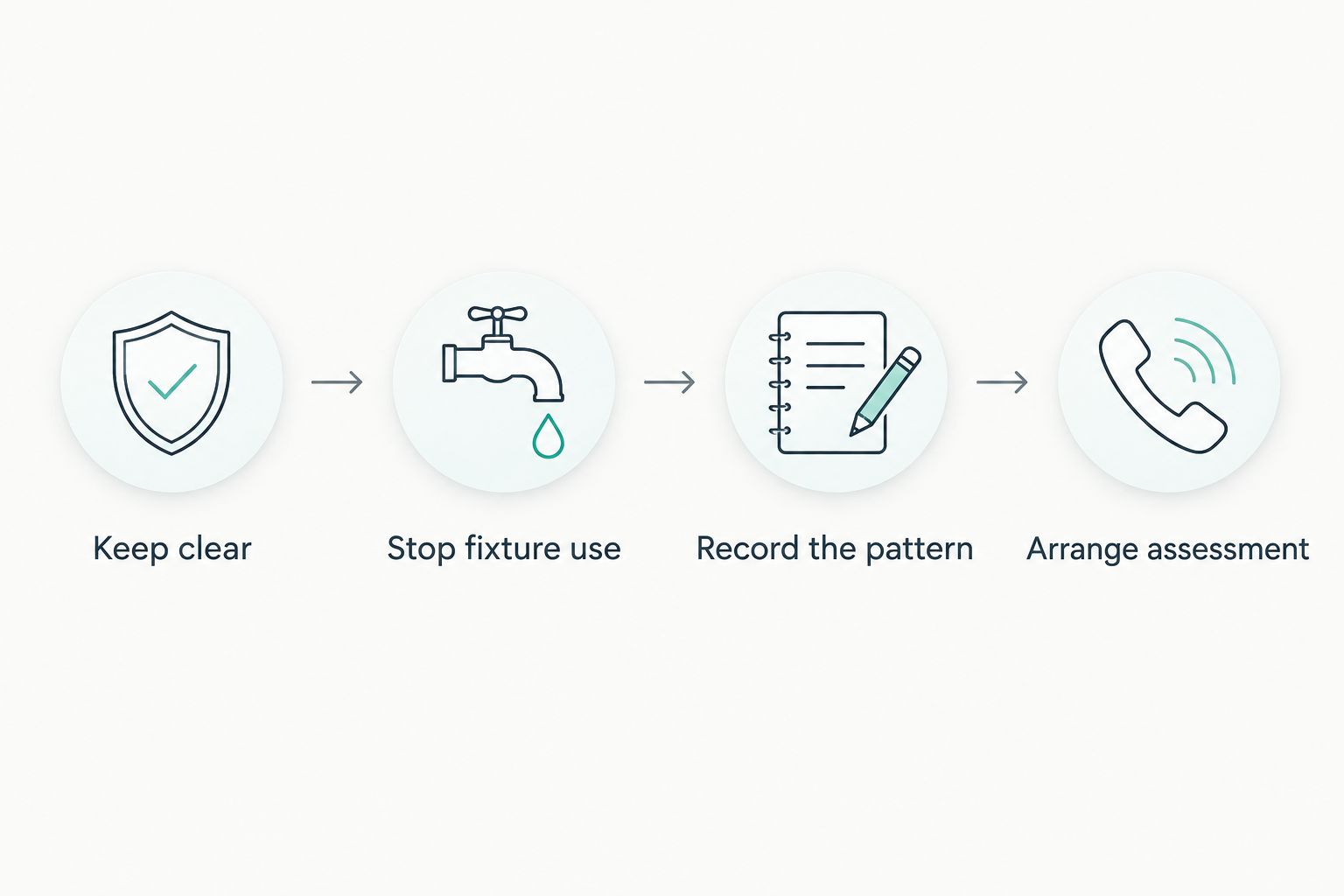
Follow this order before attempting cleanup or arranging cosmetic work. Protect people first, limit water use where appropriate, and collect observations without deliberately recreating the leak.
- Keep clear. Keep people and pets away from a bulging, sagging, cracking, or actively shedding ceiling. Do not stand underneath it to inspect, photograph, or place a container.
- Stop fixture use. Stop using a fixture clearly associated with the leak. If water is actively escaping from plumbing, close the relevant shutoff only when you can reach and operate it safely; do not force a stuck valve.
- Record the pattern. From a safe position, photograph the affected area and note recent fixture use, rainfall, or cooling operation. Include whether the damp area is changing.
- Arrange assessment. Explain the symptoms and any immediate hazards. Ask which professional should investigate and whether the affected fixture or area should remain out of use.
A wet light fitting, switch, or other electrical equipment changes the situation. Stay away from it, do not touch wet electrical controls, and seek qualified assistance. Do not enter standing water to reach a valve or electrical panel.
Do not puncture a bulging ceiling to release water. Hidden wiring, unstable material, and an uncontrolled discharge make that a poor homeowner troubleshooting step. If a ceiling looks unstable, keep the area clear and explain its condition when requesting help.
Why the right repair varies
The repair follows the confirmed source and the condition of the surrounding material. These factors change the work required:
- Source: A supply connection, waste pipe, fixture seal, roof opening, and condensate drain require different repairs.
- Access: An exposed connection is different from a concealed fault above a finished ceiling.
- Activity: Water still entering the area requires source control before finish work.
- Condition: Damaged surrounding pipework or building material affects what needs attention.
- Water quality: Suspected sewage or other contamination changes safe handling and cleanup.
- Drying: Stopping the source does not establish that concealed materials are ready to close or paint.
Ask for a clear explanation of what failed, what repair is proposed, and what remains outside that work. That conversation is more useful than choosing a repair from a photograph alone.
How should landlords coordinate a ceiling-leak report?
For a 2026 rental-property maintenance record, capture observations rather than asking tenants to diagnose the problem. Ask which room is affected, whether water is actively dripping, and what was happening before the dampness appeared.
A useful report also identifies the fixture or occupied space above, if known. In a multi-unit building, information from the affected room and the space above helps connect symptoms without assuming which unit caused them.
Keep the immediate instruction simple: avoid the affected area if the ceiling is unstable, and stop using a fixture already associated with the leak. Do not ask a tenant to remove ceiling material, handle electrical equipment, or repeatedly run water to demonstrate the problem.
Before attendance, clarify the practical arrangements through your usual property-management process. Confirm who can communicate the observations and how any necessary access will be arranged; do not assume a repair provider manages those steps.
Afterward, record the identified source, completed repair, and any drying or restoration still required. A plumbing repair and a completed ceiling restoration are separate milestones. Keep both visible in the maintenance record so an unfinished surface does not disappear from the follow-up list.
Does a damp ceiling need an emergency plumber tonight?
An active leak that cannot be safely contained or isolated needs urgent professional attention. A sagging ceiling, water near electrical equipment, or suspected contaminated water also requires you to keep people clear and seek appropriate help rather than continue troubleshooting.
Late-night urgency depends on the condition, not the clock. Tell the person handling the call whether water is still entering, whether you have stopped fixture use, and whether a safe shutoff has stopped the flow.
Worry-less handles late-night plumbing emergency calls. When arranging help in 2026, confirm current availability and explain the hazards; a service description is not a promised arrival time.
If water has stopped and there are no apparent immediate hazards, ask whether a scheduled investigation is appropriate. Do not treat the absence of fresh drips as proof that the ceiling is safe or that concealed material is dry.
Can you schedule leaking pipe repair instead?
A scheduled plumbing visit fits a controlled problem that still needs diagnosis and repair. Examples include a recurring damp patch associated with a fixture you can leave unused or a leak isolated by a safely operated shutoff.
Scheduled work gives you an opportunity to gather a clear history and coordinate access without repeatedly testing the suspected fixture. The limitation is that the situation can change: renewed dripping, spreading dampness, or ceiling movement requires reassessment.
Worry-less plumbing repairs are best for homeowners and property managers seeking scheduled work or help with a late-night plumbing emergency. Describe the symptoms and ask for practical repair advice; do not assume the ceiling needs pipe work before the source is confirmed.
Discuss the plumbing problem
Describe the damp ceiling and ask about emergency help or a scheduled plumbing repair.
What should you ask before ceiling work starts?
Ask the repair professional to distinguish a confirmed finding from a suspected cause. If a connection was repaired, ask which connection and what observations support that diagnosis.
For work arranged in 2026, keep the repair explanation with the original photographs. Ask what follow-up is appropriate, who is assessing the wet ceiling materials, and what signs should trigger another call.
Avoid requesting a cosmetic patch as the entire job while the source remains uncertain. Closing or painting the ceiling too early can conceal continuing dampness and make later investigation harder. The goal is not simply to remove the visible stain; it is to stop the source and address the affected material.
FAQ
Can a damp ceiling be caused by something other than a leaking pipe?
Yes. Rain entry, condensation, and air-conditioning drainage problems can cause a damp ceiling. Trace the source before arranging leaking pipe repair.
Does a ceiling stain directly below a bathroom prove there is a pipe leak?
No. A bathroom-related leak can involve supply plumbing, drainage, fixture seals, or waterproofing. Water can also travel before reaching the visible stain.
Should I run the upstairs shower to check for a leak?
Do not deliberately recreate a leak that is already wetting the ceiling. Stop using the suspected fixture and report the timing you have already observed to the repair professional.
Can I wait until morning if my ceiling is damp?
Waiting depends on whether water is still entering and whether there are safety concerns. Keep clear of sagging material or wet electrical equipment, and seek urgent assistance for an uncontrolled leak.
Will leaking pipe repair also fix the ceiling stain?
Leaking pipe repair addresses the confirmed pipe fault, not automatically the ceiling finish. Drying, assessment of damaged material, and restoration require separate attention.
What should a tenant tell a landlord about a ceiling leak?
A tenant should report the location, whether water is actively dripping, and any connection with fixture use or rain. Photographs taken from a safe position help document changes without disturbing the ceiling.
Who should I call if the ceiling gets damp only when the air conditioning runs?
An HVAC professional is an appropriate starting point when dampness consistently follows cooling operation. Report any equipment or ductwork above the area, while keeping other possible sources open until the water is traced.
One last thing
For your 2026 repair record, photograph the stain before anyone paints it and keep the source diagnosis alongside that image. A stain is a record of where water appeared, not proof of where it entered. That distinction helps you request the right repair and recognize whether a later mark represents a new problem or an unresolved one.