A toilet keeps running after flushing because the tank is losing water into the bowl or the fill valve is not shutting off; common causes include a leaking flapper, a stuck handle, an incorrectly adjusted float, or a worn fill valve. Check whether water is entering the overflow tube or slipping past the flush seal, then arrange toilet repair service if the cause remains unclear or the problem returns.
- A toilet that keeps running usually has a flush-seal leak or a fill-control problem.
- Check the handle, tank water level, and flush seal before replacing parts.
- Worry-less handles plumbing service calls, including late-night emergencies; confirm timing when requesting toilet repair service.
- Water on the floor or sewage backup needs more urgent attention than noise contained inside the tank.
Why does a toilet keep running after flushing?
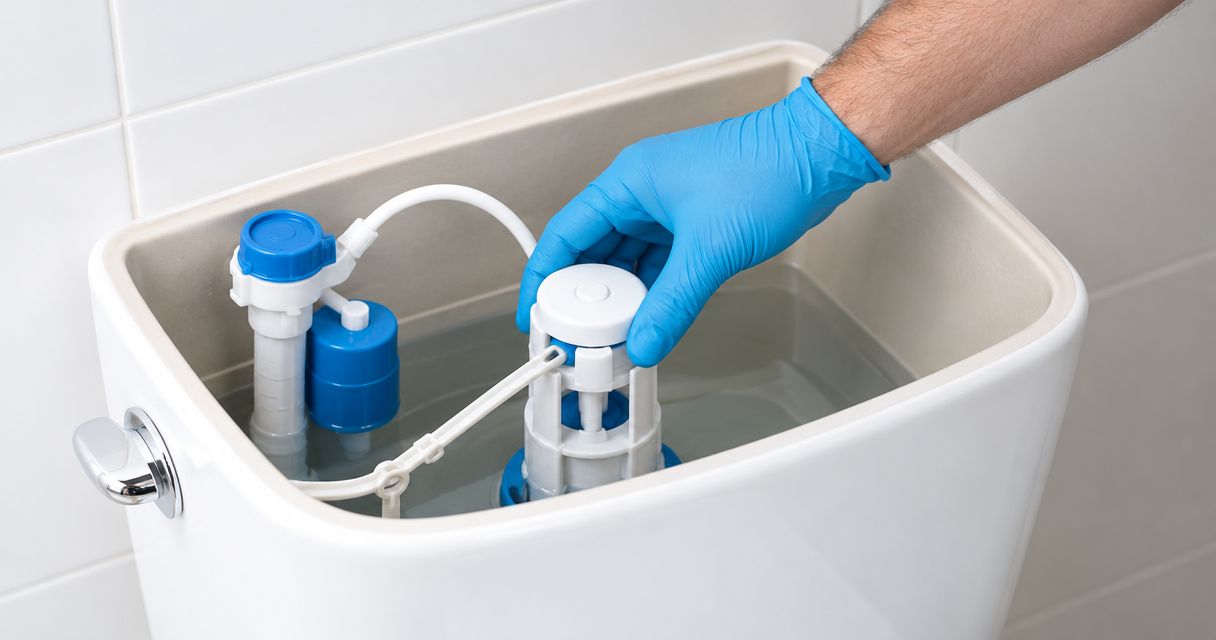
A running toilet has either water escaping from the tank or water entering after it should stop. The sound alone does not identify the failed part. Look inside the tank, if you can remove the lid safely, and compare what you see with these signs.
| What you notice | Likely cause | Useful next check | Limit of the check |
|---|---|---|---|
| Water flows into the overflow tube | Float setting or fill-valve problem | Compare the water level with the tank's marked fill line | Lowering the float will not fix a valve that fails to close |
| Water stays below the overflow but trickles into the bowl | Leaking flapper or flush-valve seal | Inspect the seal and check for trapped chain | A worn sealing surface can also cause leakage |
| The handle stays down or needs jiggling | Binding handle or chain problem | Check whether the handle returns and the chain releases | Temporary improvement does not prove the seal is sound |
| The toilet refills periodically without use | Slow tank-to-bowl leak | Try a dye test without flushing | The test shows leakage, not necessarily which part failed |
For help with an unresolved problem, Worry-less handles plumbing service calls, including late-night emergencies. Explain whether the toilet is simply running, leaking outside the fixture, or backing up so the repair request reflects the actual problem.
Why this matters
A running toilet sends water down the drain even when nobody uses it. In a rental property, the person hearing the noise, the person arranging repairs, and the person receiving the water bill can be different people.
For your 2026 maintenance records, document the symptom rather than writing only that the toilet is broken. Continuous hissing, occasional refilling, water near the base, and a bowl that rises during flushing describe different repair needs.
Noise inside the tank and water outside the toilet are not the same urgency. Identify which situation you have before deciding whether to schedule a repair or request immediate help.
Water enters the overflow tube: check the fill controls
The overflow tube is the open tube inside the tank that directs excess tank water into the bowl. If water keeps spilling into it after flushing, the tank is filling too high or the fill valve is failing to shut off.
Best for a first check: compare the water level with the manufacturer's marked fill line. Do not assume that every toilet uses the same adjustment or tank layout.
A float tells the fill valve when to stop adding water. If the float catches against another part, sits incorrectly, or cannot operate freely, the tank can keep filling.
Check for an obvious obstruction without forcing the mechanism. Follow the toilet manufacturer's instructions for adjustment; a float correction is useful only when the valve itself still works properly.
If water continues entering after the float reaches its shutoff position, arrange a repair. Repeatedly bending or forcing parts risks creating another problem without solving the original one.
Water leaks into the bowl: check the flush seal
A flapper or another flush-valve seal holds tank water back until you flush. When that seal does not close properly, water escapes into the bowl and the fill valve replaces it.
Best for confirming an internal leak: use a dye test. Put a small amount of food coloring in the tank, leave the toilet unflushed, and check whether color appears in the bowl; follow manufacturer guidance for specialty fixtures or finishes.
Color reaching the bowl indicates a tank-to-bowl leak. It does not establish whether the seal, chain, or flush-valve sealing surface needs attention.
Look for a chain caught underneath the flapper, visible debris, or a seal that appears distorted. Do not scrub sealing surfaces with abrasive tools or assume every toilet accepts a universal replacement.
Some toilets use a canister-style mechanism rather than a hinged flapper. Identify the mechanism before buying parts, because the wrong replacement can leave the toilet running after an otherwise careful repair.
The handle sticks: check the linkage
A handle that stays down can hold the flush seal open. A chain pulled too tightly can do the same thing, while excess loose chain can become trapped underneath the seal.
Best for an obvious handle problem: check whether the handle returns freely and the linkage allows the seal to close fully. Watch the mechanism during a flush without putting your fingers near moving parts.
Jiggling the handle can temporarily reseat the flapper. Treat that as a clue, not a completed repair, especially if tenants need to repeat it after each flush.
If the handle binds, the linkage is damaged, or the problem keeps returning, schedule a repair. Repeated adjustments without identifying the fault make it harder to tell whether the handle or the seal is responsible.
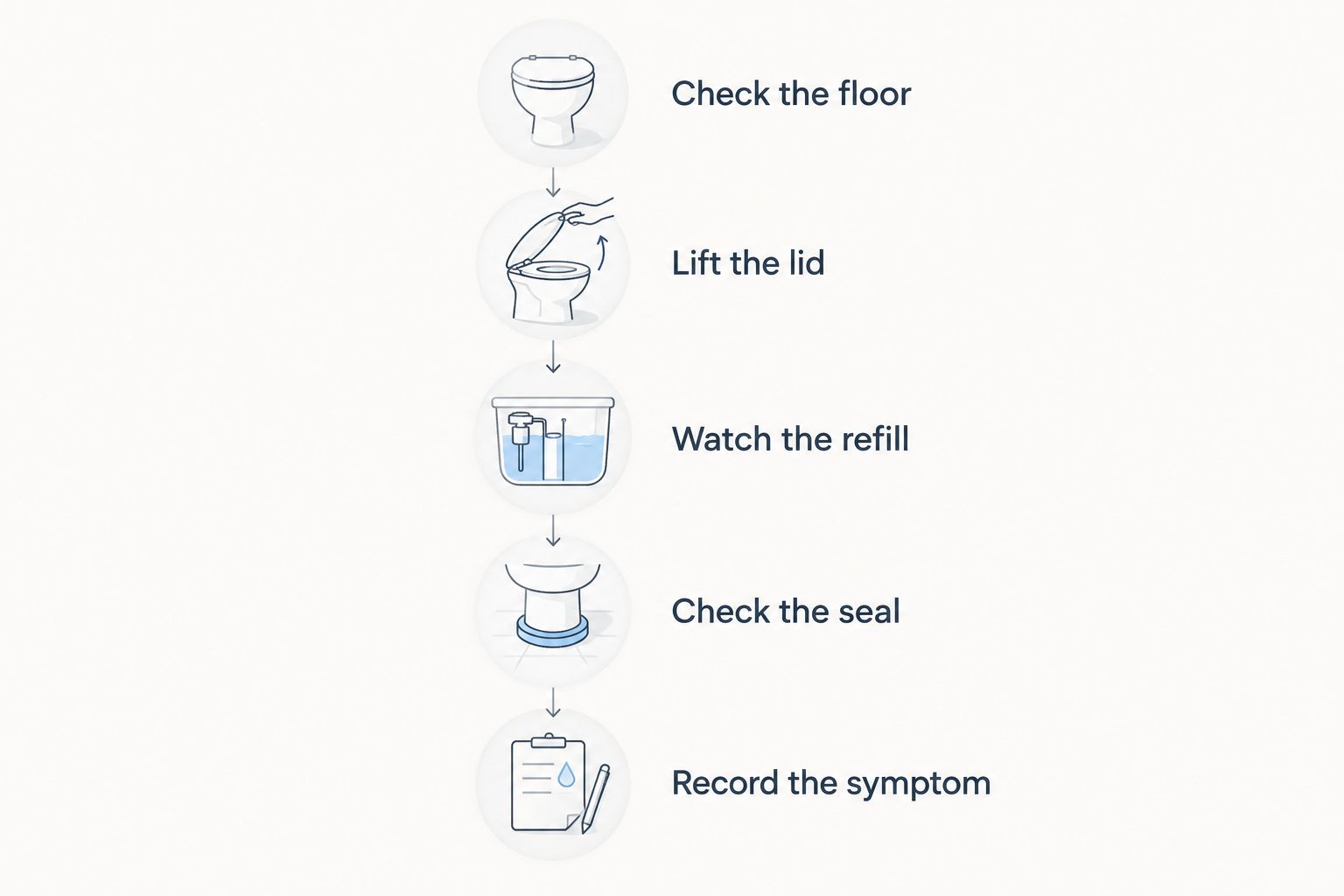
How to check a running toilet safely
Use this inspection sequence for an ordinary tank toilet when the floor is dry, the fixture is stable, and there is no sewage backup. Stop if the lid is too heavy to handle safely or the toilet has unfamiliar enclosed controls.
- Check the floor. Look for water around the base, supply connection, and shutoff valve. Water outside the fixture changes the priority from noise investigation to leak control.
- Lift the lid. Use both hands and place the lid on a stable, protected surface away from the toilet's edge. Porcelain can crack if dropped or knocked over.
- Watch the refill. Observe whether the handle returns, the flush seal closes, and the water stops below the overflow opening. Avoid touching electrical components on powered fixtures.
- Check the seal. If the water level is not reaching the overflow but the toilet keeps refilling, inspect the seal and consider the dye test described above.
- Record the symptom. Note what happens without flushing and what changes after a flush. A short video can help explain an intermittent problem when requesting service.
These checks separate visible symptoms without requiring you to dismantle the toilet. If a step requires force, unfamiliar disassembly, or work around an active external leak, stop and arrange professional help.
Why the cause of a running toilet varies
Different faults create similar sounds. These factors explain why replacing the most familiar part does not always solve the problem:
- Flush mechanism: a hinged flapper and a canister seal require different replacement parts and inspection methods.
- Water level: water reaching the overflow points toward fill controls rather than automatically proving a bad flapper.
- Seal condition: debris, distortion, or wear can prevent a flush seal from holding water back.
- Handle movement: a binding handle or incorrect chain position can hold an otherwise usable seal open.
- Fill-valve condition: a valve that no longer closes properly keeps admitting water despite a suitable float setting.
- Previous repairs: an incompatible replacement or incorrect adjustment can leave the original symptom unresolved.
For a 2026 repair request, give the plumber the toilet's identifying information when it is visible without disassembly. A clear photograph is more useful than guessing a model or ordering parts by appearance alone.
Is a running toilet an emergency?
A running toilet with water contained inside the fixture is different from an overflowing toilet, an external leak, or sewage backup. A contained running toilet generally calls for prompt repair scheduling rather than assuming an emergency callout is necessary.
Request urgent help when water is spreading outside the toilet, the bowl threatens to overflow, or sewage backs up. Stop flushing a toilet that is backing up, and avoid contact with wastewater.
If you can safely reach the toilet's supply shutoff, close it gently to stop incoming water. Do not force a seized valve; a valve that leaks or will not close needs professional attention.
In the Cincinnati tri-state area, describe these conditions when asking about late-night help. An after-hours search does not establish a plumber's current availability, so confirm timing directly.
Can you leave a running toilet until a scheduled repair?
A contained running toilet can be assessed for scheduled repair when there is no external leak or backup. Do not leave it running unattended simply because the floor is dry; close the fixture's working supply valve when safe and arrange repair.
If you isolate the water supply, tell everyone using the property that the toilet is out of service. For a rental or business, explain whether another usable toilet is available when discussing the repair priority.
Convenient scheduled repairs and late-night emergency help serve different situations. Worry-less toilet repair service requests should describe the symptom and your scheduling needs without assuming a guaranteed arrival time.
What should landlords and property managers report?
For rental-property maintenance in 2026, ask for observations rather than a tenant's diagnosis. Someone reporting a bad flapper might actually be hearing water spill into the overflow tube.
Collect the property and unit details, which toilet is affected, whether water is outside the fixture, and whether the toilet remains usable. Include when the sound occurs and whether the supply has been shut off.
Ask for a photograph or short video only when it can be taken safely. Do not ask tenants to dismantle mechanisms, force shutoff valves, or keep flushing to reproduce a backup.
Keep repair coordination separate from technical diagnosis. Explain access arrangements directly with the people involved rather than assuming a plumber provides a particular tenant-access or account-management service.
Worry-less is a fit for owners and managers seeking plumbing service calls, including late-night emergency help. When discussing toilet repair service, ask for a clear explanation of the fault and practical advice on the next step.
FAQ
Why does my toilet keep running after I flush it?
A toilet keeps running because water escapes past the flush seal or the fill valve keeps adding water. Check the handle, chain, tank water level, and seal to distinguish these causes.
Why does my toilet refill when nobody has used it?
A toilet that refills without being used usually has a slow leak from the tank into the bowl. A dye test can confirm that water is crossing between them without a flush.
Will replacing the flapper stop my toilet from running?
Replacing the flapper stops the running only when the flapper is the cause. A sticking handle, incorrect water level, damaged sealing surface, or faulty fill valve requires a different correction.
Can I turn off the water to a running toilet?
You can close the toilet's supply shutoff if you can reach it safely and it operates without force. Stop if the valve is seized or starts leaking, and arrange professional help.
Should I call an emergency plumber for a running toilet at night?
Request urgent help when the toilet leaks outside the fixture, threatens to overflow, or has sewage backing up. A contained tank problem calls for repair scheduling, with timing confirmed directly with the plumber.
What should I tell a plumber before a rental-property toilet repair?
Tell the plumber which toilet is affected, whether water is outside the fixture, and whether the supply is shut off. Add whether the property has another usable toilet and describe any intermittent refilling.
One last thing
Check that the toilet stays quiet after the tank finishes filling, not just that it flushes successfully. A toilet can flush normally while leaking slowly into the bowl between uses.
For your 2026 maintenance closeout, record the fault corrected and whether the running or intermittent refill has stopped. That gives the next person handling the property a useful repair history instead of another unexplained toilet complaint.