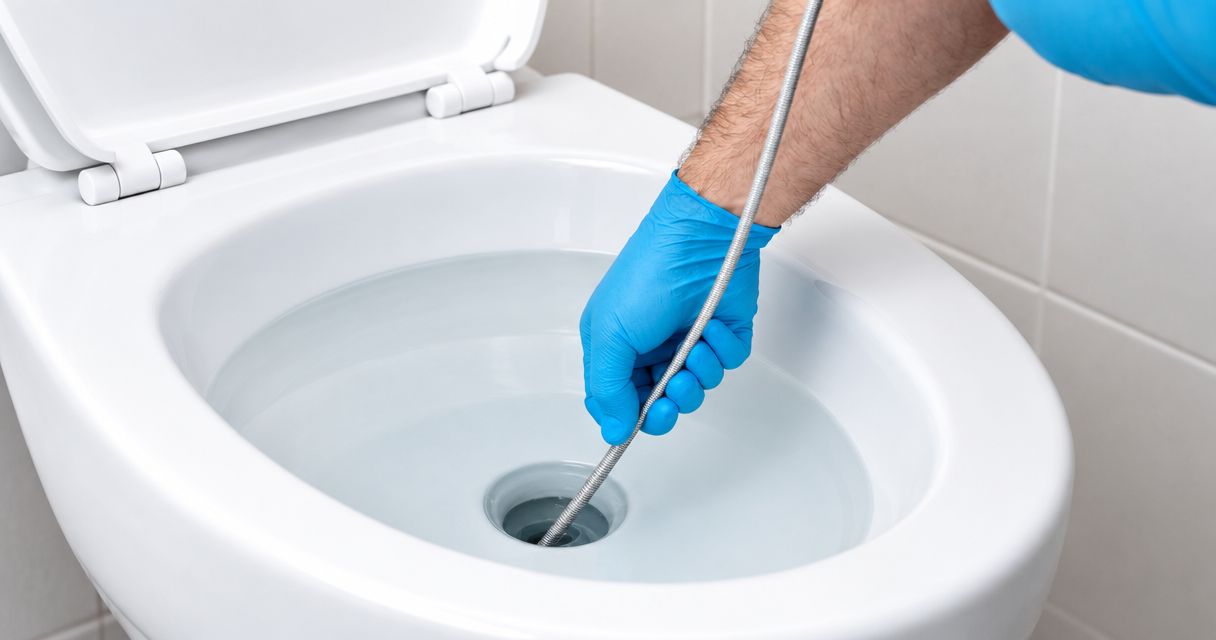
A rental toilet that keeps clogging needs its cause checked, not another round of flushing: recurring blockages can come from unsuitable items, something lodged in the toilet, weak flushing, or a restriction farther down the drain. A toilet repair service should distinguish a fixture problem from a shared drainage problem before recommending work. Stop using the toilet if the bowl rises, wastewater backs up elsewhere, or flushing causes another fixture to gurgle.
- Recurring toilet clogs need diagnosis; a cleared bowl does not prove the drain is clear.
- A toilet repair service should check flushing performance, lodged objects, and signs of a shared drain blockage.
- Worry-less handles scheduled plumbing repairs and late-night plumbing emergencies; confirm timing when requesting help.
- For rental properties, record symptoms without assuming tenant misuse or ordering a replacement first.
Why does a rental toilet keep clogging?
Repeated clogs mean the original cause remains or the blockage keeps being recreated. The key distinction is whether the trouble stays at the toilet or involves other fixtures. For owners arranging plumbing repairs for Cincinnati property managers, that distinction helps explain the problem when requesting service.
Use these observations to describe the symptoms, not to make a final diagnosis:
| Observed pattern | What needs checking | Best for | Limitation |
|---|---|---|---|
| The toilet clears, then clogs again | A remaining obstruction or recurring material buildup | Explaining repeat callouts | Does not identify where the blockage sits |
| The flush seems weak before clogging | Tank operation, water delivery, and bowl performance | Requesting a fixture inspection | A weak flush does not rule out a drain problem |
| Nearby fixtures gurgle or back up | Shared drainage and possible venting problems | Flagging a wider investigation | Sound alone cannot locate the cause |
| Trouble began after an object disappeared | An obstruction in the toilet or connected drain | Reporting a suspected lodged object | The object can remain out of sight |
| Several units report drainage trouble | Drainage serving the affected properties | Coordinating building-level assessment | Reports alone do not establish the pipe layout |
Why this matters
A toilet that works after plunging can still have an unresolved problem. Treating each recurrence as an isolated event loses the history that helps a plumber choose the next check. It also leaves tenants and property managers repeating the same temporary response.
For your 2026 maintenance records, keep repeat toilet complaints together rather than opening unrelated notes. Record the affected bathroom, what happened before the clog, whether other drains changed, and what the previous repair addressed. That creates a useful repair history without assigning blame.
What causes repeat toilet clogs?
Several problems produce similar symptoms. These are reasons to investigate, not reasons to approve a particular repair without inspection.
- Unsuitable flushed material: Wipes, paper towels, hygiene products, and other items belong in the trash, not the toilet. Repeated flushing can carry material beyond the bowl without clearing the drainage route.
- A lodged object: A small object can obstruct the toilet's internal passage and catch paper. Plunging does not establish that the object has been removed.
- Weak flushing: A tank or flushing mechanism that does not work correctly can leave the toilet without an effective flush. The plumber should check operation rather than assume the drain is the only problem.
- A downstream restriction: A partial blockage beyond the toilet can cause recurring trouble. Symptoms at other fixtures make this especially important to investigate.
- Pipe or venting problems: Pipe defects and venting faults can interfere with drainage. Recurrence alone does not prove either condition; the recommendation needs supporting findings.
Do not replace a toilet just because it has clogged repeatedly. A new fixture will not correct a restriction farther along the drain, and clearing a drain will not repair a faulty tank mechanism. The work needs to match the cause.
What should you do when the toilet clogs again?
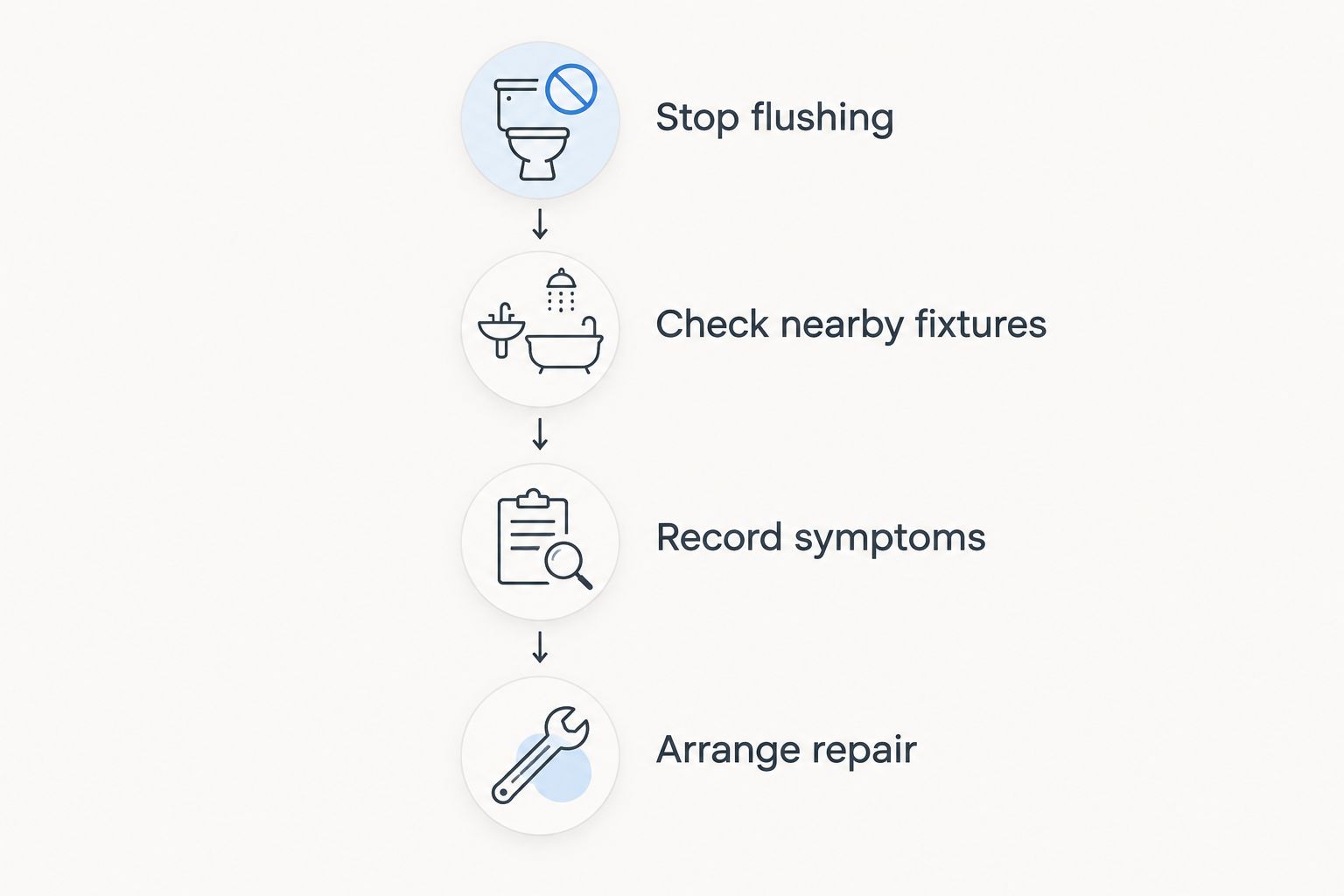
Use this sequence to limit further discharge and give the repair provider a clear account. Do not create more wastewater just to test whether the blockage remains.
- Stop flushing. Keep the affected toilet out of use. If the bowl is rising, another flush adds water without resolving the obstruction.
- Check nearby fixtures. Ask whether sinks, tubs, showers, or other toilets have already shown slow drainage, gurgling, or backup. Observe existing symptoms; do not run fixtures to reproduce an overflow.
- Record symptoms. Note when the problem returned, what happened during the last flush, and whether earlier work cleared or repaired anything. Photograph visible conditions only from a safe, dry location.
- Arrange repair. Explain that the clog is recurring. Report wastewater backup, an unusable toilet, and effects on other fixtures when requesting a service time.
If clean water continues entering the bowl, closing an accessible toilet supply valve can stop the refill. Do not force a stuck valve or enter standing water to reach it. Closing that valve does not stop wastewater coming back through the drain.
When does a recurring clog need late-night help?
Request urgent plumbing help when wastewater is escaping, backup affects other fixtures, or you cannot safely contain the problem. Keep people and pets away from sewage. If water has reached electrical equipment or outlets, stay clear of the affected area.
An unusable toilet also needs prompt attention, particularly when occupants have no usable alternative. Tell the repair provider that fact rather than simply reporting a slow flush. Confirm what help is available and the expected service timing; an after-hours request is not a guaranteed arrival time.
A toilet that is out of use, with no overflow or other signs of active backup, can be discussed as a scheduled repair. The important step is preventing reuse while the underlying problem remains. For your 2026 repair plan, distinguish active wastewater escape from a contained fixture fault so the request accurately describes the situation.
When is a scheduled repair the right next move?
A scheduled visit suits a contained recurring problem when the affected toilet can remain unused and there is no active backup. It gives you an opportunity to share previous repair notes and ask for an explanation of why the clog keeps returning. Scheduling does not make the diagnosis less important.
Ask the plumber to separate immediate clearance from any recommended follow-up work. Clearing an obstruction restores a drainage path; it does not automatically establish why the obstruction formed. If further inspection is recommended, ask what finding or unresolved symptom makes it useful.
| Service approach | Best for | Benefit | Limitation |
|---|---|---|---|
| Late-night emergency request | Active overflow, wastewater backup, or an urgent sanitation problem | Brings the immediate condition to the provider's attention | Timing must be confirmed; further work can still be necessary |
| Scheduled plumbing repair | A contained recurring fault with the toilet kept out of use | Allows coordination around diagnosis and repair | Unsuitable if the condition is actively worsening |
What should a toilet repair service check?
A useful assessment connects the symptom to the recommended work. The plumber should consider the toilet's flushing operation, the possibility of an obstruction, and evidence that the problem extends beyond the fixture. Not every visit requires the same equipment or inspection method.
Ask for a plain-language explanation of:
- What was found, rather than only what tool was used.
- Whether the fault was in the toilet or farther along the drainage route.
- What the completed work corrected.
- Whether any cause remains uncertain.
- What symptom should prompt another call.
If replacement is recommended, ask how replacing the toilet addresses the finding. If drain inspection is recommended, ask which symptoms justify looking farther downstream. These questions help you authorize relevant work without prescribing a repair yourself.
How should landlords coordinate a repeat-clog repair?
Give the repair provider observations, access arrangements, and repair history—not a conclusion about tenant behavior. A tenant saying that nothing unusual was flushed is useful information, but it does not eliminate a hidden obstruction or mechanical fault. A recurring clog alone is not proof of misuse.
Keep a consistent 2026 maintenance entry for the affected fixture. Include the complaint, any related drainage reports, previous findings, the repair completed, and the instructions given afterward. For a multi-unit property, identify affected units without assuming they share the same drainage branch.
Confirm access with the occupant and provider through your normal arrangements. Ask occupants to leave the affected toilet unused and report new backup elsewhere. Any access, habitability, or responsibility questions need to follow the applicable lease and local requirements; a plumbing symptom does not settle those questions.
After the visit, send a short factual update describing what was repaired and any usage advice. Avoid saying the issue is permanently solved unless the findings support that statement.
Who can help with recurring rental toilet problems?
Worry-less is a fit for rental owners seeking scheduled plumbing repairs and help with late-night plumbing emergencies. The service also emphasizes clear explanations and practical repair advice, which are useful when you need to understand whether a repeat clog calls for fixture work or further drainage investigation.
You can use Worry-less to request plumbing help and explain the recurring symptoms. Confirm service timing and whether the property is within the service area. A request for same-day, weekend, or after-hours help does not establish availability.
Request help with recurring clogs
Describe the symptoms and ask about scheduled repair or late-night emergency help.
Can a toilet keep clogging because of the toilet itself?
Yes. A lodged object or a flushing mechanism that does not operate correctly can cause recurring trouble at the fixture. Ask the plumber to check those possibilities before treating every recurrence as a main-drain problem.
Does a recurring clog mean the sewer line is blocked?
No. A recurring toilet clog alone does not establish a sewer-line blockage. Backup or drainage changes at other fixtures are important clues, but inspection is needed to determine the location and cause.
Should you use chemical drain cleaner in a clogged toilet?
Do not add chemical drain cleaner as a default response to a recurring toilet clog. Products have different permitted uses and hazards; follow the label, and tell the plumber if any chemical has already been added. Never mix drain-cleaning chemicals.
FAQ
Why does my rental toilet clog again after plunging?
Plunging can move material without removing the underlying obstruction or correcting a weak flush. A recurring clog needs assessment of the toilet and, where symptoms justify it, the connected drainage.
Is a toilet that keeps clogging always the tenant's fault?
No, recurring clogs do not establish tenant misuse. Lodged objects, flushing faults, and downstream restrictions need to be distinguished through findings rather than assumptions.
Can I flush again to see whether the blockage cleared?
Do not flush again if the bowl remains high or drainage is uncertain. Another flush adds water and can cause an overflow.
Should I replace a rental toilet that keeps blocking?
Replace the toilet only when the diagnosis supports replacement. A new toilet does not correct a blockage or defect farther along the drainage route.
What should I tell a plumber about a recurring toilet clog?
Explain when the clog returned, what previous work addressed, and whether other fixtures gurgle or back up. Also report overflow and whether occupants have another usable toilet.
Can Worry-less help with late-night toilet problems?
Worry-less handles plumbing service calls, including late-night emergencies and scheduled repairs. Describe the conditions and confirm service-area coverage and timing when requesting help.
What should a landlord save after a toilet repair?
Save the plumber's findings, the work completed, and any follow-up instructions in the fixture's maintenance record. Keep observations separate from unconfirmed explanations about the cause.
One last thing
A successful flush is an observation, not a complete diagnosis. Before closing a recurring-clog entry in your 2026 maintenance log, record what was actually found and corrected. That detail is more useful at the next call than a note saying only that the toilet was cleared.