After burst pipe repair, landlords should check that the repaired pipe stays dry with water restored, nearby fixtures work normally, and affected rooms have been assessed for moisture and safety hazards. Before closing the maintenance request, document the repair, confirm any remaining drying or building work, and give occupants clear instructions for reporting another leak.
- After burst pipe repair, verify the repair, check affected rooms, and document unfinished work before closing the maintenance request.
- A dry pipe does not prove that wet walls, flooring, or insulation are dry.
- Worry-less suits landlords who need late-night plumbing help and convenient scheduled plumbing repairs.
- Keep emergency plumbing repair and water-damage follow-up separate so neither task disappears from the maintenance record.
What should landlords check after a burst pipe is repaired?
Check the repair itself, the water supply, the affected building materials, and the follow-up record. A completed plumbing repair stops the source of water; it does not establish that the surrounding property is ready for normal use.
For rental-property coordination, the plumbing repair guide for Cincinnati property managers provides a related starting point. Use the following checklist for your 2026 maintenance records, whether the incident happened overnight or during a scheduled visit.
Confirm the repaired pipe stays dry
Ask the plumber to explain what failed, what was repaired or replaced, and how the repair was checked after the water supply returned. You need an understandable account, not a technical diagnosis based on a photograph.
Look for fresh droplets, seepage, or renewed wetness around the repaired area from a safe, accessible position. Do not touch hot piping, remove coverings, or reach into an opening containing wiring to inspect it yourself.
A dry-looking fitting is useful evidence, but it is not the whole check. Ask whether the plumber checked the repair while the connected fixtures were operating, rather than only while everything was off.
Check fixtures served by the affected pipe
Confirm that the fixtures connected to the repaired line receive water and shut off normally. Report persistent changes in flow, unusual noise, discoloration, or a fixture that no longer works as expected.
Ask the plumber how to return affected fixtures to service and whether any flushing is needed. Avoid guessing at a flushing duration or assuming every fixture needs the same treatment.
For a rental property, record which fixtures were checked. A general note saying the water is back on gives the next person little useful information if a tenant later reports a problem.
Inspect the water's path through the property
Check the room containing the failed pipe and the spaces water reached below or beside it. Water can travel behind finishes and appear somewhere other than directly beneath the break.
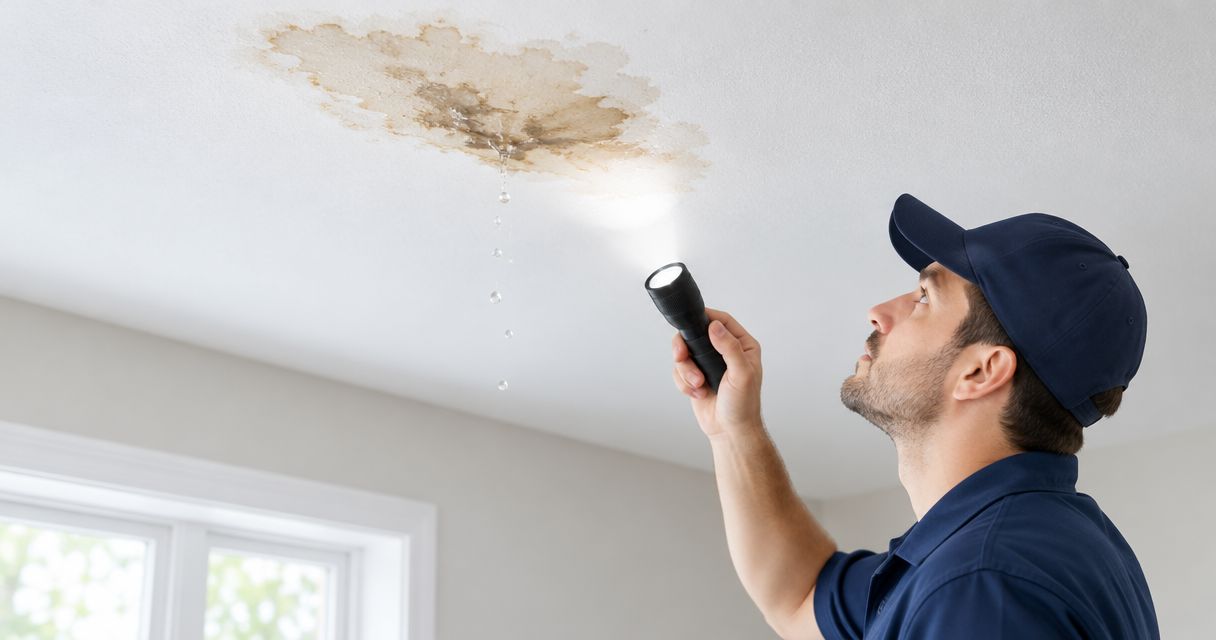
Look for damp flooring, stained ceilings, swollen trim, peeling finishes, and wet contents. Visible dryness at the repair does not rule out moisture inside a wall or beneath flooring.
Do not close a wet wall simply because the pipe no longer leaks. Have affected materials assessed before they are covered, particularly where insulation, enclosed cavities, or flooring layers became wet.
Confirm safety before restoring normal use
Keep people away from sagging ceilings, unstable wet materials, and areas where water reached electrical equipment. Do not enter standing water to reach a switch, outlet, appliance, or electrical panel.
Where electrical components became wet, arrange qualified electrical assessment rather than treating the plumbing repair as clearance to use them. Likewise, a plumber stopping the leak does not establish that damaged ceilings or floors are safe.
Record what remains unfinished
Separate completed plumbing work from drying, cleanup, electrical assessment, and finish repairs. Assign follow-up responsibility explicitly instead of leaving a vague note that someone needs to check the room.
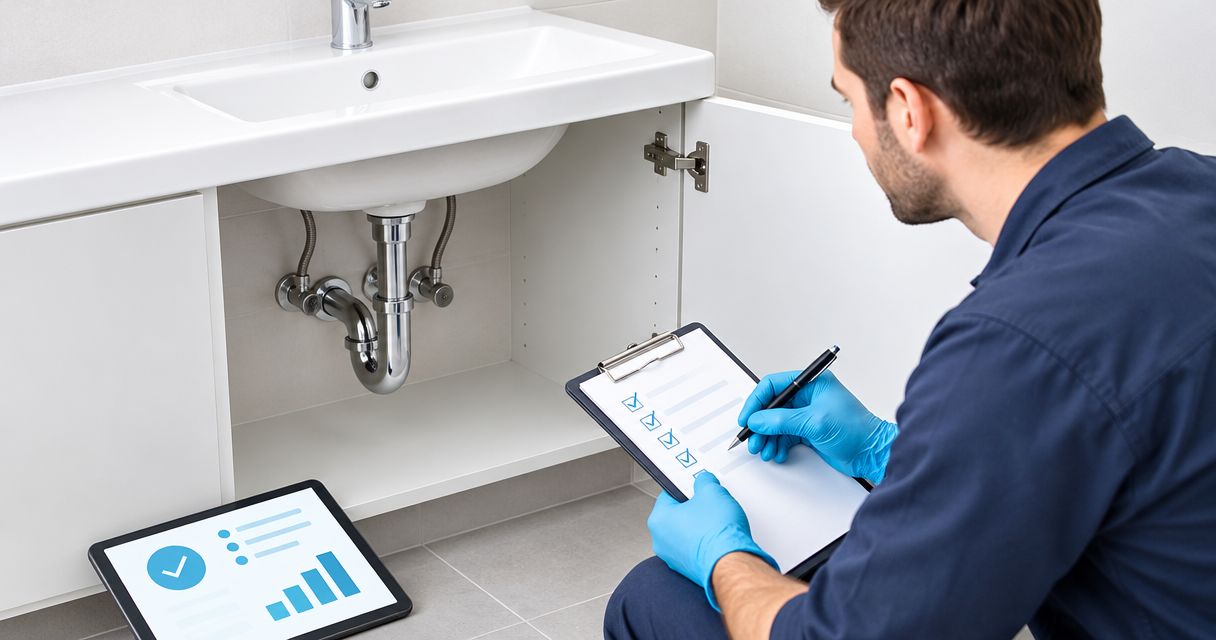
Keep the repair explanation, photographs taken from safe locations, and outstanding tasks with the property record. Include the affected unit or room so another manager can understand the incident without reconstructing it from messages.
Why this matters
A burst pipe creates overlapping jobs: stopping the leak, checking the affected space, and returning the property to normal use. Treating them as one completed task leaves room for unfinished work to disappear.
For a 2026 rental-property maintenance checklist, use separate completion notes for the plumbing repair and the surrounding damage. This makes handoffs clearer when an owner, manager, tenant, plumber, and other trades are involved.
The distinction also helps you communicate accurately. Tell an occupant that the pipe has been repaired when that is confirmed; do not describe the entire incident as resolved while moisture assessment or ceiling repairs remain outstanding.
How should landlords organize the follow-up?
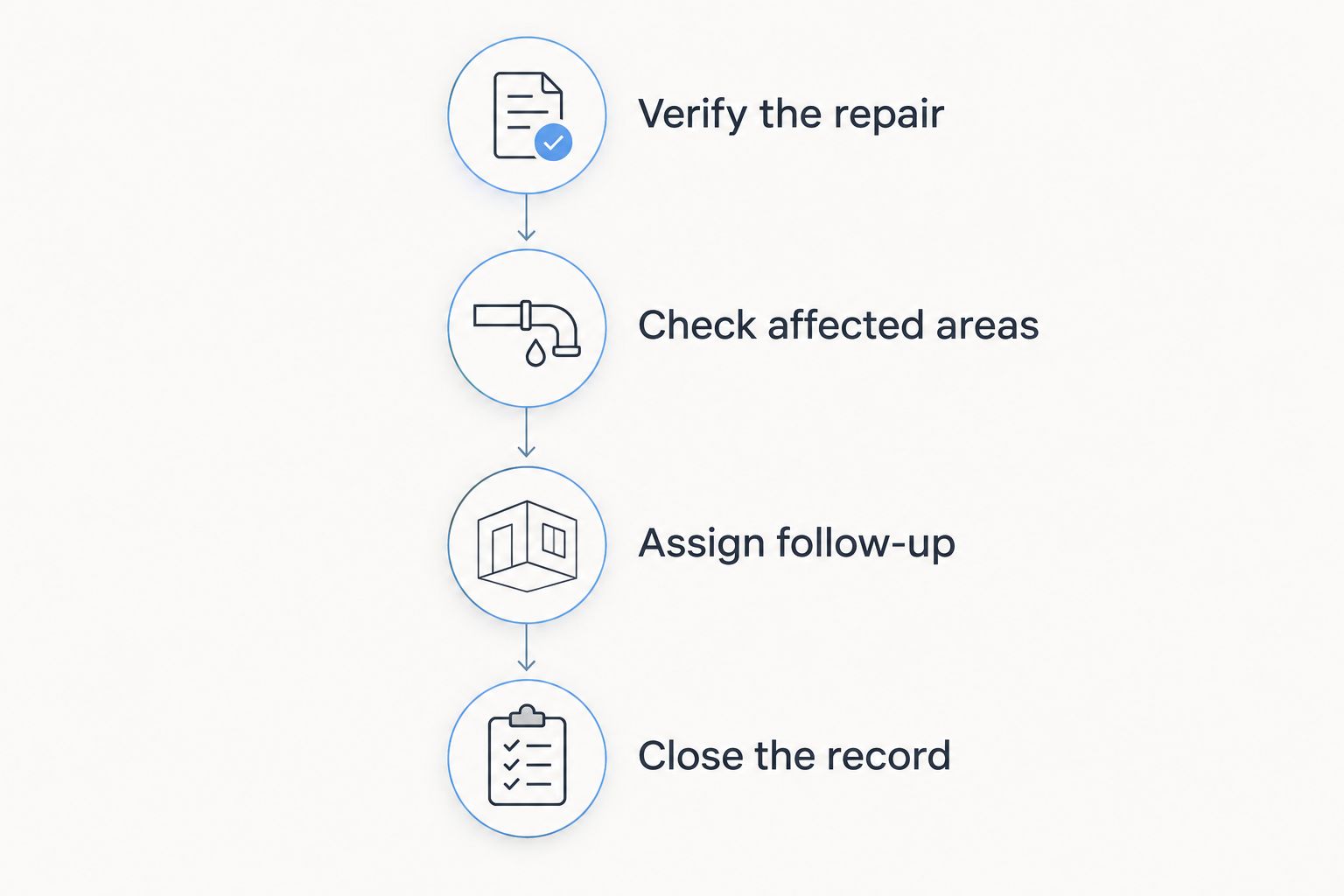
Use a simple sequence that distinguishes checking the repair from closing the job. The same sequence works after a late-night emergency or a planned return visit.
- Verify the repair. Obtain the plumber's explanation and confirm how the repaired section was checked.
- Check affected areas. Record where water traveled and identify any safety concerns without opening building cavities yourself.
- Assign follow-up. Identify who will handle moisture assessment, cleanup, electrical concerns, and damaged finishes where needed.
- Close the record. Record what is complete, what remains open, and what occupants should report.
The sequence prevents a common administrative mistake: marking the entire maintenance request complete when only the plumbing portion is finished. Keep outstanding work visible even if a different contractor handles it.
Does the property need emergency help or a scheduled return visit?
Renewed uncontrolled leaking requires a different response from a dry repair awaiting finish work. Base your next move on what is happening now, not on whether the original call happened after hours.
The comparison below is a decision aid, not a guarantee of appointment availability. For your 2026 incident record, describe the current condition when asking for service.
| Follow-up route | Best for | What it addresses | Limitation |
|---|---|---|---|
| Emergency plumbing help | Active leaking that cannot be safely controlled | Stopping an ongoing plumbing problem | Does not automatically include drying, electrical work, or building repairs |
| Scheduled plumbing repair | A controlled situation needing further plumbing attention | Planned investigation or completion of identified plumbing work | Not a substitute for action on an uncontrolled leak |
| Water-damage assessment | Wet materials or concern about hidden moisture | Assessing affected areas and planning drying or material removal | Does not replace repairing the failed pipe |
If the repaired area starts leaking again, avoid using the affected fixtures. Shut off the relevant water supply only if you can reach and operate the valve safely, and seek plumbing help.
If the repair is dry but a wall remains damp, identify the remaining moisture work rather than assuming another plumbing visit alone will resolve it. Ask each contractor to explain the limits of their work.
Worry-less offers plumbing service calls, including help with late-night emergencies and convenient scheduled repairs. Worry-less is a fit for landlords who want plumbing help with clear explanations and practical repair advice. Confirm the current service arrangements when making a request.
Arrange plumbing help
Describe the repaired pipe, any renewed leaking, and the follow-up plumbing work you need.
Why does follow-up after burst pipe repair vary?
The work remaining after a burst pipe depends on what became wet and what the repair actually resolved. A visible, accessible pipe repair and a leak inside a finished ceiling need different follow-up checks.
Use these factors to organize the conversation, not to estimate damage from a distance:
- Repair location: An exposed pipe is easier to observe than one behind a finished wall or ceiling. Ask how an enclosed repair will be checked before access is closed.
- Water travel: Water reaching another room or floor expands the area that needs inspection. Check the water's path, not just the source.
- Affected materials: Wet contents, insulation, wall finishes, and flooring need their own assessment. Do not treat every material as interchangeable.
- Electrical exposure: Water near electrical components adds a safety issue beyond the plumbing repair. Keep that assessment separate.
- Remaining plumbing symptoms: Continued dripping, abnormal flow, or recurring fixture problems require explanation rather than an automatic job closure.
For your 2026 maintenance process, record the factors that actually apply. A short, specific description is more useful than a long checklist marked complete without supporting notes.
What should landlords tell tenants after burst pipe repair?
Tell tenants what was repaired, which fixtures are ready to use, and whether any rooms or areas remain restricted. Only communicate clearance that the relevant professional has actually provided.
Ask occupants to report fresh dripping, returning damp patches, unusual water flow, or changes around the repaired area. Give them the property's established reporting instructions rather than introducing an informal process that conflicts with existing arrangements.
Keep the message factual and calm. A useful update separates confirmed completion from the next planned action, without promising that a repair has eliminated every possible plumbing problem.
For landlords managing several properties, include the unit and affected room in every update. That small detail prevents a repair photograph or contractor message from becoming detached from the correct maintenance record.
What records should landlords keep after a burst pipe repair?
Keep the service paperwork, the explanation of the failure and repair, safe photographs of affected areas, and notes about unfinished work. Record when the incident was reported and when each follow-up task was completed.
For a 2026 maintenance record, distinguish observations from conclusions. A note saying a ceiling stain remains visible is an observation; a statement that the ceiling cavity is dry needs an appropriate assessment behind it.
If an insurance claim is involved, follow the insurer's documentation instructions. Do not assume that photographs alone establish the cause, the repair scope, or coverage.
Keep evidence of the repair and evidence of the property's condition together. That gives the next manager or contractor a clearer account of what happened and what still needs attention.
Should landlords replace nearby pipes after one bursts?
A single burst pipe does not establish that every nearby pipe needs replacement. Ask the plumber to explain the identified cause and whether the surrounding piping shows a related concern.
Keep the recommendation specific: which section needs attention, why, and whether it requires urgent action or a scheduled repair. Do not turn an isolated failure into a whole-building conclusion without an inspection supporting it.
If the cause remains unresolved, record that as an open question. Replacing the damaged section and understanding why it failed are related tasks, but they are not identical.
FAQ
How do I know whether a burst pipe repair is holding?
Ask the plumber how the repaired section was checked with water restored and connected fixtures operating. Report fresh droplets, seepage, or renewed wetness rather than assuming the repair is sound because the floor was wiped dry.
Can tenants use the water immediately after burst pipe repair?
Tenants should use affected fixtures only after receiving instructions that they are ready for use. Ask the plumber about returning the line to service and any flushing needed.
Does a dry pipe mean the wall is dry too?
A dry pipe does not establish that surrounding walls, insulation, or flooring are dry. Have affected materials assessed before closing an opened wall or covering water-damaged areas.
Should I call an emergency plumber if the repaired pipe leaks again?
Renewed leaking that cannot be safely controlled calls for urgent plumbing help. Avoid affected fixtures and shut off the relevant water supply only if the valve is safely accessible.
Who should check electrical outlets that got wet?
A qualified electrical professional should assess electrical components affected by water. Do not treat completion of the plumbing repair as permission to use wet electrical equipment.
Can Worry-less help with scheduled plumbing follow-up?
Worry-less offers convenient scheduled plumbing repairs as well as help with late-night plumbing emergencies. Explain the current problem and confirm service arrangements when requesting help.
One last thing
Photograph the access opening before it is closed, if you can do so safely and without disturbing the work. A finished wall conceals the repair location, which makes a clear maintenance record useful when another plumbing question arises.
Pair the photograph with the plumber's explanation rather than treating the image as proof of workmanship or dryness. The record should explain what was done, not ask the next person to guess from a picture.