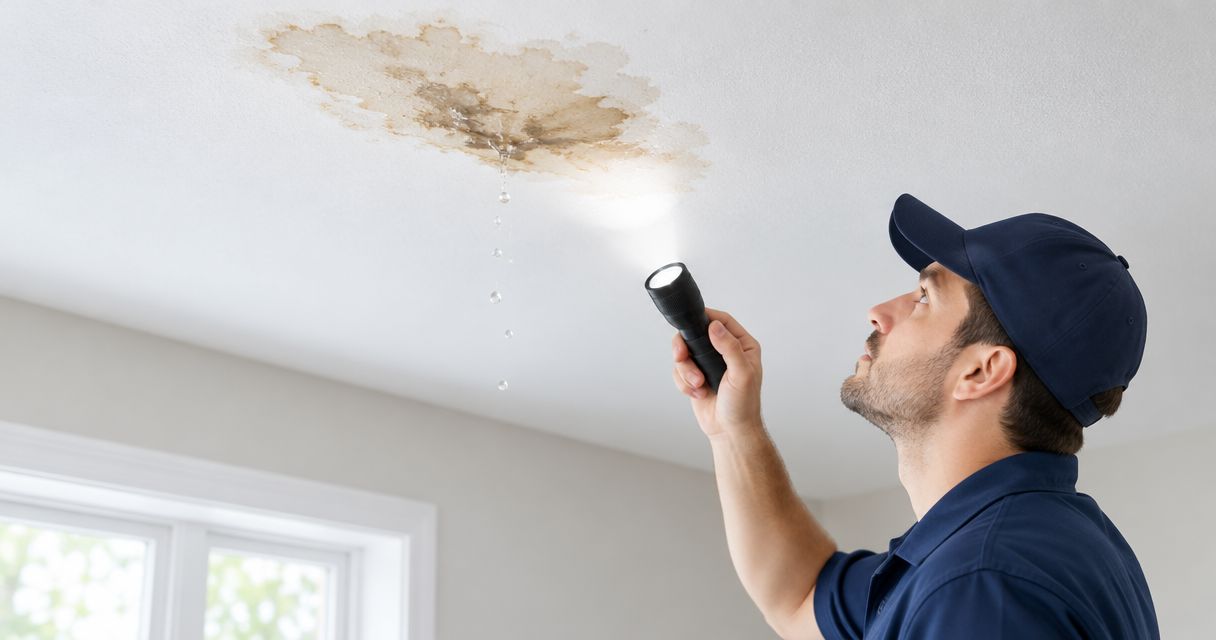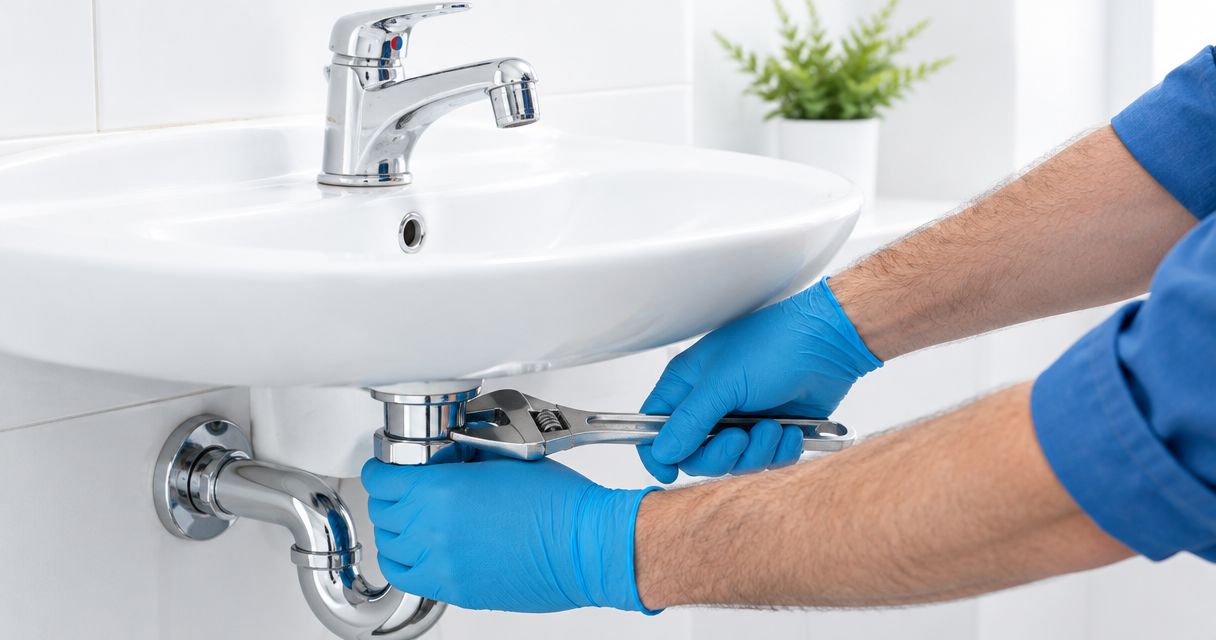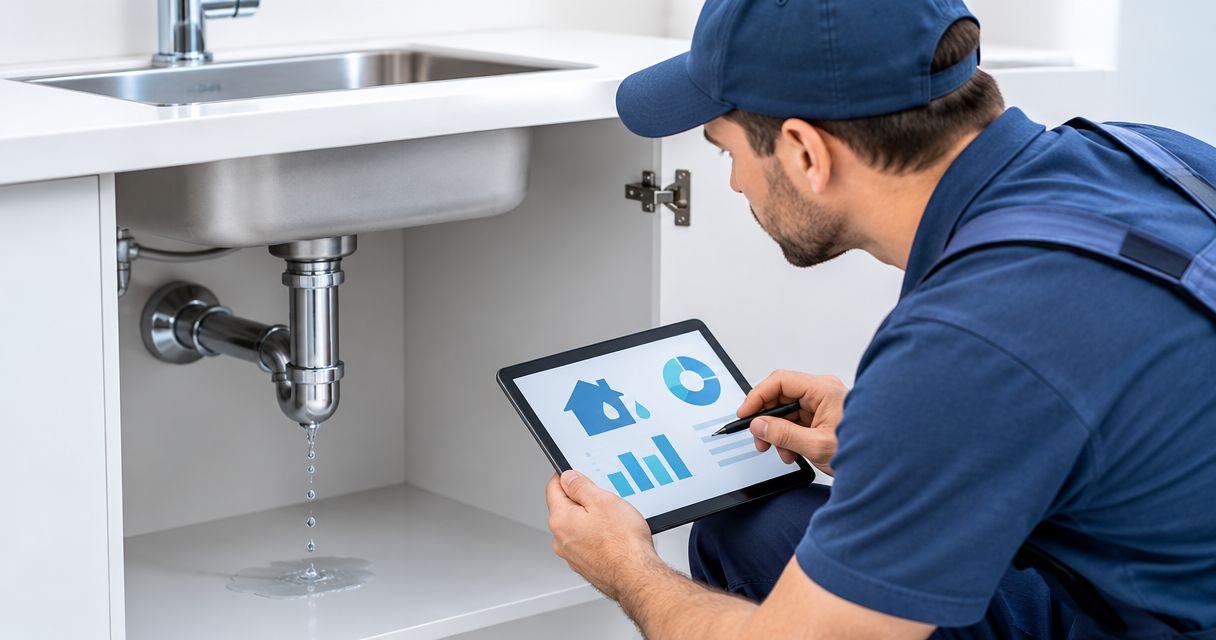
An emergency plumbing estimate should state the problem being investigated, the work proposed, how charges are calculated, what is excluded, and what requires your approval before work continues. To understand your emergency plumber cost, separate the charge for attending and diagnosing the problem from emergency stabilization and any permanent repair, including work left for a scheduled visit.
- Emergency plumber cost should distinguish attendance, diagnosis, stabilization, and permanent repair—not hide them inside an unexplained total.
- Worry-less handles plumbing service calls, including late-night emergencies; confirm the proposed work and current scheduling before approving service.
- Property managers should request a written scope, spending authorization, and a record of any unfinished repair.
- Ask whether after-hours charges, materials, cleanup, and a return visit are included or separate.
What should an emergency plumbing estimate include?
A useful estimate explains both what you are authorizing and where that authorization ends. A total without a scope leaves you unable to tell whether the plumber is quoting a temporary shutoff, a replacement part, or a completed repair.
Use this checklist when reviewing a 2026 emergency plumbing estimate. The exact work depends on the fault, but each applicable charge should have an explanation.
| Estimate item | What to ask for | What needs clarification |
|---|---|---|
| Attendance or callout | The basis for sending someone to the property | Whether attending includes any diagnosis or repair |
| Diagnosis | The inspection or testing proposed | Whether further investigation needs separate approval |
| After-hours work | Any charge connected with the timing of the visit | Whether that charge is separate from labor |
| Labor | The charging method and covered tasks | What happens if the repair takes longer than expected |
| Materials | The parts and supplies included in the proposed work | Whether substitutions or additional parts change the estimate |
| Stabilization | The action intended to stop immediate damage or loss of use | What remains unresolved afterward |
| Permanent repair | The proposed repair and its boundaries | Whether it happens during this visit or later |
| Other charges | Applicable taxes, disposal, or other charges | Whether they are included in the stated total |
| Exclusions | Work the estimate does not cover | Responsibility for access, drying, or surface repairs |
| Approval | The point at which additional permission is required | Who can approve a change and how it is recorded |
For plumbing repairs or late-night emergency help, Worry-less provides service calls. Ask for the current scheduling options and the scope of the proposed visit rather than treating an emergency search result as a promise of immediate attendance.
Why this matters
An emergency estimate is also a decision about the property's next condition. Stopping a leak can leave a fixture unavailable; restoring water service can still leave a wall opening that needs separate attention.
For homeowners, that distinction helps you understand what the repair accomplishes. For landlords and property managers, it also helps you explain the next step to the person occupying the property without promising work that has not been approved.
In 2026, compare written scopes before comparing totals. Two estimates are not equivalent when one covers only immediate stabilization and the other includes the permanent repair.
Separate attendance, diagnosis, and repair
Ask what the initial charge buys before the visit begins. Attendance, investigation, and repair are different activities, even when a plumber combines them into one quoted amount.
A callout charge does not explain whether the plumber will test a suspected leak, remove a fixture, or replace a failed component. The estimate should make that boundary understandable without requiring you to know plumbing terminology.
Use direct questions:
- Does the initial charge cover attendance only, or does it include diagnosis?
- Is any repair labor included?
- What investigation is proposed before a repair can be priced?
- Will you explain any additional charge before proceeding?
- If I decline the repair, what charges remain payable?
When the cause is still uncertain, request a defined investigation rather than an unexplained repair allowance. The useful commitment is not a guessed final diagnosis; it is a clear description of the next authorized task.
Emergency stabilization versus scheduled repair
Emergency stabilization and permanent repair serve different purposes. Stabilization addresses the immediate problem; a scheduled repair addresses the remaining defect when the situation can safely wait.
Neither approach wins automatically. Choose the scope that addresses the current risk without disguising unfinished work as a completed repair.
| Approach | Best for | Practical advantage | Limitation to resolve |
|---|---|---|---|
| Emergency stabilization | An active problem that needs immediate control | Focuses the visit on stopping the immediate issue | The fixture or affected supply can remain out of use |
| Permanent repair during the visit | A diagnosed fault with an agreed repair scope | Addresses the underlying defect during the same visit | Additional findings can require a revised scope |
| Scheduled repair | A controlled problem that can safely wait | Allows a separate repair plan and coordinated access | The defect remains until the repair is completed |
What an emergency stabilization estimate should say
Ask what will be shut off, isolated, disconnected, or temporarily secured. The written scope should also say what you must not use afterward and whether the affected area needs further attention.
A temporary measure is useful when it achieves a defined purpose. Its limitation is equally important: stopping visible water does not, by itself, explain whether the failed component has been repaired.
What a scheduled repair estimate should say
A scheduled estimate should identify the remaining defect and the proposed permanent work. Ask whether returning to finish that work creates another attendance charge and whether the original investigation remains part of the repair plan.
For a 2026 rental-property repair, keep the emergency visit record and scheduled scope together. That makes it easier to distinguish completed work from a task still awaiting approval or access coordination.
Why emergency plumber cost varies
Emergency plumber cost depends on the work and the charging terms, not simply on the label attached to the call. Ask the plumber to explain which of these factors applies to your estimate:
- Timing of attendance: Confirm whether an after-hours or weekend charge applies and what it covers.
- Diagnostic uncertainty: A visible drip identifies where water appears, not necessarily the source or full repair scope.
- Access to the defect: Ask whether reaching the pipe or component requires removal of fixtures or opening a surface.
- Repair scope: Isolating a failed supply and replacing the failed section are different tasks.
- Materials and equipment: Confirm which parts and any task-specific equipment are included.
- Follow-up work: Clarify whether another visit, cleanup, or reinstatement sits outside the proposed repair.
These are questions to resolve, not reasons to accept an unexplained charge. Every additional charge should connect to a stated task, material, or agreed charging term.
How do I approve emergency plumbing work without an open-ended bill?
Approve a defined task and a clear stopping point. If the fault cannot be fully diagnosed yet, authorize the investigation separately from work that depends on its findings.
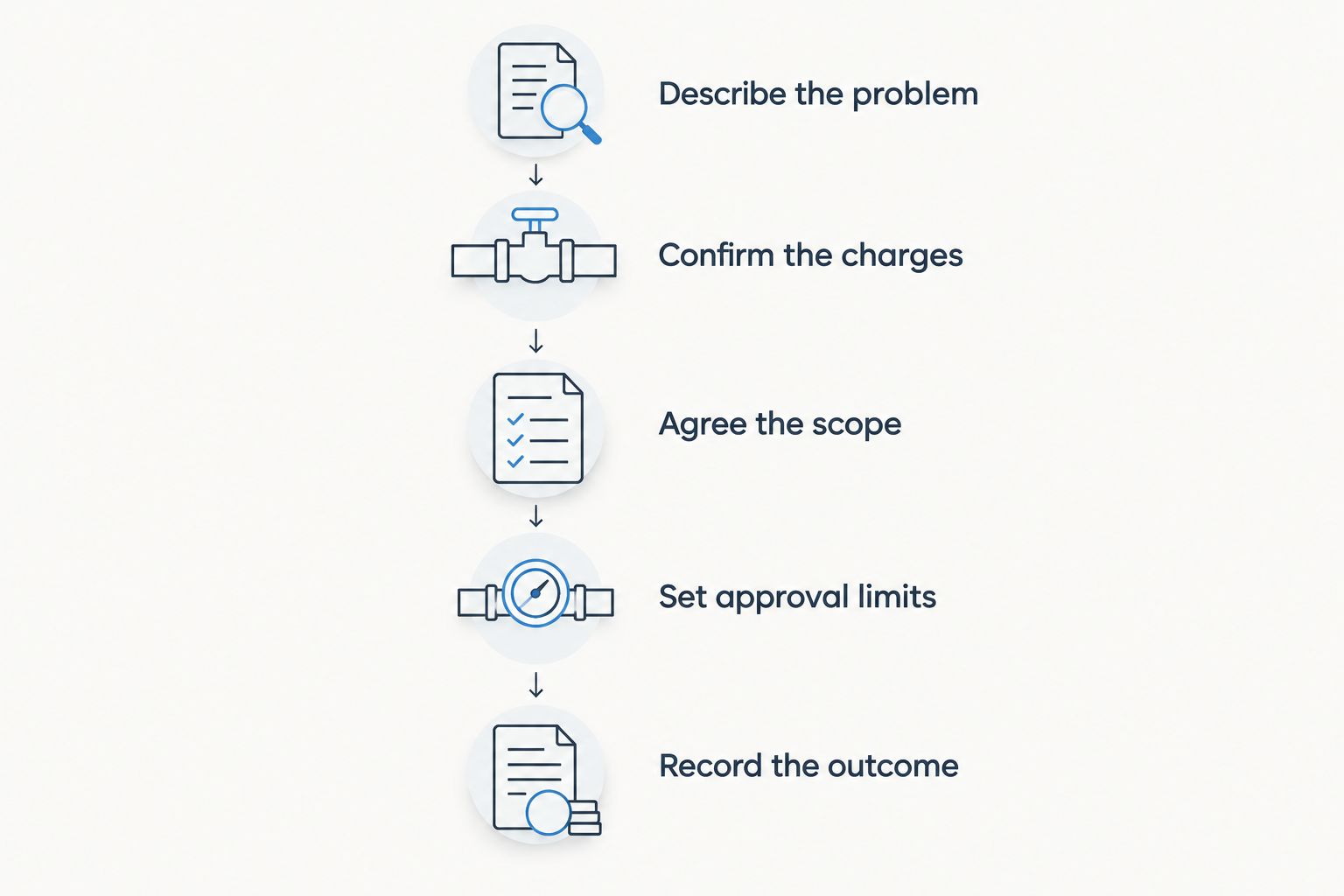
Use this sequence during a 2026 emergency call:
- Describe the problem. Explain what you can see, where it is happening, and whether the affected fixture is still in use. Separate observations from guesses about the cause.
- Confirm the charges. Ask what attendance and initial diagnosis include, and whether timing adds a separate charge.
- Agree the scope. Establish whether the proposed work is investigation, stabilization, or permanent repair.
- Set approval limits. State who can approve extra work and require contact before the scope changes.
- Record the outcome. Request a written account of completed work, remaining restrictions, and the next repair step.
This sequence gives you a decision point before the work expands. It does not require a plumber to predict a concealed fault before inspecting it.
Keep the estimate and any approved changes in the same message thread or property record. A verbal explanation helps during the call; a written summary preserves what was agreed when someone else handles the follow-up.
What should landlords and property managers add to the estimate?
A rental-property estimate should identify the property, the affected fixture or area, and the person authorized to approve work. Explain the access arrangement that actually applies to the property; do not assume the contractor has standing permission to enter.
Give the plumber the information needed to coordinate the visit without turning an urgent call into an unrestricted instruction. The work record should answer:
- What problem was reported, and what did the plumber find?
- Which task was authorized, and by whom?
- What work was completed during the visit?
- Is any fixture or supply still unavailable?
- What repair or separate trade work remains?
- Who needs to receive the estimate or completion record?
A clear handoff matters as much as a clear estimate. If one person handles the late-night call and another coordinates scheduled maintenance, both need the same account of the property's condition.
Worry-less is best for homeowners and property managers seeking plumbing service calls, including late-night emergency help. Ask for clear explanations and practical repair advice, then confirm the scope and scheduling that apply to your property.
Does an emergency plumbing estimate include water-damage repairs?
An emergency plumbing estimate includes water-damage repairs only when the written scope expressly includes them. Fixing a pipe does not automatically include drying materials, repairing a ceiling, or replacing flooring.
Ask who is responsible for work outside the plumbing repair. If access requires an opening, confirm whether making that opening and restoring the surface are included, excluded, or subject to a separate estimate.
Can I schedule the permanent repair after an emergency visit?
A scheduled permanent repair is an option when the immediate problem has been controlled and the plumber explains the restrictions that remain. Confirm what must stay shut off or unused and what requires further attention before the return visit.
Ask for the remaining work in writing. Do not treat the end of an emergency visit as confirmation that every affected fixture is ready for normal use.
FAQ
What should an emergency plumbing estimate include?
An emergency plumbing estimate should include the proposed scope, charging method, applicable attendance and after-hours charges, materials, exclusions, and approval requirements. It should distinguish immediate stabilization from any permanent repair left for later.
How can I compare emergency plumber cost between quotes?
Compare emergency plumber cost using matching scopes, not totals alone. Check whether each estimate includes attendance, diagnosis, materials, permanent repair, and any return visit.
Should I approve plumbing work before the cause is confirmed?
Approve a defined investigation when the cause is unconfirmed, rather than an unrestricted repair. Ask the plumber to explain the findings and seek approval before expanding the work.
Is an after-hours charge the same as repair labor?
An after-hours charge and repair labor are not automatically the same charge. Ask whether they are separate, combined, or calculated under another stated charging method.
What should a landlord ask for after an emergency plumbing visit?
A landlord should request a written account of the fault, completed work, remaining restrictions, and any follow-up repair. Keep that record with the estimate and approved changes so the next coordinator has the same information.
Does a plumbing estimate include repairing walls or floors?
A plumbing estimate includes wall or floor repairs only when the written scope says so. Ask separately about access openings, drying, cleanup, and surface restoration.
Does finding a same-day plumber mean attendance is guaranteed?
Finding a same-day plumber does not guarantee attendance or a response time. Confirm current scheduling directly and ask what the proposed visit covers before authorizing work.
One last thing
Ask for the completion record to use the same scope language as the estimate. If the estimate says stabilization, the final record should explain what was stabilized and what remains—not leave you to infer that the entire problem is resolved.
For your 2026 property records, keep the original estimate, approved changes, and completion summary together. When contacting Worry-less about a follow-up repair, that information helps you describe the next task clearly.