Ask an after hours plumber whether they serve the property, when they can arrive, how to limit damage safely, what work they propose, what charges apply, and how they will document the repair. Before authorizing work, separate the immediate emergency from repairs that can wait, and establish who can approve changes to the scope.
- An after hours plumber should confirm the property location, arrival estimate, immediate precautions, proposed work and charges before dispatch.
- For rental properties, distinguish emergency plumbing repair from scheduled follow-up before authorizing work.
- Worry-less suits property managers seeking late-night plumbing help and convenient scheduled repairs.
- Request a written repair summary so the next maintenance decision starts with facts, not another tenant description.
What should a property manager ask an after-hours plumber?
Use these 6 questions as your 2026 call checklist. Keep the answers in the same maintenance record as the tenant’s report; the plumbing repair guide for Cincinnati property managers provides a related reference for repair coordination.
1. Can you serve this property, and what arrival estimate can you confirm?
Give the full property address before describing the repair in detail. Confirm that the plumber serves that location and can consider the call at that time; an after-hours search result does not establish either point.
Ask for the current arrival estimate and how you will hear about changes. Treat the answer as an estimate unless the plumber explicitly commits otherwise. Tell the tenant what was actually confirmed, rather than turning an estimated arrival into a promise.
For a Cincinnati tri-state property, verify the address individually. Do not assume a plumber covers every surrounding community because their website mentions Cincinnati.
2. What should the occupant do safely before you arrive?
Describe whether water is still flowing, where it is appearing, and whether the affected fixture remains in use. Ask whether the occupant should stop using that fixture or close an accessible, clearly identified water valve.
Do not ask a tenant to enter standing water near electrical equipment, open walls, or force a stuck valve. If water is near outlets, appliances or electrical panels, keep people away and explain that hazard when requesting help.
Ask what to do if the situation changes before arrival. A useful answer gives the occupant a clear limit, not an open-ended instruction to troubleshoot plumbing.
3. What needs attention tonight, and what can be scheduled?
Ask the plumber to distinguish stopping the immediate problem from completing the permanent repair. A temporary measure is not the same as a finished job, even when it stops visible water.
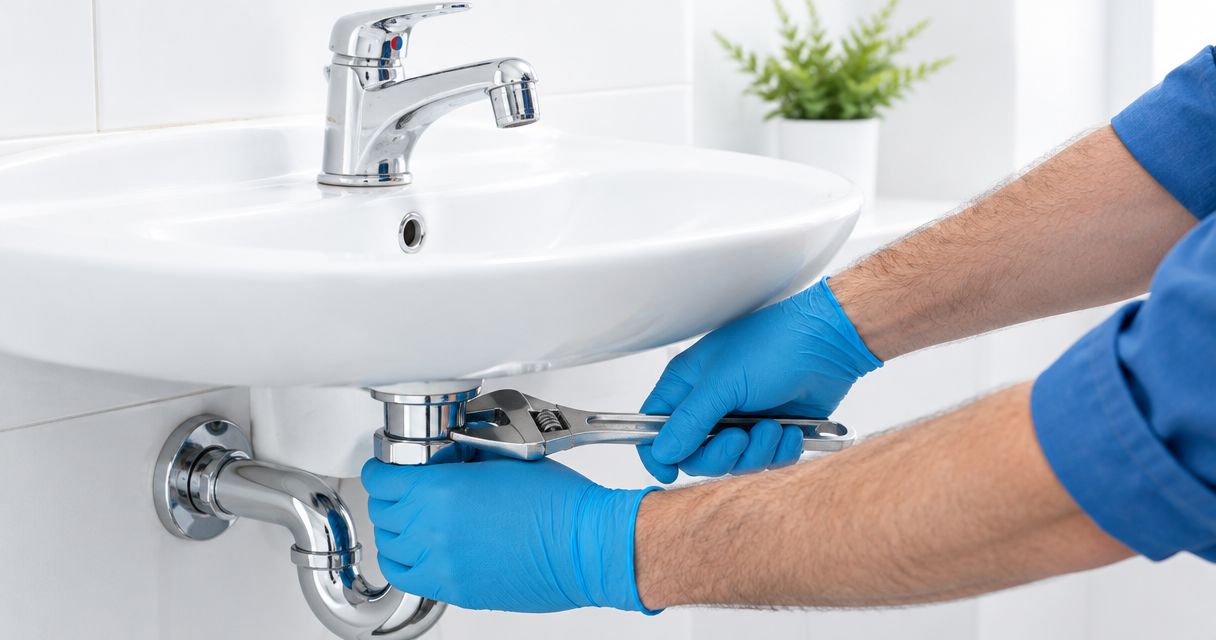
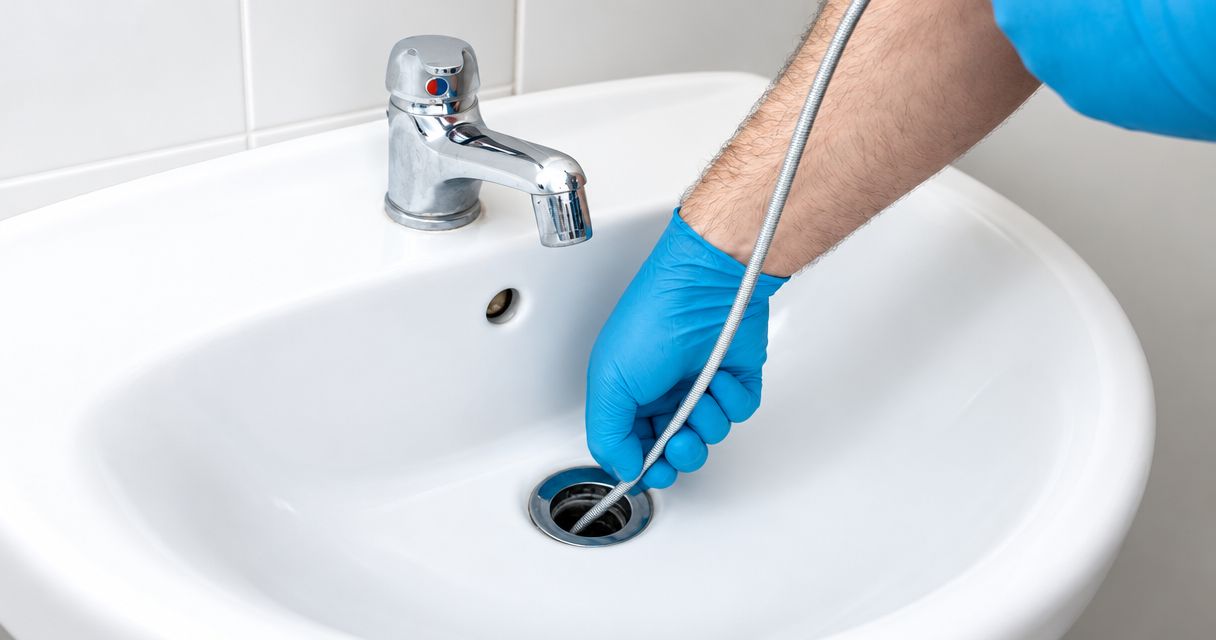
For a leaking pipe, ask whether the proposed work repairs the failed section or only isolates it. For a blocked drain, ask whether the work addresses the blockage and what further investigation, if any, is recommended.
Authorize the immediate need without losing track of the remaining work. Scheduled repairs deserve a separate scope, particularly when the first visit leaves a fixture unavailable.
4. What charges apply, and what does the proposed work include?
Before dispatch, ask how the visit is charged, whether after-hours or diagnostic charges apply, and when a repair estimate becomes available. Clarify whether the estimate includes materials and whether any diagnostic charge is separate from the repair.
Ask what happens if the plumber finds a different problem after inspection. Establish that changed work needs your approval before it begins, subject to the authorization you actually give.
Do not treat a telephone description as a confirmed diagnosis. Ask the plumber to distinguish the charge for investigating the problem from the charge for the proposed repair.
5. Who will approve the work and coordinate access?
Name the person authorized to approve work and provide a reliable callback number. Confirm whether you, the owner or another designated contact will handle scope changes.
Coordinate access under the lease, applicable requirements and your existing property procedures. Do not assume the plumbing company has tenant-access arrangements, key access or an ongoing account process.
Tell the plumber about relevant access limitations before dispatch. A locked mechanical room or an unavailable occupant is a coordination issue to resolve, not a detail to leave until arrival.
6. What repair record and follow-up advice will I receive?
Ask whether the plumber can provide a written description of the finding, work completed and remaining recommendations. Request photographs when appropriate, without assuming that photo documentation is included.
Ask what the occupant can use afterward and what symptoms require another call. If the repair is temporary, request a clear explanation of its limits and the next recommended step.
Keep the repair summary with the original report in your 2026 maintenance file. That record helps the next person distinguish a completed repair from an unresolved maintenance item.
Why this matters
An emergency call involves 2 separate decisions: how to control the immediate problem and what work to approve. Keeping those decisions distinct prevents a temporary fix from being recorded as a completed repair.
For landlords and property managers, communication matters alongside the plumbing work. The tenant needs safe instructions, the plumber needs an accurate description, and the approving contact needs a defined scope.
A useful call produces a clear handoff between those people. It does not require the tenant to diagnose the fault or the manager to approve unspecified work.
Should you request emergency work or schedule the repair?
For your 2026 maintenance checklist, base urgency on the current conditions, not simply the time of day. Tell the plumber whether the problem is active, whether it can be safely isolated, and which facilities are unavailable.
| Approach | Best for | Benefit | Limitation |
|---|---|---|---|
| After-hours plumbing assessment | Active leaks, sewage backing up, or situations you cannot safely control | Addresses the immediate problem without waiting for a scheduled visit | The first visit might stabilize the issue rather than complete every repair |
| Scheduled plumbing repair | Safely isolated faults and non-urgent fixture problems | Lets you coordinate access and discuss the remaining work | Waiting is inappropriate when conditions are worsening or the property cannot be used safely |
A controlled leak and a completed repair are different outcomes. If closing a valve stops the leak, explain which fixture or area has lost water and ask whether waiting is appropriate.
A contained faucet leak does not automatically justify an emergency call. Conversely, water spreading beyond the fixture, wastewater coming back into the property, or an uncertain source requires prompt assessment rather than a routine booking assumption.
Do not promise tenants that every problem will be fixed during the first visit. Ask the plumber to explain the likely scope after inspection and communicate only what has been confirmed.
Why after-hours plumbing decisions vary
The right next step depends on the conditions at the property and the plumber’s assessment. These factors belong in the initial call:
- Active water flow: Explain whether the leak continues or has stopped after safe isolation.
- Wastewater exposure: Report sewage or drain water backing up, rather than describing every incident as a simple clog.
- Loss of essential facilities: State which toilets, sinks or water supplies are unavailable, especially when occupants have no usable alternative.
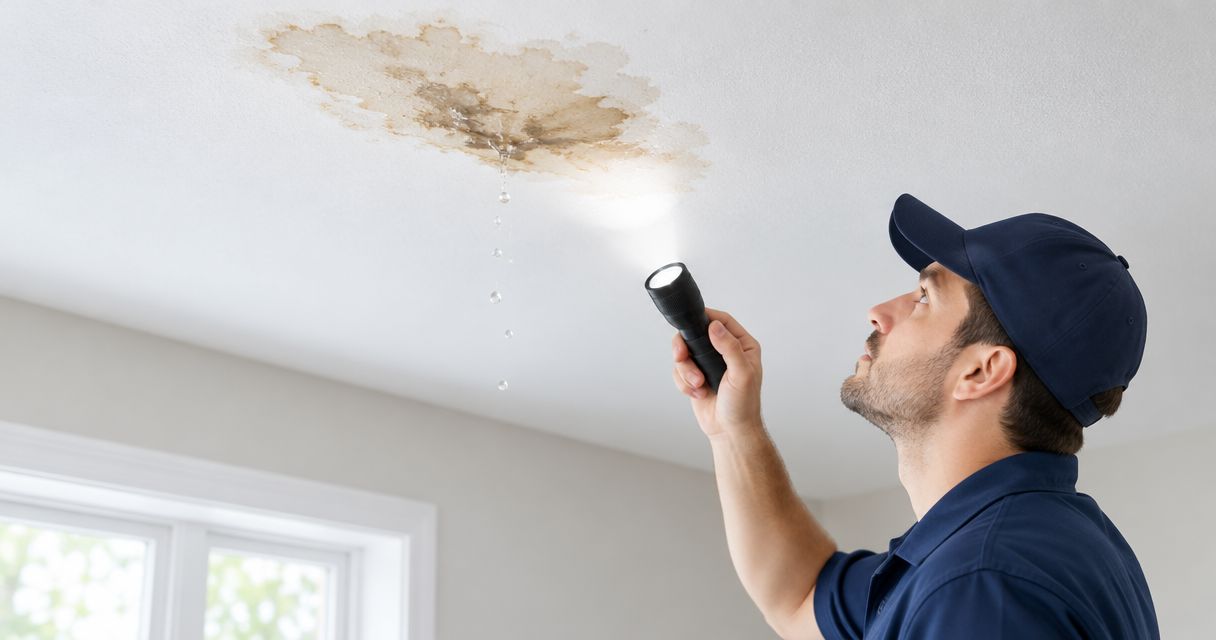
- Access to the fault: Explain whether water is visible at an exposed pipe or appearing through a ceiling, wall or floor.
- Uncertain source: Separate what the occupant observed from what anyone suspects caused it.
- Repair status: Tell the plumber whether another repair or temporary measure has already been attempted.
These details support triage; they do not establish a remote diagnosis. Avoid labeling a stain as a burst pipe or a slow drain as a sewer failure without an inspection.
How should you coordinate the tenant, plumber and approving contact?
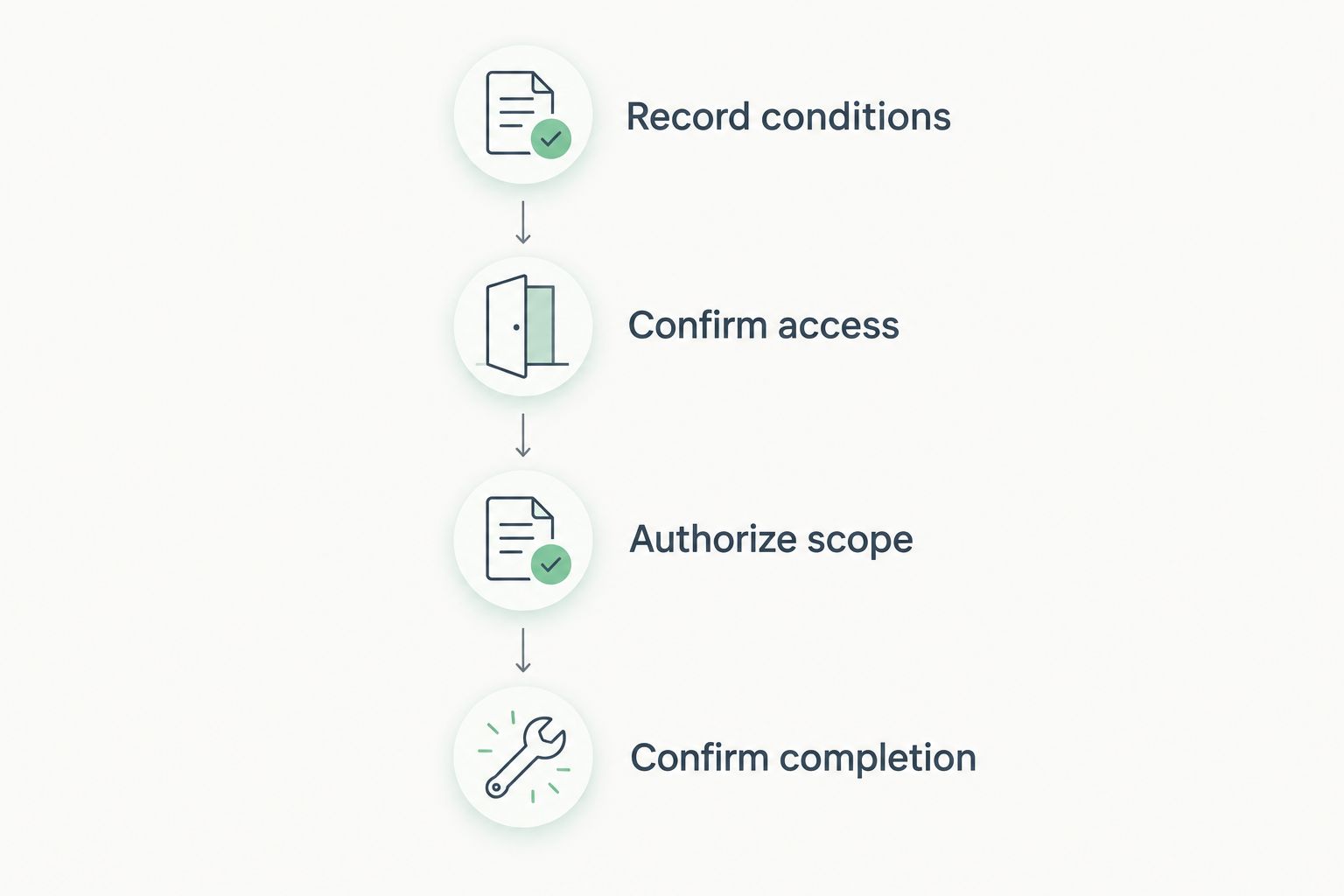
Use a short handoff sequence instead of forwarding a long message thread. Keep observations, decisions and completion notes together so each person receives the information needed for their role.
- Record conditions: Note the affected room, visible symptoms, whether water is still moving and when the occupant noticed it.
- Confirm access: Establish who will admit the plumber and flag any relevant access restrictions.
- Authorize scope: Identify the approving contact and what work has actually been authorized.
- Confirm completion: Record what was repaired, what remains unavailable and what follow-up is recommended.
Ask the tenant for 3 details when photographs are safe and practical: an overview of the affected area, a closer view of the visible problem, and a description of whether it is changing. Do not delay urgent help to collect pictures, and do not ask anyone to approach a hazard.
For your 2026 work-order template, separate reported symptoms from confirmed findings. Water beneath a sink is an observation; a failed supply connection is a diagnosis to record only after confirmation.
What should you ask if the leak has stopped?
Ask whether the source is understood, whether the affected fixture can be used, and whether the problem needs an inspection despite appearing inactive. A leak stopping does not establish that the fault has been repaired.
Explain what changed immediately before it stopped, such as closing a valve or stopping fixture use. That information is more useful than simply telling the plumber the emergency is over.
Can an after-hours visit replace a scheduled repair?
An after-hours visit replaces scheduled work only when the necessary repair is completed and the plumber confirms what is ready for use. If the visit only isolates the problem, keep the remaining repair open.
Ask for the next step before closing the work order. Record any affected fixture that must remain unused and communicate that restriction to the occupant.
What should you confirm before choosing a plumbing service?
Worry-less is suited to property managers seeking late-night plumbing help and scheduled repairs. Its stated services include late-night emergency calls, convenient scheduled repairs, and clear explanations with practical repair advice.
When contacting Worry-less, use the same questions about the address, arrival estimate, charges, authorization and repair scope. A late-night service offering does not guarantee an immediate opening or a particular arrival time.
For non-urgent work, explain the fault and your coordination needs just as clearly. Scheduled faucet, toilet and leaking-pipe repairs still need an agreed scope and a completion record.
FAQ
What should I ask an after hours plumber before booking?
Ask whether the plumber serves the address, what arrival estimate is available, what immediate precautions to take, how charges work and who must approve repairs. Confirm what documentation and follow-up advice you can expect.
Should I authorize a permanent repair over the phone?
Authorize only a scope you understand; a telephone description does not confirm the cause of the problem. Ask the plumber to explain findings and obtain approval for changed work after inspection.
What should I tell a tenant while waiting for a plumber?
Give the tenant the confirmed arrival estimate and the plumber’s safe instructions for the reported problem. Tell the tenant to stay away from water near electrical equipment and to report worsening conditions.
Does an after-hours plumbing service guarantee same-day arrival?
An after-hours service description does not guarantee same-day arrival. Confirm current availability and an arrival estimate for the specific property before making commitments to occupants.
Can Worry-less help with scheduled plumbing repairs too?
Worry-less offers convenient scheduled plumbing repairs as well as help with late-night emergencies. Confirm the address, repair needs and scheduling options when making the request.
What should a property manager keep in a 2026 plumbing maintenance record?
Keep the initial symptoms, confirmed findings, authorized work, completion summary and any remaining recommendations in the 2026 maintenance record. Include relevant photographs when available and note any fixture that must remain unused.
Should a tenant keep using a blocked drain?
Stop using the affected drain when water is backing up and ask the plumber what other fixtures should remain unused. Explain whether the problem affects only that fixture or appears elsewhere in the property.
One last thing
Ask what remains unresolved before you ask whether the job is finished. That question separates stopping damage, restoring fixture use and completing a permanent repair without assuming they happened together.
Close the maintenance item only when the completion record matches the actual outcome. If follow-up is needed, assign the next action rather than leaving it buried in an invoice.