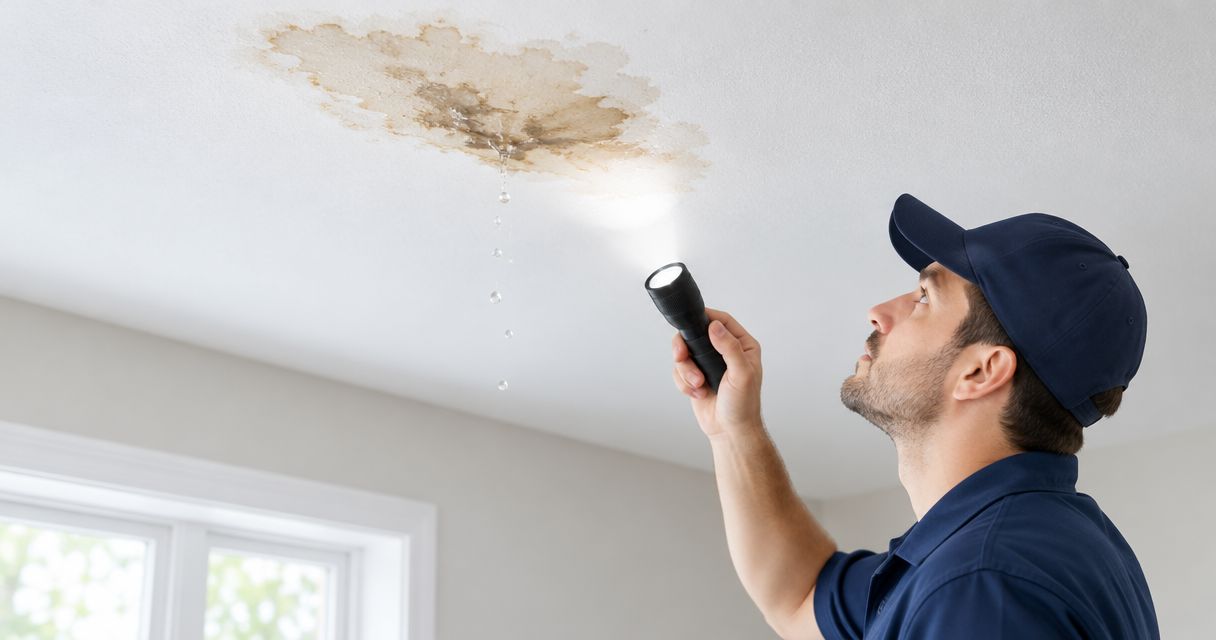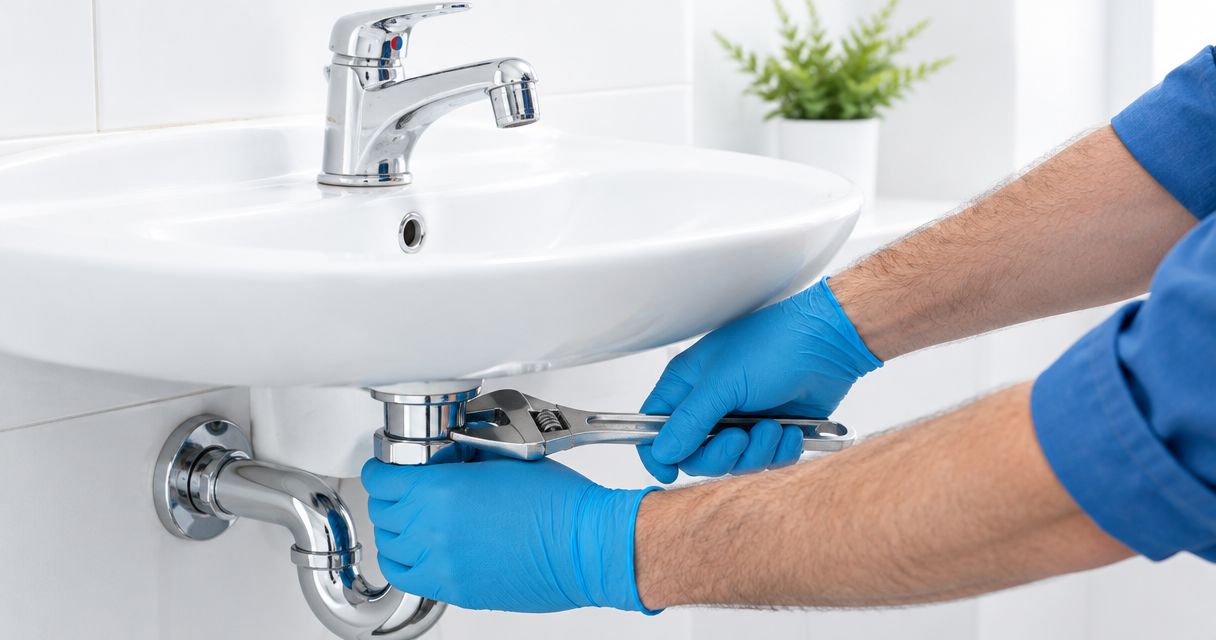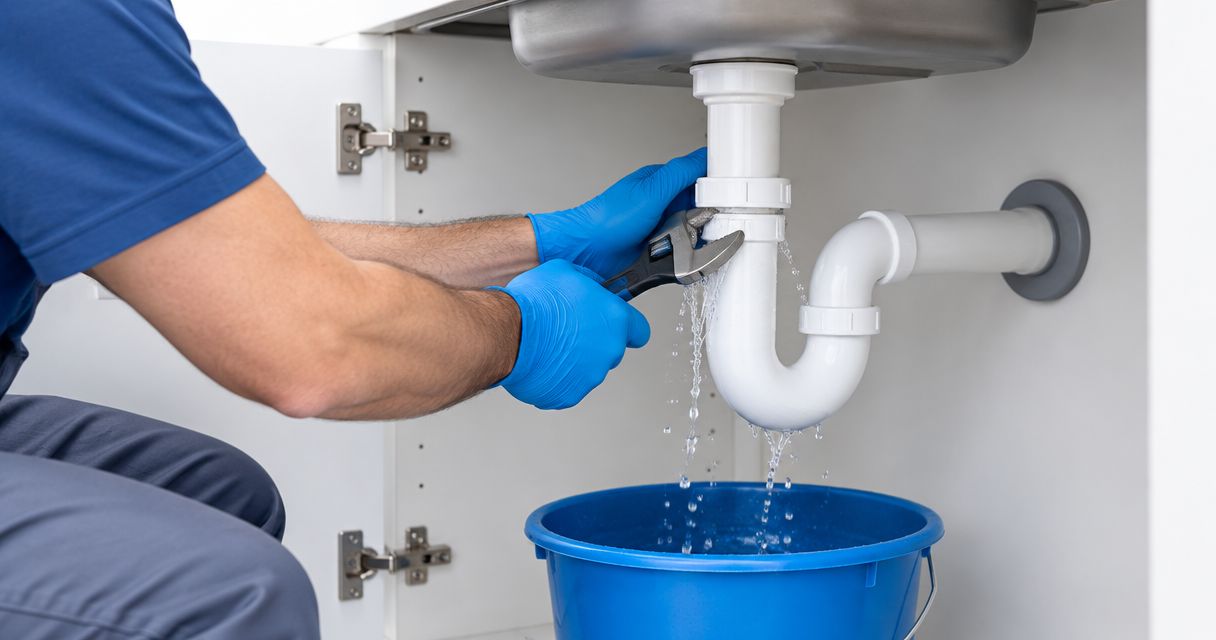
If a rental property's water shutoff will not close, stop forcing the handle, keep people away from water near electrical equipment, and arrange emergency water leak repair if water is still escaping. Use an accessible upstream shutoff only when you know what it controls and are authorized to operate it. A closed-looking handle does not prove the supply is isolated: check whether the leak actually stops.
- Emergency water leak repair starts with safe isolation; do not force a stuck water shutoff.
- Worry-less handles plumbing service calls, including late-night emergencies; confirm availability when requesting help.
- Landlords should identify affected units before operating a shared water shutoff.
- A leaking pipe and a failed shutoff both need attention, even after water stops escaping.
What if a rental property's water shutoff will not close?
Treat the failed shutoff and the water leak as separate repair needs. Stopping the immediate leak does not restore a valve that cannot reliably isolate the supply. For Cincinnati tri-state landlords arranging help, Worry-less handles plumbing service calls, including late-night emergencies.
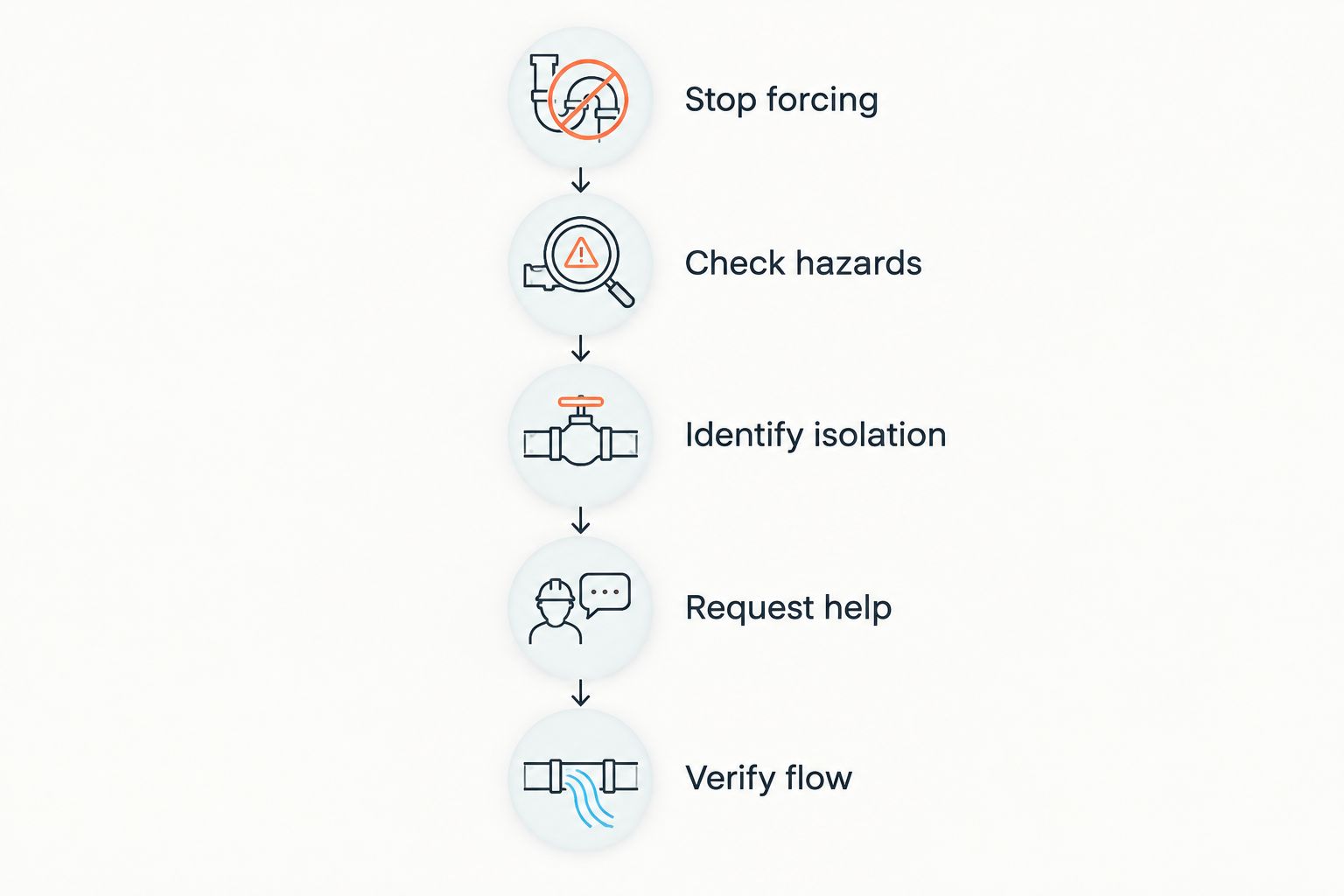
Follow this sequence when a valve resists turning or fails to stop an active leak:
- Stop forcing. Do not add a wrench, extension, or extra leverage to a stuck handle. Excess force can damage the handle, valve, or connected pipe.
- Check hazards. Keep occupants away from standing water near outlets, appliances, electrical panels, or exposed wiring. Do not enter water to reach a valve or breaker.
- Identify isolation. Look for a known, accessible upstream shutoff. Confirm whether it serves one fixture, one unit, or multiple units before operating it.
- Request help. Describe the active leak, failed valve, affected area, and any shared supply. If no safe isolation point is available, explain that immediately.
- Verify flow. Watch the original leak from a safe position. Water already in the pipes can continue draining after isolation, so report whether the flow decreases or remains steady.
Why this matters
A shutoff failure removes a way to limit damage during a plumbing problem. At a rental property, the next available valve can also interrupt water to people who have no connection to the original leak. You need both a safe repair decision and a clear picture of who loses service.
For your 2026 maintenance records, distinguish a valve that is difficult to move from one that moves but does not stop water. Those observations help explain the problem without asking a tenant to diagnose the plumbing. Neither condition belongs on a list of completed repairs until the isolation function has been checked.
Which shutoff should you use instead?
Use a known upstream valve, not an unidentified valve that happens to be nearby. Pipe location alone does not establish what a valve serves, especially where several rental units share building services.
| Isolation option | Best for | Benefit | Limitation or caution |
|---|---|---|---|
| Fixture shutoff | A leak downstream of that fixture's supply valve | Limits interruption to the affected fixture when it works | Does not stop a leak upstream of the valve |
| Unit shutoff | A leak on a confirmed individual-unit supply | Can isolate the unit without shutting down the whole property | Its coverage must be known; labels can be wrong |
| Building main | A supply leak requiring broader isolation | Stops incoming water to the downstream building supply | Can interrupt every unit or business it serves |
| Utility-controlled shutoff | A problem requiring utility-side isolation | Gives authorized personnel another isolation point | Do not operate utility equipment yourself |
A fixture shutoff is not automatically the safest choice simply because it affects fewer people. If its body is leaking, its handle is damaged, or the connected pipe moves when you touch it, stop attempting to operate it. Explain that condition when requesting repair.
For a 2026 rental maintenance plan, record confirmed isolation points by the fixtures or units they actually serve. Treat an old handwritten label as a clue, not proof. Have uncertain coverage checked during planned plumbing work rather than discovering it during another leak.
When the handle will not move
A handle that will not move is not an invitation to apply more force. Corrosion, wear, or a mechanical problem can prevent operation, but the symptom alone does not identify the cause. Do not dismantle a pressurized valve to investigate.
If the valve and surrounding area are dry and there is no active leak, arrange a scheduled repair. A failed isolation point still needs attention, but a stuck valve by itself does not mean water is currently escaping. Tell the plumber whether the valve serves a toilet, faucet, appliance connection, unit, or building.
If a leak is active downstream, look for safe upstream isolation and request help. Do not ask a tenant to keep trying the same stuck handle while water spreads. The priority is controlling the supply without creating another failure.
When the handle moves but water keeps flowing
A moving handle does not confirm that the valve has closed internally. Water can continue because the valve is not sealing, the wrong supply was isolated, or retained water is draining from the pipe. Observe the leak rather than relying on handle position alone.
Report whether the flow stays steady, slows, or stops. That description is more useful than saying the valve is definitely broken internally. Avoid repeatedly opening and closing a questionable valve to test it during an active leak.
Do not remove a supply connector or open a pipe to prove that isolation worked. A plumber should establish a safe isolated condition before dismantling the affected connection. A valve that only reduces the leak has not provided dependable isolation.
When turning the valve creates another leak
If water appears around the valve handle, body, or adjoining connection while you turn it, stop. Do not assume another turn will fix the problem. Report both the original leak and the new leakage so the repair request describes the full situation.
Use an accessible upstream shutoff only if its purpose is clear and you can reach it safely. Do not tighten unfamiliar valve components, loosen fittings, or attempt valve replacement while the supply remains pressurized. A bucket can collect limited drips where safe, but it does not control the water supply.
For occupied rentals, keep people away from the affected area without creating a trip hazard or blocking an exit. If water reaches electrical equipment, stop treating the situation as a routine cleanup task. Keep clear and request appropriate emergency assistance.
Why the next step varies
The correct response depends on the observed conditions, not simply on whether the call happens at night. These factors determine whether you need immediate isolation, urgent attendance, or a scheduled valve repair:
- Active water escape: A dry, stuck valve allows a different response from a failed valve beside a spreading leak.
- Safe access: Standing water, electrical equipment, or an unsafe route can make an otherwise useful shutoff inaccessible.
- Valve coverage: A fixture valve affects a different area from a shared building main.
- Known ownership: Utility-controlled equipment requires the utility or other authorized personnel, not improvised operation.
- Valve condition: Leakage at the valve or movement in connected piping is a reason to stop handling it.
- Available isolation: A confirmed upstream valve changes what can be safely controlled before repair begins.
Keep these observations in your 2026 maintenance log. Record what happened without turning observations into an unsupported diagnosis. For example, note that the handle moved while the leak continued, rather than declaring a particular internal component defective.
How should a landlord coordinate the repair?
Give the plumber enough information to understand both the water problem and the property impact. You do not need a technical diagnosis. Clear observations and accurate contact details are more useful than guesses about replacement parts.
Prepare a short repair brief:
- The property address and exact location of the leak.
- Whether water is still escaping and where it is spreading.
- Which shutoff was attempted and what happened.
- Whether a confirmed upstream valve has been closed.
- Which units or businesses have lost water, if known.
- Any electrical hazards or unsafe access conditions.
- Who can provide current observations and coordinate access under the property's existing arrangements.
Tell affected occupants what is known: where the problem is, whether water has been isolated, and when you will provide another update. Do not promise restoration before the problem has been assessed. An appointment request is not confirmation that a plumber is on the way.
Worry-less is best for landlords seeking plumbing service calls, including late-night emergency help. Confirm current availability and explain whether the immediate need is active leak control or a scheduled repair to a failed shutoff.
Request plumbing repair help
Explain the active leak, failed shutoff, and affected units. Confirm current availability when you request help.
Can the valve repair wait until a scheduled visit?
A scheduled visit fits a dry, failed shutoff when there is no active leak and no immediate need to isolate the fixture. Keep the issue open in the maintenance record and tell the plumber the valve does not operate reliably. Do not mark it resolved because the fixture still works.
An active, uncontrolled leak needs urgent attention rather than a routine appointment request. If the water has been safely isolated, explain what remains without water so the repair can be coordinated around the actual disruption. For your 2026 work order, separate temporary isolation from completed repair.
Should you shut off water to the whole rental building?
A building shutoff is an option when it is the known, safe upstream isolation point and you are authorized to operate it. It also interrupts every downstream unit or business, so communicate the interruption as soon as practical. Do not operate unidentified valves by trial and error.
If the only apparent shutoff is utility-controlled, contact the utility for instructions. Do not remove covers, enter unsafe spaces, or operate equipment that requires authorization. Tell the plumber that building-side isolation has not been established.
What should you check after the repair?
Ask the plumber to explain what failed, what was repaired, and which area the repaired valve isolates. Have the valve's operation checked as part of the work. A dry connection and a working isolation function answer different questions; both matter.
Update your 2026 maintenance record with the confirmed valve location and coverage. Record any additional repair advice separately from work already completed. If water affected walls, flooring, or ceilings, arrange an appropriate assessment rather than assuming that stopping the leak finished every part of the incident.
FAQ
What should I do first if my rental property's water shutoff is stuck?
Stop forcing the handle and check for immediate hazards. If water is actively escaping, seek a known, safe upstream isolation point and request emergency plumbing help.
Can I use a wrench to close a stuck water shutoff?
Do not add a wrench or extension to force a stuck shutoff handle. Extra force can damage the valve or connected pipe and create another leak.
Why does water keep leaking after I close the valve?
Continued leakage can mean the valve is not sealing, the wrong supply was isolated, or retained water is draining. Report whether the flow stays steady, slows, or stops; do not disconnect piping to test isolation.
Is a stuck shutoff always a plumbing emergency?
A stuck shutoff without an active leak can be handled through a scheduled repair. An uncontrolled leak, unsafe water spread, or inability to isolate an active supply problem needs urgent attention.
Can a landlord turn off water to several rental units?
Operate a shared shutoff only when its coverage is known, access is safe, and you are authorized to use it. Follow applicable requirements and communicate the interruption to affected occupants.
Does Worry-less help with late-night plumbing emergencies?
Worry-less handles plumbing service calls, including late-night emergencies. Confirm current availability when requesting help; a late-night inquiry does not establish an arrival time.
What should I tell an emergency plumber about a failed shutoff?
Describe the leak location, whether water is still escaping, and what happened when you tried the valve. Include any shared water interruption, electrical hazard, or access concern.
One last thing
A successful leak repair does not automatically mean you have a usable shutoff. Before closing the work order, confirm that the valve can isolate the intended supply and that its location is recorded accurately. That distinction makes the next repair easier to coordinate without asking an occupant to experiment with unfamiliar plumbing.