Use a toilet repair service to repair a rental toilet when the fault is confined to a replaceable part and the porcelain fixture remains sound; replace it when cracked porcelain, persistent fixture-related failures, or an unresolved flushing problem makes another repair unsuitable. Stop using a toilet that leaks at the base, overflows, or has a visible crack until the cause is assessed. For your 2026 maintenance plan, separate the immediate need to stop damage from the longer-term repair-or-replace decision.
- Toilet repair service should address the diagnosed fault, not default to replacing the entire fixture.
- Worry-less handles plumbing service calls, including late-night emergencies, for owners needing help with rental-property plumbing.
- Replace cracked porcelain; investigate recurring clogs before assuming a replacement toilet will solve them.
- Record the symptom, previous repair, and affected fixtures so your plumber can assess the underlying problem.
Why this matters
A tenant needs a working toilet. You need a repair that addresses the cause rather than another visit for the same symptom. Replacing the fixture does not fix a blocked branch drain, and replacing a tank component does not fix cracked porcelain.
Worry-less offers plumbing service calls, including late-night emergency help, alongside scheduled repairs. Worry-less toilet repair service is best for owners seeking practical repair advice and help with either scheduled repairs or late-night plumbing emergencies. Confirm scheduling directly rather than treating an after-hours search as a promise of immediate attendance.
For landlords and property managers in the Cincinnati tri-state area, the useful question is not simply whether a toilet can be repaired. Ask whether the proposed work explains the reported symptom and leaves the fixture suitable for continued use.
Toilet repair service: repair or replace a rental toilet?
Repair a sound toilet with an identifiable component fault; replace a damaged fixture or one whose diagnosed problems justify replacement. Your 2026 maintenance decision should follow the condition of the toilet, its repair history, and the condition of the connections beneath it—not appearance alone.
| Approach | Best for | Main advantage | Limitation |
|---|---|---|---|
| Component repair | A sound fixture with a faulty fill valve, flush seal, handle, or connection | Addresses the failed part without replacing sound porcelain | Does not resolve unrelated drain or installation problems |
| Reset and connection repair | A base leak or movement traced to the seal, mounting, or flange | Addresses the connection between the toilet and drain | Hidden floor or flange damage can require additional work |
| Toilet replacement | Cracked porcelain or a fixture with a confirmed reason for replacement | Replaces the damaged or unsuitable fixture | Does not correct a separate drain blockage or damaged floor |
A running tank, a moving bowl, and a recurring clog are different faults. Give each its own diagnosis rather than authorizing the same repair for every toilet complaint. The right comparison is the proposed scope of work against the actual cause.
When is repairing the toilet the better choice?
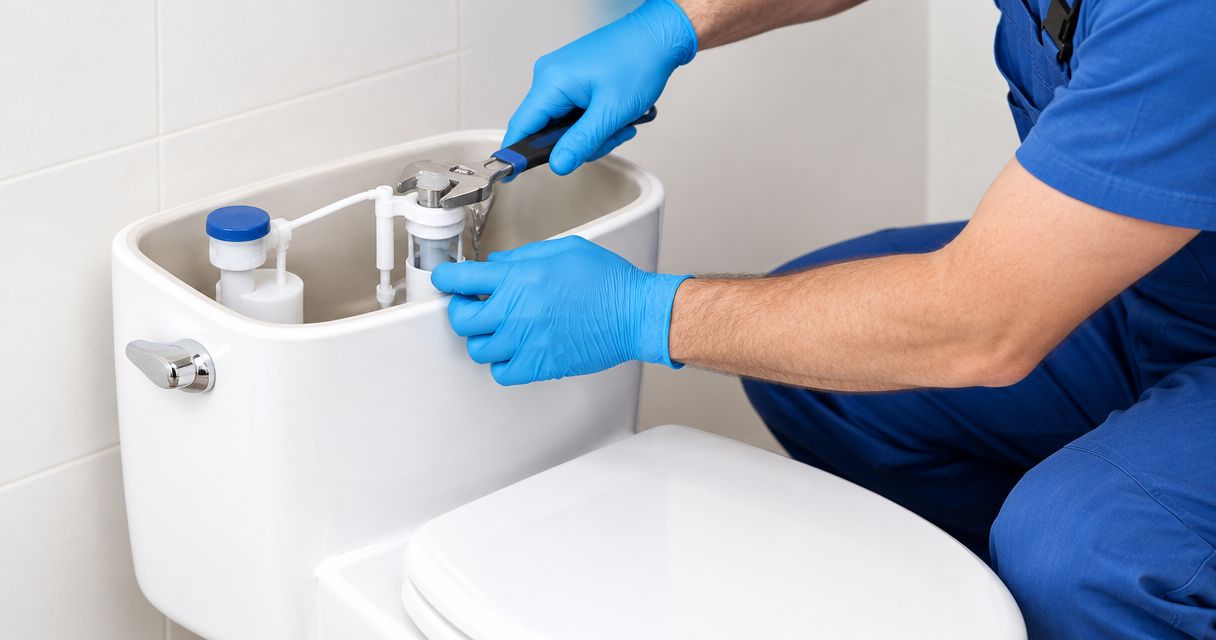
Repair is appropriate when the fixture is intact and the problem sits in a serviceable component. A toilet that keeps refilling, for example, needs an assessment of the tank's fill and flush mechanisms before anyone concludes that the whole toilet has failed.
Common repair candidates include:
- Running water: Check the flush seal, fill valve, water level, and handle linkage.
- Handle trouble: Inspect the handle and its connection to the flushing mechanism.
- Supply connection leaks: Identify whether water comes from the supply line, shutoff valve, or tank connection.
- Base movement: Inspect the mounting, flange, and supporting surface rather than simply tightening bolts harder.
- A failed bowl seal: Confirm the leak source and inspect the connection before resetting the toilet.
These are assessment categories, not instructions to replace parts blindly. Water on the floor can travel from a tank connection and collect beside the base, making the source look different from where it began.
Choose a repair when the plumber can explain which part failed and how the work addresses the symptom. The drawback is that repairing the obvious part alone leaves any separate problem untouched. Ask what else needs inspection, especially after repeated complaints.
When is replacing the toilet the better choice?
Replacement is the appropriate direction for cracked porcelain; caulk or an improvised patch is not a substitute for a sound fixture. A crack in the tank or bowl can leak, and damaged porcelain is not a suitable place to base a long-term rental repair.
Other replacement decisions require a clearer comparison. Repeated failures deserve a review of what failed, what was previously repaired, and whether the problems belong to the toilet itself. A recurring drain obstruction is not evidence that the porcelain fixture needs replacement.
Before approving a replacement in 2026, ask your plumber to confirm:
- The reason replacement is preferable to a targeted repair.
- Whether the floor flange and supporting floor need attention.
- Whether the replacement fits the existing drain location and available space.
- Whether the supply connection or shutoff valve also needs work.
- Whether any separate drain problem remains unresolved.
Replacement gives you a new fixture, but it also introduces installation work that a small component repair would avoid. Replace for a diagnosed reason, not simply because the toilet looks old. Keep the explanation with the property's maintenance record so the next decision starts with useful history.
Why the repair-or-replace decision varies
The same tenant description can point to different faults. “The toilet leaks” might mean a dripping supply connection, water escaping during a flush, or a tank problem. These factors determine the next move:
- Porcelain condition: A component repair cannot restore cracked porcelain.
- Leak location: A tank connection, supply valve, and bowl seal require different work.
- Failure history: Repetition of the same symptom calls for checking the earlier diagnosis.
- Drain behavior: Problems at nearby fixtures can indicate a shared drainage issue.
- Installation condition: A damaged flange or unstable supporting surface changes the repair scope.
- Loss of use: An unusable toilet needs different scheduling attention from a working fixture with a minor handle issue.
Keep urgency separate from replacement. An urgent overflow can come from a blockage that does not require a new toilet; a cracked fixture can require replacement even if water is not currently spreading across the floor.
What should you do before the plumber arrives?
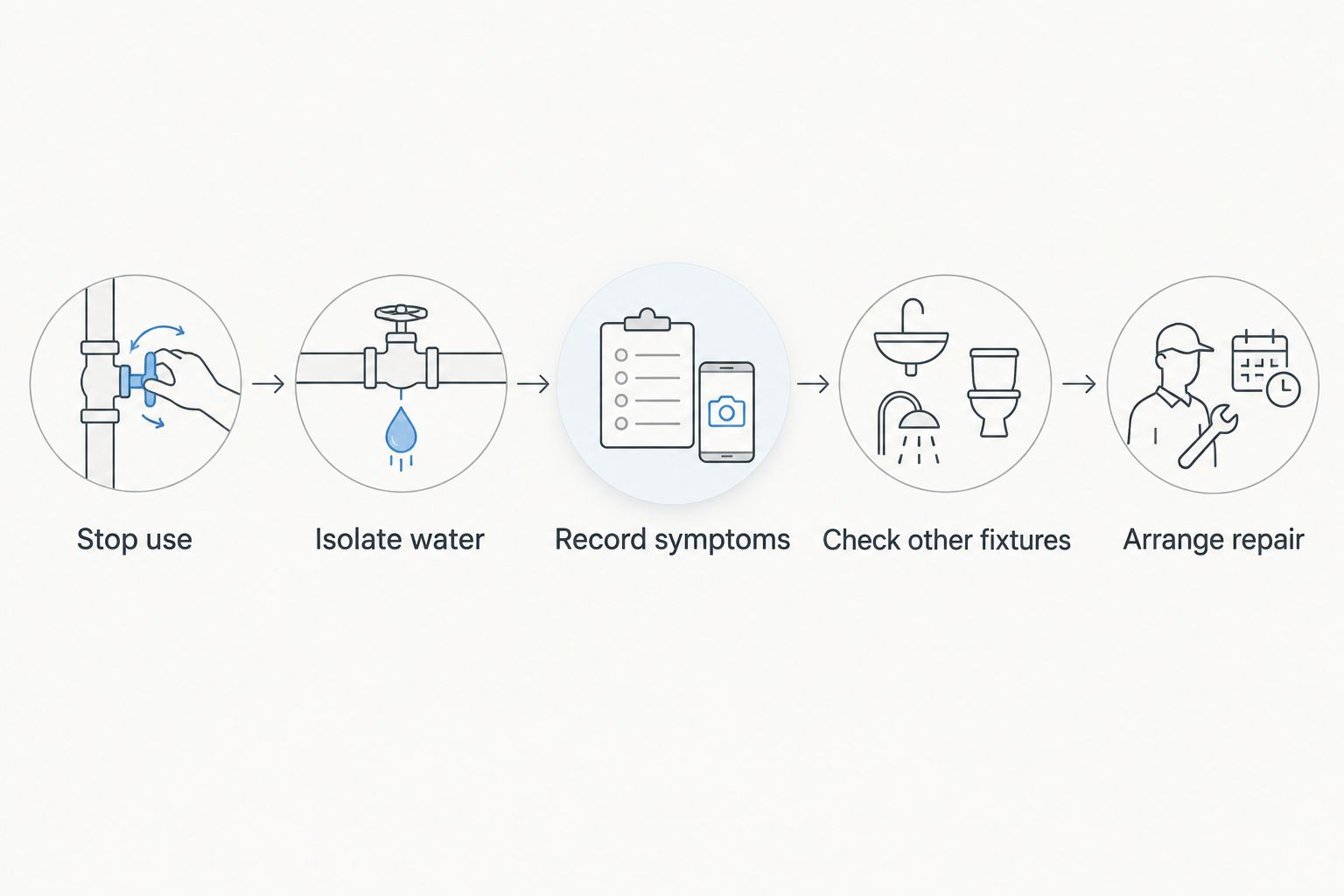
Stop use, identify the symptom, and communicate what you can safely observe. You do not need to diagnose the fault or dismantle the toilet to provide useful information. A short, accurate report is more helpful than a confident guess about a failed part.
- Stop use. Do not keep flushing an overflowing toilet or one that leaks during flushing. Keep people away from wastewater and wet areas.
- Isolate water. If safe and accessible, close the toilet's supply valve for an active supply or tank leak. Do not force a seized valve; closing the supply does not clear a drain backup.
- Record symptoms. Note whether water appears continuously, only during flushing, or after the tank refills. Take photographs from a safe position.
- Check other fixtures. Report nearby drains that gurgle, drain slowly, or back up. Do not deliberately run more water into an already backing-up system.
- Arrange repair. Explain whether the toilet is usable, whether water is contained, and whether the property has another functioning toilet.
For your 2026 maintenance log, describe the event rather than assigning a cause: water appeared at the base during flushing is more useful than the seal is bad. The plumber still needs to inspect the fixture and its connections.
If water is near electrical equipment or you cannot safely reach the valve, stay clear rather than stepping into the affected area. Tell the person handling the emergency about the hazard before anyone approaches it.
Does a leaking rental toilet need emergency plumbing help?
A leaking rental toilet needs urgent attention when water is spreading, wastewater is escaping, or the leak cannot be safely isolated. A contained problem with the toilet taken out of use can be assessed for a scheduled visit, subject to the property's remaining facilities and the actual condition.
A running tank is different from an uncontrolled floor leak. Report both accurately rather than labeling every toilet fault an emergency or postponing every problem until normal hours.
For after-hours decisions, consult the guide to when to call an emergency plumber in Cincinnati. Worry-less handles late-night plumbing emergencies, but you must confirm attendance and scheduling directly.
Will a new toilet stop recurring clogs?
A new toilet will not correct a blockage elsewhere in the drainage system. Replacement addresses recurring clogs only when the diagnosis identifies the fixture itself as the relevant problem.
Tell the plumber whether the clog affects only this toilet, whether other drains react during flushing, and what previous clearing work involved. That history helps distinguish a local obstruction from a problem beyond the fixture. Avoid assuming that a successful temporary clearing explains why the blockage returned.
How should a property manager approve the work?
Approve a defined repair scope, not an open-ended instruction to make the problem disappear. Ask for the diagnosis, the proposed work, and any separate issues that need attention. Keep the explanation in language another manager can understand.
Your 2026 work-order record should answer these questions:
- What did the occupant report, and when does it happen?
- What fault did the inspection identify?
- Why is repair or replacement the appropriate response?
- Does the work include the supply connection, bowl seal, mounting, or flange?
- What testing will confirm that the reported symptom is resolved?
- What findings require a separate decision?
After the work, ask whether the toilet was checked through filling and flushing and whether the relevant connections remained dry. If the original complaint involved movement or a recurring blockage, ask how that specific complaint was evaluated.
A completed repair should connect the original symptom to the work performed and the result checked. That record is useful when a tenant reports a similar issue later, especially if a different person coordinates the next visit.
FAQ
Should I repair or replace a toilet in a rental property?
Repair an intact toilet when the fault is confined to a serviceable part; replace cracked porcelain or a fixture with a confirmed reason for replacement. Check the drain, mounting, and connections before assuming replacement will solve the problem.
Is a toilet leaking at the base always a bad seal?
No, water at the base does not prove the bowl seal has failed. Water can come from a supply or tank connection, so the source needs to be identified before work begins.
Can a toilet repair service fix a constantly running toilet?
A toilet repair service can assess the tank components that control filling and flushing. If the porcelain is sound, a running toilet does not automatically need replacement.
Should a tenant keep flushing a blocked toilet?
No, stop flushing a blocked toilet, especially if the bowl level is rising. Report any nearby drains that are also backing up and arrange an assessment.
Does Worry-less help with late-night toilet plumbing problems?
Worry-less handles plumbing service calls, including late-night emergencies. Confirm scheduling directly; late-night service does not establish a guaranteed arrival time.
Can I schedule a toilet repair instead of requesting emergency help?
A contained fault can be assessed for a scheduled repair when the affected toilet is safely out of use. Explain whether another toilet is available and whether there is any continuing leak or wastewater escape.
What should I tell the plumber about a repeat toilet problem?
Tell the plumber the symptom, when it occurs, and what previous work addressed it. Include whether other fixtures are affected so the assessment is not limited to the toilet alone.
One last thing
A dry floor is not proof that a toilet is working correctly. Water can leak internally from the tank into the bowl without appearing outside the fixture. Include unexplained refilling and running-water sounds in the tenant's report, even when there is nothing to photograph.
Make your 2026 maintenance notes symptom-led: what happened, when it happened, and what resolved it. That small distinction keeps the next repair decision grounded in the property's history instead of starting again with a guess.