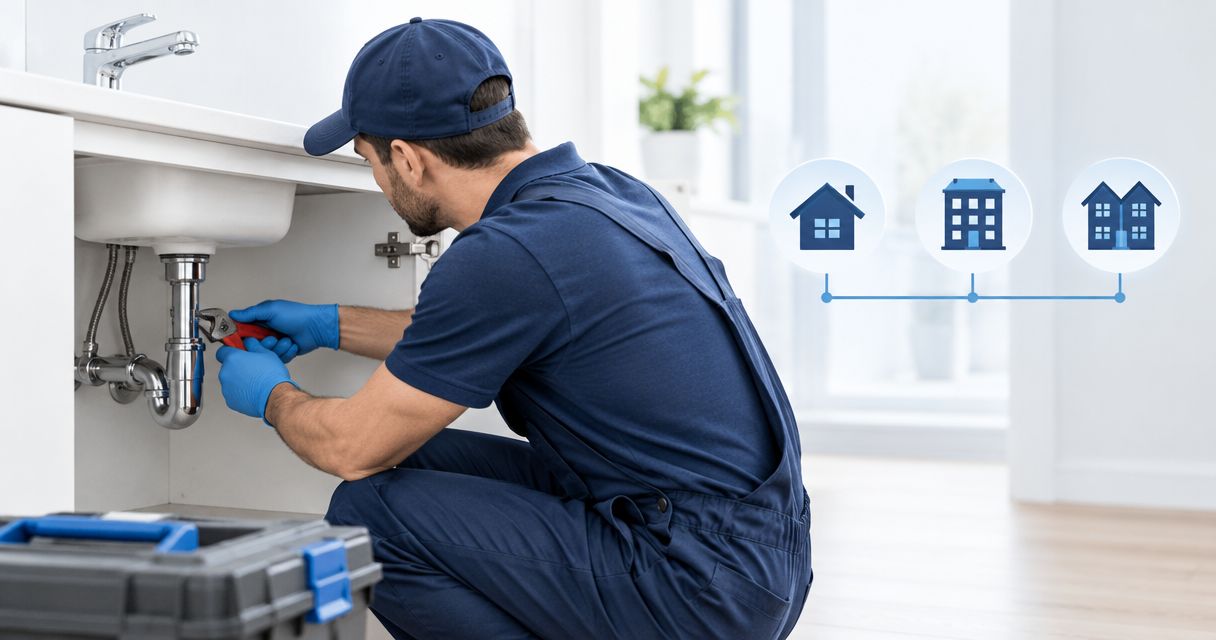
Group plumbing repair services across rental properties by urgency first, then by repair type, location and confirmed access. For your 2026 maintenance plan, keep active leaks and sewage problems out of the routine queue, and combine stable faucet, toilet and pipe repairs into clearly documented scheduled work.
- Group plumbing repair services by urgency before combining rental-property maintenance visits.
- Keep active leaks and sewage backups separate from routine scheduled repairs.
- Worry-less handles plumbing service calls, including late-night emergencies; confirm timing before coordinating access.
- Give the plumber a property-by-property repair list, not an undifferentiated backlog.
Worry-less is best for owners seeking plumbing service calls with late-night emergency help. Start with Worry-less to discuss the repair needs, then confirm which jobs belong together and which need separate attention.
How do you group plumbing repairs across rental properties?
Use 3 scheduling groups: urgent problems needing immediate attention, contained problems needing prompt assessment, and stable repairs suitable for a planned visit. These are planning categories, not diagnoses; the plumber still needs to assess the fault and explain the repair.
| Scheduling group | Best for | Benefit | Limitation |
|---|---|---|---|
| Urgent assessment | Uncontrolled water, sewage backup or an unsafe affected area | Keeps an active problem out of the routine backlog | Interrupts the planned repair schedule |
| Prompt assessment | A contained leak or an unusable fixture with no active overflow | Creates room to coordinate access without ignoring the fault | Requires reassessment if conditions change |
| Scheduled repairs | Stable faucet drips, running toilets and other non-escalating faults | Lets you organize related work together | Grouping must not become an excuse to postpone needed repairs |
Then organize each group by property, fixture and access readiness. An urgent repair should never wait just because another property has a convenient appointment. A shared route is useful only after the urgency decisions are settled.
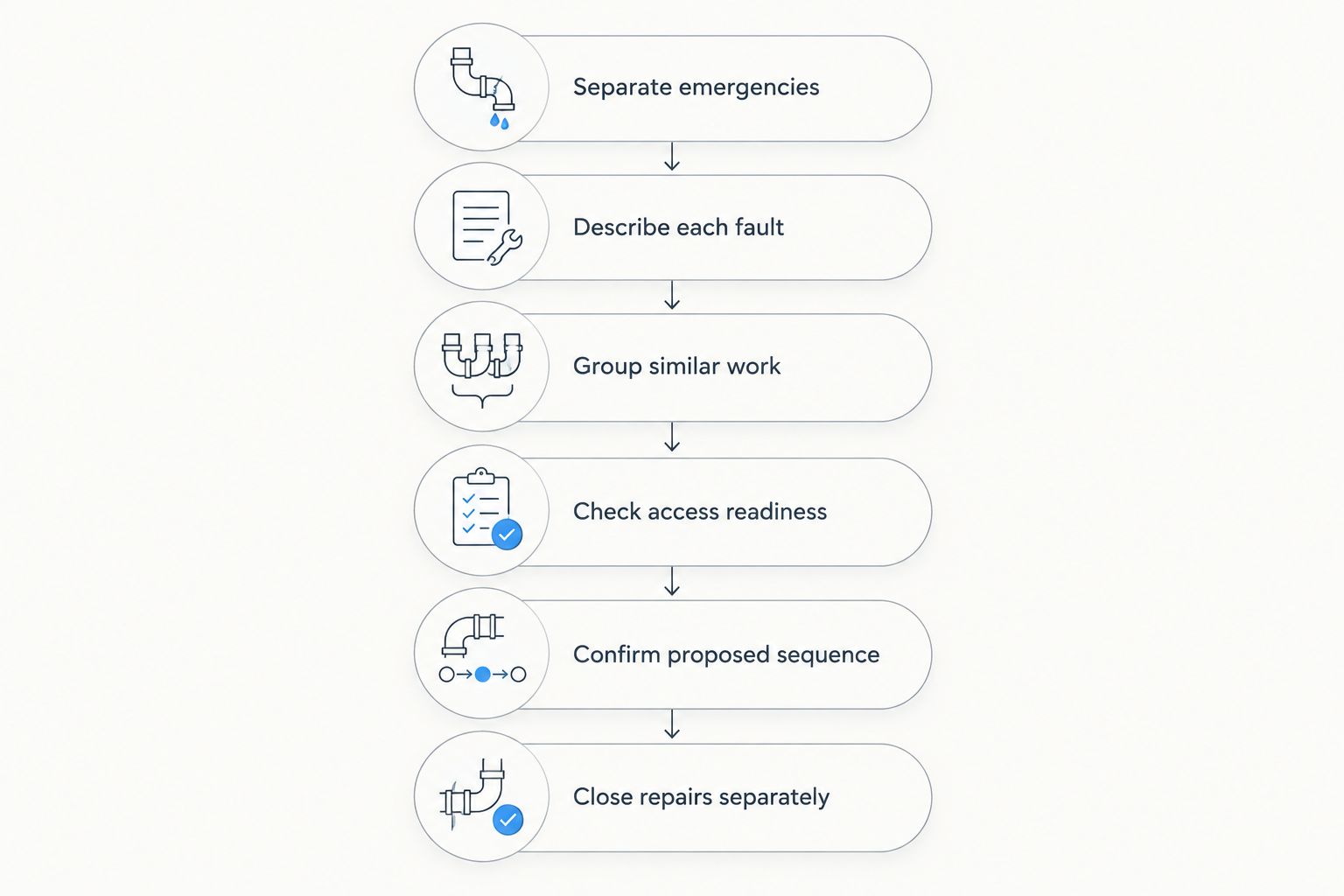
Follow this repair-grouping process
- Separate emergencies. Identify active water escape, sewage backup and any condition making the affected space unsafe. Seek immediate guidance rather than putting those reports into a batch.
- Describe each fault. Record the property, unit, fixture, symptoms and whether the problem is continuing. Replace vague descriptions such as bathroom problem with the specific observation.
- Group similar work. Put stable toilet faults together, faucet faults together and visible pipe leaks together. Similar symptoms do not establish a shared cause, so keep individual repair notes.
- Check access readiness. Confirm who will coordinate lawful access, whether the fixture area is clear and whether the resident knows which issue is being assessed. Follow applicable notice requirements.
- Confirm the proposed sequence. Give the plumber the grouped list and ask which jobs fit the same scheduled work period. Do not assume a booking covers every property or every repair.
- Close each repair separately. Record what was found, what was completed and what remains unresolved. A finished visit does not automatically mean every item on the original list is finished.
The sequence matters more than the size of the list. Putting access checks before booking helps you identify jobs that are ready, while separate closeout notes stop an unfinished repair from disappearing inside a completed appointment.
Why this matters for rental-property maintenance
A maintenance list should tell you what needs attention and what is ready to schedule. A long list of addresses without symptoms does neither. You still have to establish whether water is escaping, which fixtures are affected and who can coordinate access.
For a 2026 rental-maintenance plan, the practical goal is organized work without delayed emergency action. Grouping is not a promise of fewer visits, a particular completion time or a lower bill. It gives you a clearer basis for discussing the work with the plumber.
Landlords and property managers also need a record that survives a handoff. If someone else takes the next tenant call, that person should be able to distinguish an assessed fault from an unverified report without reconstructing the conversation.
Keep emergency plumbing outside the scheduled batch
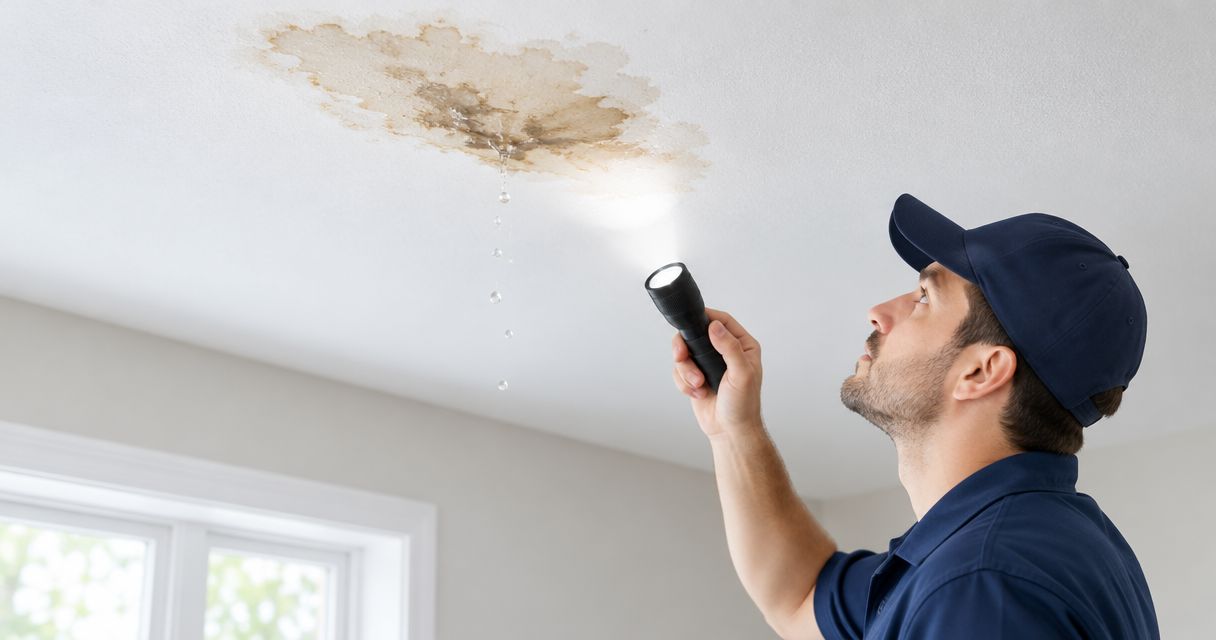
An active leak is not simply another pipe repair on a spreadsheet. First establish whether water is still escaping and whether the affected area is safe. If water is near electrical equipment, stay clear and seek appropriate emergency help; do not enter the affected area to investigate.
If you can safely reach and operate a known water shutoff, use it to stop the supply while arranging assistance. Do not force a stuck valve or enter standing water to reach one. For sewage backup, stop using the affected fixtures and keep people away from contaminated water.
Give the plumber a short description of the current condition:
- Is water still escaping, or has the supply been isolated?
- Is the problem limited to a fixture, or are several fixtures affected?
- Is sewage involved?
- Is the affected space safe to approach?
- Who can provide current information from the property?
Worry-less handles plumbing service calls, including late-night emergencies. That service scope does not establish a guaranteed arrival time, weekend booking or immediate availability; confirm the actual arrangements before giving residents an expectation.
Keep the original scheduled list intact when an emergency occurs. Move the urgent report into its own record, then review the remaining appointments instead of treating the entire portfolio as an emergency.
Build scheduled groups around clear repair descriptions
Scheduled work deserves the same attention as emergency planning. A stable problem still needs a clear description, an agreed appointment and confirmation that the repair is complete. Do not leave it indefinitely in a low-priority category.
For your 2026 repair list, group jobs by the affected fixture while preserving the symptoms that distinguish them:
| Repair category | Best for grouping | Information to preserve | Grouping limitation |
|---|---|---|---|
| Faucets | Stable drips and operation problems | Where water appears and when it happens | A spout drip and a leak beneath the sink need different assessment |
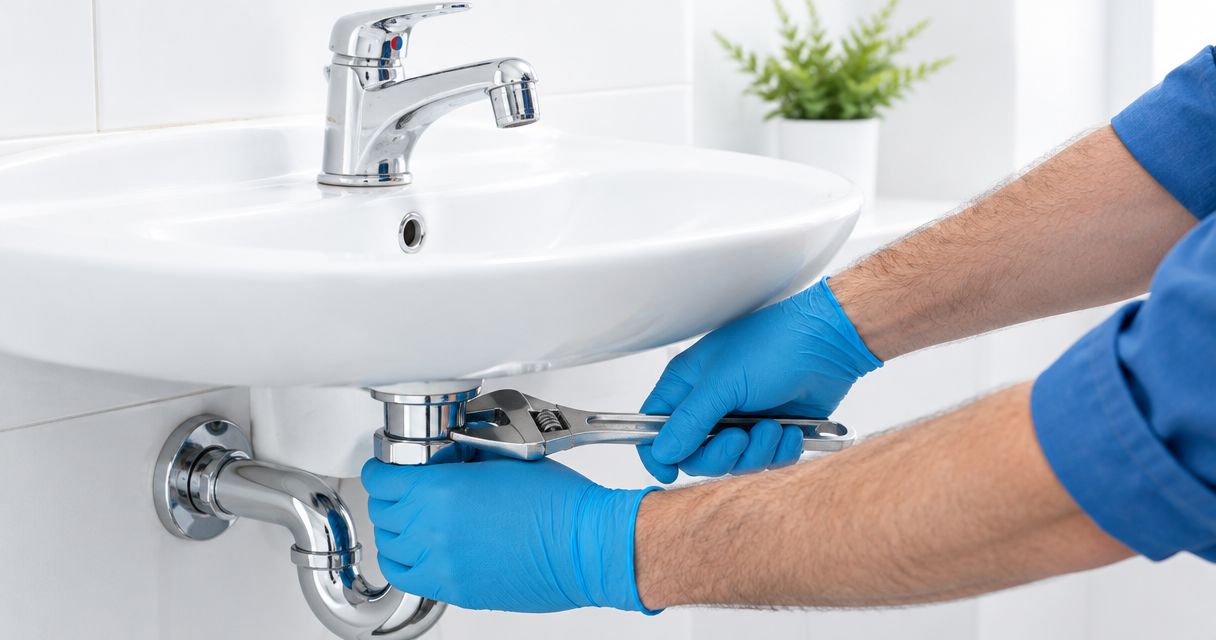
| Toilets | Running, refilling or flushing complaints | Whether water runs continuously, appears at the base or overflows | An overflowing toilet does not belong in the routine group |
| Visible pipes | Contained, identified leak reports | Exact location and whether the supply is isolated | Concealed damage or renewed water escape changes the urgency |
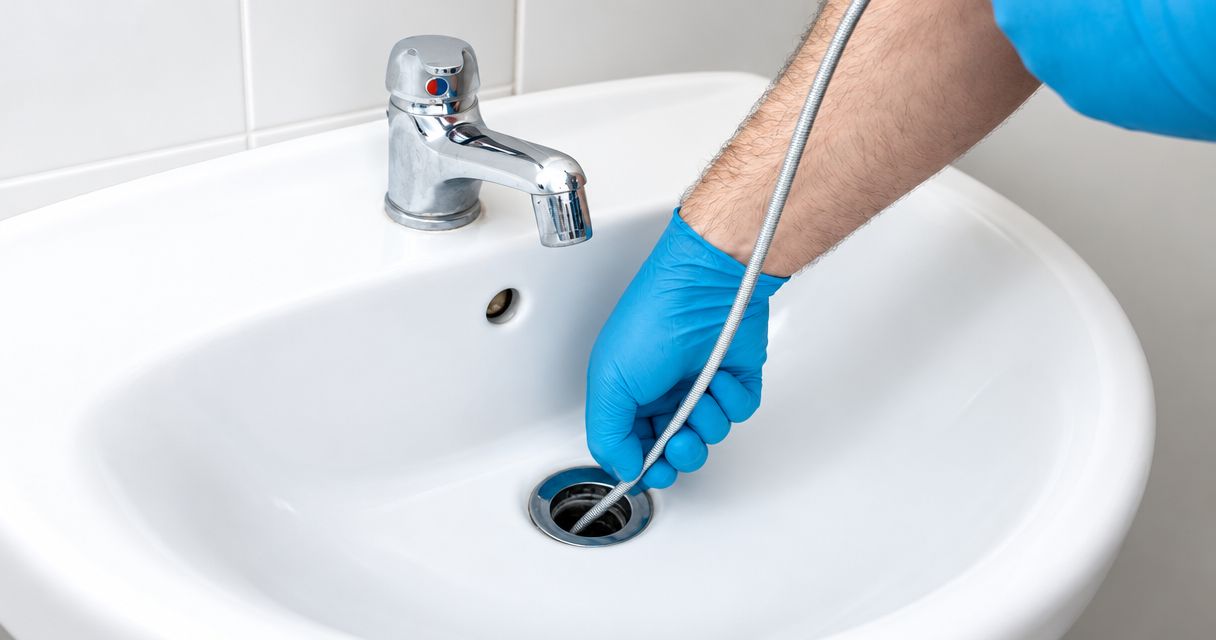
| Drains | Non-overflowing drainage complaints | Which fixtures are affected and whether the fault recurs | Sewage backup needs separate urgent attention |
A category is an organizing aid, not a parts order. Do not assume every running toilet needs the same component or every slow drain needs the same treatment. Let the assessment determine the repair.
Before confirming grouped work, ask whether the plumber needs photographs or additional details. Share only relevant property information, and keep tenant personal information out of repair photographs where possible.
Why plumbing repair groups vary
The right grouping changes with the condition of each property and the work being requested. Use these factors rather than a fixed rule that every job in the same building belongs together:
- Urgency: Active water escape or sewage changes the scheduling decision before location does.
- Containment: An isolated supply is different from a leak that continues to spread, but isolation does not complete the repair.
- Fixture condition: A usable fixture with a stable fault presents a different coordination problem from an unusable fixture.
- Location: Nearby properties are candidates for a shared sequence only after the plumber confirms that arrangement.
- Access readiness: A repair cannot proceed as planned if lawful access or a clear work area is unresolved.
- Assessment needs: A recurring or poorly understood fault needs its history preserved, not compressed into a generic repair label.
Recheck those factors when a resident reports a change. A job categorized for scheduled attention can require a different response if water starts escaping or additional fixtures become affected.
What should you send before booking grouped repairs?
Send a concise property-by-property list, with one entry for each fault. For your 2026 maintenance records, use consistent fields so the plumber and the person coordinating access are discussing the same job.
Include these 4 core fields in every entry:
- Location: Property address, unit and affected room or fixture.
- Observed symptoms: What happens, when it happens and whether water is escaping.
- Current condition: Whether the fixture remains usable and whether any supply has been isolated.
- Coordination status: The contact handling access and any arrangements still awaiting confirmation.
Add previous repair information when it is relevant. A repeat complaint should identify what was previously addressed and what the resident now observes, without assuming that the earlier repair caused the current fault.
Keep requests separate from approvals. Asking the plumber to assess several fixtures does not explain which repairs you have authorized. Confirm the proposed scope, how additional findings will be communicated and who can make decisions before work expands.
Discuss your grouped plumbing repairs
Explain the faults, separate urgent concerns and confirm scheduling arrangements.
Can you combine emergency and routine repairs during one visit?
Emergency work takes priority; routine additions need separate confirmation. Tell the plumber about other faults, but do not assume an emergency visit includes the scheduled backlog or that adding work will fit the available appointment.
Once the urgent condition is addressed, ask whether the remaining repairs should be assessed then or booked separately. Keep a distinct record for each fault either way.
Should you group repairs by building or by fixture type?
Group by urgency first, then use building and fixture type together. A building-based list keeps access coordination visible, while fixture categories help explain the work; neither should hide an urgent condition or an unresolved diagnosis.
Use the property as the main record and tag each fault by fixture. That keeps the repair attached to the correct unit even when you discuss similar work across several properties.
How do you keep grouped repairs from becoming a backlog?
Give every unresolved repair a next action, not just a priority label. The next action might be obtaining a clearer symptom description, confirming access, requesting assessment or arranging follow-up after a finding.
Review the open list when conditions change and after each scheduled visit. For your 2026 process, a repair should leave the open list only when its completion is documented—not merely because the appointment occurred.
FAQ
What's the best way to organize plumbing repair services for several rentals?
Organize plumbing repair services by urgency first, then by property, fixture and confirmed access. Keep a separate record for each fault so grouped scheduling does not obscure unfinished work.
Can a leaking pipe wait until other rental repairs are ready?
Do not postpone an active pipe leak just to combine appointments. Establish whether water is still escaping, isolate the supply only if safe and seek plumbing guidance.
Can I book several rental properties for the same day?
Ask the plumber to confirm whether the proposed properties and repairs fit the same day's schedule. A grouped request does not establish same-day availability or a completion promise.
Should tenants diagnose the plumbing problem before I arrange service?
Ask tenants to describe what they observe, not diagnose the cause. The location, symptoms, affected fixtures and current water escape are more useful than an assumed repair.
Does Worry-less help with late-night plumbing emergencies?
Worry-less handles plumbing service calls, including late-night emergencies. Confirm the current scheduling arrangements and explain whether water is escaping or sewage is involved.
What should I record after a grouped plumbing visit?
Record the finding, completed work and remaining next action for each fault. Keep unresolved items open even if other repairs at the property are finished.
Should recurring drain problems stay on the routine repair list?
Recurring drain problems need their history documented and their urgency reassessed. Sewage backup or overflow should not remain in a routine batch simply because the complaint has happened before.
One last thing
Close the fault, not the visit. An appointment marked complete tells you someone attended; it does not tell you whether the leaking faucet, running toilet and drain complaint were all resolved.
Keep completion status at the individual repair level. That small distinction makes the next resident call easier to handle: you can identify unfinished work without reopening every item associated with the appointment.