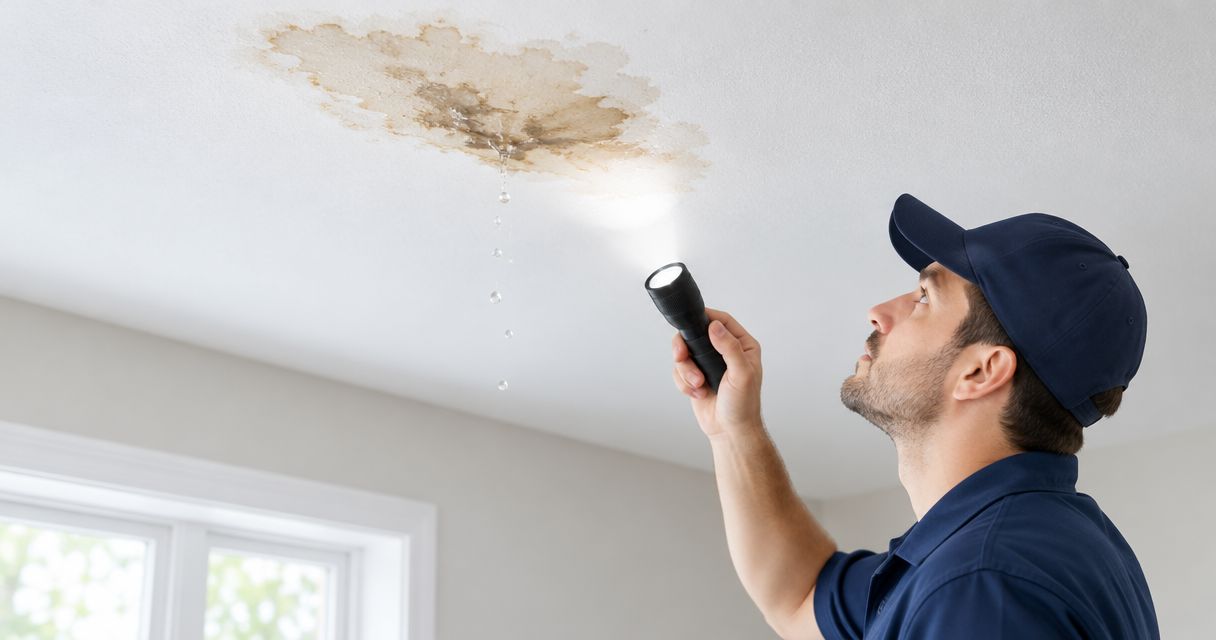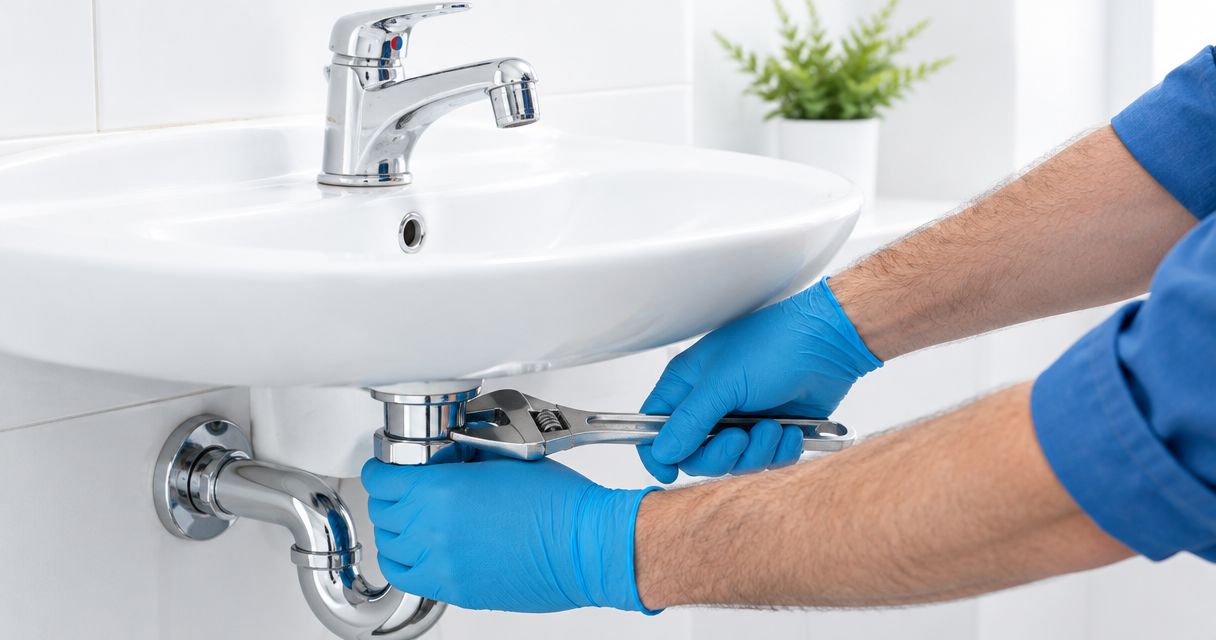
For emergency water leak repair in a vacant rental, stop the water at a safely accessible shutoff, keep people away from electrical hazards, and arrange plumbing help if the leak remains uncontrolled. A vacant unit still needs prompt attention: stopping the supply does not remove water already inside walls, ceilings, or floors. Coordinate the plumbing repair and the assessment of wet materials as separate tasks before returning the property to use.
- Emergency water leak repair starts with safe water isolation, not opening walls or tightening unfamiliar fittings.
- Worry-less offers late-night emergency plumbing help and scheduled repairs; confirm timing when you call.
- A stopped leak still requires inspection of wet materials and confirmation that the plumbing repair holds.
- Give the plumber the property address, leak location, shutoff status, and access arrangements.
Emergency water leak repair in a vacant rental: what now?
Make the property safe, isolate the water if you can, and report what is still happening. For Cincinnati tri-state landlords and property managers, Worry-less handles plumbing service calls, including late-night emergencies and scheduled repairs. Confirm the service timing and describe the conditions before arranging attendance.
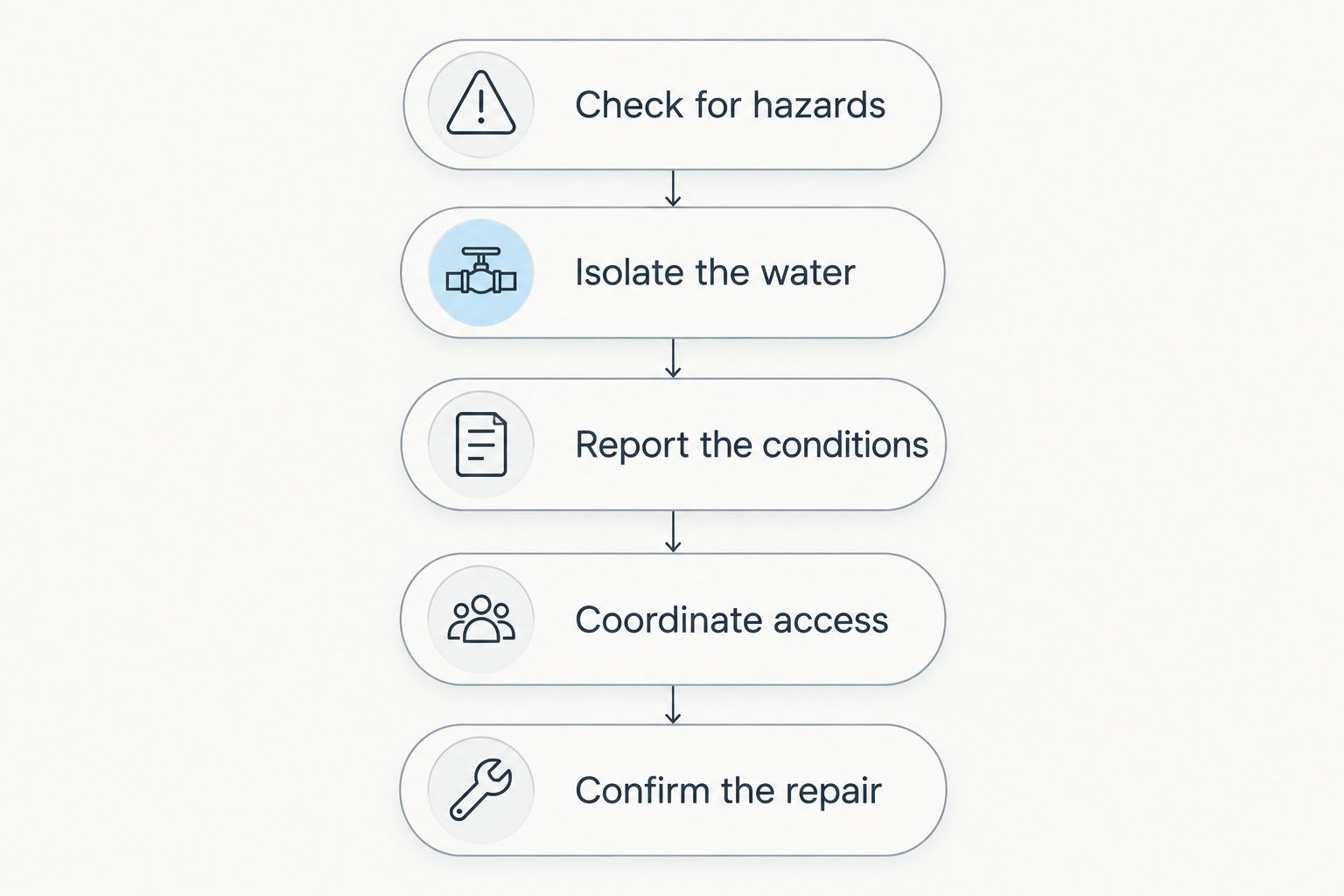
Use this sequence for your 2026 rental-maintenance checklist:
- Check for hazards. Stay out of standing water near electrical equipment, outlets, or appliances. Keep away from sagging ceilings and areas where wet building materials appear unstable. Do not enter a hazardous space just to find the source.
- Isolate the water. Close the affected fixture's supply valve only if it is accessible and safe to operate. If the source is unclear or the local valve does not stop the flow, use the property's main shutoff if you know its location and can reach it safely. Do not force a stuck valve.
- Report the conditions. Tell the plumber whether water is still flowing, which rooms are affected, and whether the shutoff worked. Describe what you can see rather than diagnosing a concealed pipe failure.
- Coordinate access. Identify the person authorized to arrange entry and approve the work. Explain any known obstacles, including locked utility spaces or an affected neighboring unit; agree on access rather than assuming the contractor can enter.
- Confirm the repair. Have the plumbing checked before normal water service resumes. Arrange assessment and drying of wet materials separately where needed, then document the completed work and any follow-up.
These steps separate immediate control from the work needed to return the rental to service. Closing a valve is a protective action, not proof that the leak has been repaired.
Why this matters
An empty rental has no occupant regularly noticing a dripping connection, a running toilet, or water spreading across the floor. Vacancy changes how a leak is discovered; it does not make an active leak less urgent.
For a landlord, the immediate job is to limit further damage without creating another hazard. The management job is different: preserve a clear record, arrange access, authorize the appropriate work, and confirm what remains unfinished.
Keep those responsibilities together in your 2026 maintenance record. A note that says only “plumber attended” leaves the next person without the information needed to decide whether water can stay on or the unit is ready for use.
When does a vacant-rental leak need emergency help?
Treat uncontrolled water and unsafe conditions as the priority, not the property's occupancy status. Water that continues escaping after a local shutoff, a suspected burst pipe, or water reaching electrical equipment calls for urgent professional help. Do not wait for a new tenant to report the same problem.
A contained fixture problem is different. When the supply is safely isolated and the area is stable, a scheduled repair can be the appropriate next step. The important distinction is whether further damage is still occurring, not whether the discovery happened during business hours.
| Repair route | Best for | Practical advantage | Limitation |
|---|---|---|---|
| Emergency plumbing help | Uncontrolled leaks or conditions requiring urgent attention | Prioritizes stopping the active plumbing problem | Attendance does not automatically include drying or building-material repairs |
| Scheduled plumbing repair | Safely isolated leaks with no continuing water escape | Lets you coordinate entry, approval, and related maintenance | Waiting is inappropriate if the isolation fails or conditions worsen |
If you cannot establish whether the water has stopped, say so when requesting help. An uncertain report is more useful than an unsupported assurance that everything is contained.
What should you do if the leak is hidden?
Do not open a wet ceiling or wall simply to confirm where the pipe runs. Water can travel along framing and other surfaces before appearing somewhere else, so the visible stain does not necessarily identify the failed connection.
Describe the visible evidence: water beneath a sink, dripping from a ceiling, pooling beside a toilet, or appearing near a water heater. Include whether it changes when a fixture is used and whether shutting off the supply stops it. Keep observations separate from guesses.
For a vacant property, also check whether the affected area connects to an occupied space. Notify the responsible property contact if water is reaching another unit or a shared area. Do not enter another person's space or operate shared building controls without the appropriate authorization.
Why emergency water leak repair varies
The repair plan depends on the source, access, and what happened after the water escaped. These factors explain why the same visible symptom does not always lead to the same job:
- Leak source: A faucet supply connection, toilet connection, concealed pipe, and water-heater leak require different diagnosis and repair decisions.
- Isolation: A working local shutoff can contain a fixture leak; an ineffective valve leaves the water supply problem unresolved.
- Physical access: An exposed connection is easier to inspect than plumbing behind finished surfaces or inside a locked utility space.
- Electrical or structural hazards: Water near electrical equipment or unstable materials changes what can be approached safely.
- Affected spaces: Water entering another unit or a shared area adds coordination beyond the vacant rental itself.
- Wet materials: Repairing the plumbing does not establish whether flooring, insulation, walls, or ceilings need further attention.
Give the plumber those facts before asking for a repair recommendation. A useful explanation identifies the failed component, the proposed work, and what that work does not address.
What should a landlord tell the plumber?
Prepare a short handoff rather than a long account of every past maintenance issue. Start with the current condition and the action already taken.
Include:
- The property address and whether the affected rental is vacant.
- Where water is visible and whether it is still escaping.
- Which valve was closed and whether that changed the flow.
- Known electrical hazards, unstable materials, or affected adjoining spaces.
- Who will coordinate entry and who can authorize repairs.
- Any recent plumbing work relevant to the same location.
Photos help show location and visible conditions, but take them only from a safe position. Do not delay controlling an active leak to photograph it, and do not treat a photo as confirmation of the cause.
For your 2026 work order, keep the initial report separate from the plumber's findings. “Water beneath kitchen sink” records an observation; “failed supply connection” records a diagnosis only after someone has established it.
The plumbing repair services for Cincinnati property managers guide is a useful next read for coordinating repair requests. Keep the emergency handoff focused on the immediate problem, then address routine maintenance through a separate, clear scope.
What needs to happen after the water stops?
Check the repair and the affected property separately. The plumbing task is to identify and correct the source, then check the repaired area under appropriate operating conditions. The property task is to assess the water that already escaped.
Ask the plumber to explain what failed, what was repaired, and whether any plumbing remains isolated or needs follow-up. If the leak was concealed, establish what was inspected and whether further investigation is needed before covering the area again.
Wet materials need their own assessment. Do not assume a dry-looking surface means the space behind it is dry, and do not repaint a stain as a substitute for addressing moisture. Where electrical equipment was affected, obtain appropriate professional guidance before restoring use.
Close the 2026 incident record with the repair details, remaining restrictions, and responsibility for follow-up. A completed plumbing visit and a completed property recovery are not interchangeable milestones.
How can you coordinate repairs without repeated confusion?
Give each contractor a clear task and identify who receives the findings. The plumber addresses the plumbing source; other qualified professionals address affected electrical systems or building materials when those tasks are needed.
Before work starts, ask what the proposed repair includes and what requires separate authorization. Clarify whether the immediate work is a temporary measure or the completed repair. Neither should be left ambiguous in the maintenance record.
Worry-less plumbing service calls suit property managers seeking late-night emergency help and scheduled repairs with clear explanations. Ask for practical repair advice and confirm the scope and timing directly; a search for after-hours, weekend, or same-day plumbing does not establish an appointment.
When the leak is safely contained, use the scheduled visit to address the confirmed fault rather than turning the emergency report into an undefined list of jobs. Record unrelated faucet, toilet, or pipe concerns separately so each receives a clear decision.
Arrange the next repair step
Describe the leak, explain the shutoff status, and confirm service timing directly.
Can emergency water leak repair wait until morning?
Emergency water leak repair should not wait while water remains uncontrolled or conditions are unsafe. If the supply is safely isolated and no further water is escaping, discuss a scheduled repair with the plumber and keep the affected area out of use.
Do not reopen the valve just to check whether the problem has disappeared. Reintroducing water without addressing the failure can restart the leak.
Can you turn the water back on before the rental is occupied?
Restore the water after the plumbing repair has been checked and any restrictions are understood. Do not use the incoming tenant's arrival as the first opportunity to discover whether a repair holds.
For a 2026 turnover, record which fixtures were checked, whether any supply remains isolated, and what follow-up is outstanding. Keep the readiness decision tied to completed work rather than the calendar alone.
Should you contact an insurer before arranging plumbing help?
Follow the applicable policy's reporting instructions while taking safe steps to limit further damage. Keep photos, repair documentation, and communication records, but do not assume a policy covers a vacant-property leak or every resulting expense.
Insurance reporting does not replace stopping an active leak. Ask the insurer about documentation and coverage questions without delaying necessary safety measures.
FAQ
What's the first thing to do when a vacant rental has a water leak?
Check for hazards, then isolate the water only if the shutoff is safely accessible. Stay away from standing water near electrical equipment and unstable ceilings.
Is a leak still an emergency if nobody lives in the rental?
An uncontrolled leak remains urgent even when the rental is vacant. Base the response on continuing water escape and unsafe conditions, not occupancy.
Should I shut off the main water supply or just the fixture valve?
Use the fixture valve if it safely stops the affected supply. If it does not stop the leak, use the main shutoff only if you know its location and can operate it safely.
Does emergency water leak repair include drying the property?
Plumbing repair and drying are separate tasks unless the agreed scope specifically includes both. Confirm who will assess and address wet walls, floors, ceilings, or insulation.
Can Worry-less help with late-night plumbing problems?
Worry-less handles plumbing service calls including late-night emergencies, along with scheduled repairs. Confirm timing directly rather than assuming immediate or same-day attendance.
What should I send the plumber before a rental-property visit?
Send the address, visible leak location, current water-flow status, and what happened when a valve was closed. Add safe photos and the agreed access contact.
How do I know the rental is ready after a leak?
Confirm the plumbing repair has been checked and that affected materials and systems have received appropriate assessment. Record any remaining restrictions before returning the space to use.
One last thing
A closed shutoff valve is an unresolved maintenance condition until someone confirms the next step. Label its status in the work order and tell whoever manages the next visit why it is closed. That simple handoff helps prevent a cleaner, contractor, or property representative from reopening the supply without understanding the leak.