Emergency drain cleaning is urgent when sewage enters your property, wastewater keeps rising, or a backup prevents you from safely using essential plumbing. Stop using affected fixtures and request emergency plumbing help; a single slow drain with no overflow or contamination can usually be assessed for a scheduled repair instead.
- Emergency drain cleaning takes priority when sewage backs up, wastewater spreads, or essential plumbing becomes unusable.
- Stop adding water to a backing-up drainage system; repeated flushing can worsen an overflow.
- Worry-less handles plumbing service calls, including late-night emergencies; confirm availability when you make contact.
- Landlords should report affected fixtures, visible contamination, and whether neighboring units have similar symptoms.
Why this matters
A drain problem becomes an emergency because of what the wastewater is doing, not because the blockage happens after dinner. The immediate priorities are to limit exposure, avoid adding water, and explain the symptoms clearly when requesting help.
For Cincinnati-area homeowners, landlords, and property managers comparing plumbing help in 2026, Worry-less offers late-night emergency assistance and scheduled plumbing repairs. Worry-less is a fit for property owners seeking late-night plumbing help and practical advice on scheduled repairs. Confirm current availability rather than assuming an after-hours search guarantees a visit.
When does emergency drain cleaning become necessary?
Request emergency drain cleaning when wastewater is escaping its intended drainage path or you cannot safely use essential plumbing. An overflowing toilet, sewage coming through a floor drain, or wastewater rising in a shower calls for a different response than a sink that empties slowly but stays contained.
Use this 2026 decision guide to describe the situation, not to diagnose the obstruction yourself. Drain symptoms help establish urgency, but they do not prove the blockage's location or which repair method is appropriate.
| Next step | Best for | Benefit | Limitation |
|---|---|---|---|
| Emergency plumbing assessment | Sewage exposure, continuing overflow, or unusable essential plumbing | Prioritizes stopping the immediate problem and assessing the blockage | An urgent visit does not establish the cause before inspection |
| Scheduled drain repair | A contained slow drain with usable alternatives and no contamination | Lets you coordinate access and explain recurring symptoms | It is not appropriate while wastewater is actively escaping |
| Scheduled follow-up after clearing | Repeated backups or unresolved drainage symptoms | Addresses why the problem returns rather than treating restored flow as the whole answer | Further investigation depends on the findings |
A contained problem can change category. If water begins rising elsewhere, sewage appears, or another fixture stops draining, stop using the affected plumbing and update the person handling your repair request.
Sewage entering a room needs an urgent response
Sewage inside an occupied space creates an exposure problem as well as a drainage problem. Keep people and pets away from contaminated water, and avoid walking through it to inspect a drain.
Do not assume a dry-looking surface is clean after the water recedes. Restoring drainage and addressing contaminated materials are separate tasks; ask what the plumbing work covers and whether separate cleanup is needed.
For rental properties, describe where wastewater has reached and whether the affected area remains occupied. Report what you can observe without asking a tenant to touch wastewater, remove a drain cover, or investigate concealed plumbing.
Do not delay an active sewage backup just because the water temporarily stops rising. A pause does not establish that normal use is safe.
Several backing-up fixtures need prompt assessment
When a toilet, shower, and another drain develop related symptoms, report them together. Multiple affected fixtures can point to a shared drainage problem, but symptoms alone cannot establish whether the obstruction is inside the building or farther along the sewer connection.
Water appearing in a shower when a toilet is flushed is especially useful information to relay. So is a floor drain rising while another fixture discharges. Do not repeat the action to demonstrate it; describe what already happened.
In a multi-unit building, ask whether nearby occupants have noticed similar symptoms through your normal communication arrangements. Do not assume that an unaffected apartment proves the rest of the building can keep using water normally. Ask the responding plumber which fixtures or areas should remain out of use.
A contained slow drain can suit a scheduled repair
A sink that drains slowly without overflowing, sewage, or related problems elsewhere is different from an active backup. If you can stop using that fixture and retain safe access to essential plumbing, arrange a scheduled assessment rather than repeatedly testing it.
Scheduling is not the same as ignoring the problem. Note when the slow drainage began, whether it has happened before, and whether the fixture eventually empties. These observations help explain the issue without committing you to a diagnosis.
For your 2026 maintenance list, put recurring slow drains alongside leaking faucets and toilet problems that need planned attention. Convenient scheduling gives owners and managers a way to address contained faults before the next complaint arrives.
What should you do while waiting for plumbing help?
The safest response focuses on stopping additional discharge and keeping people away from hazards. Do not turn an inspection into another overflow by testing fixtures repeatedly.
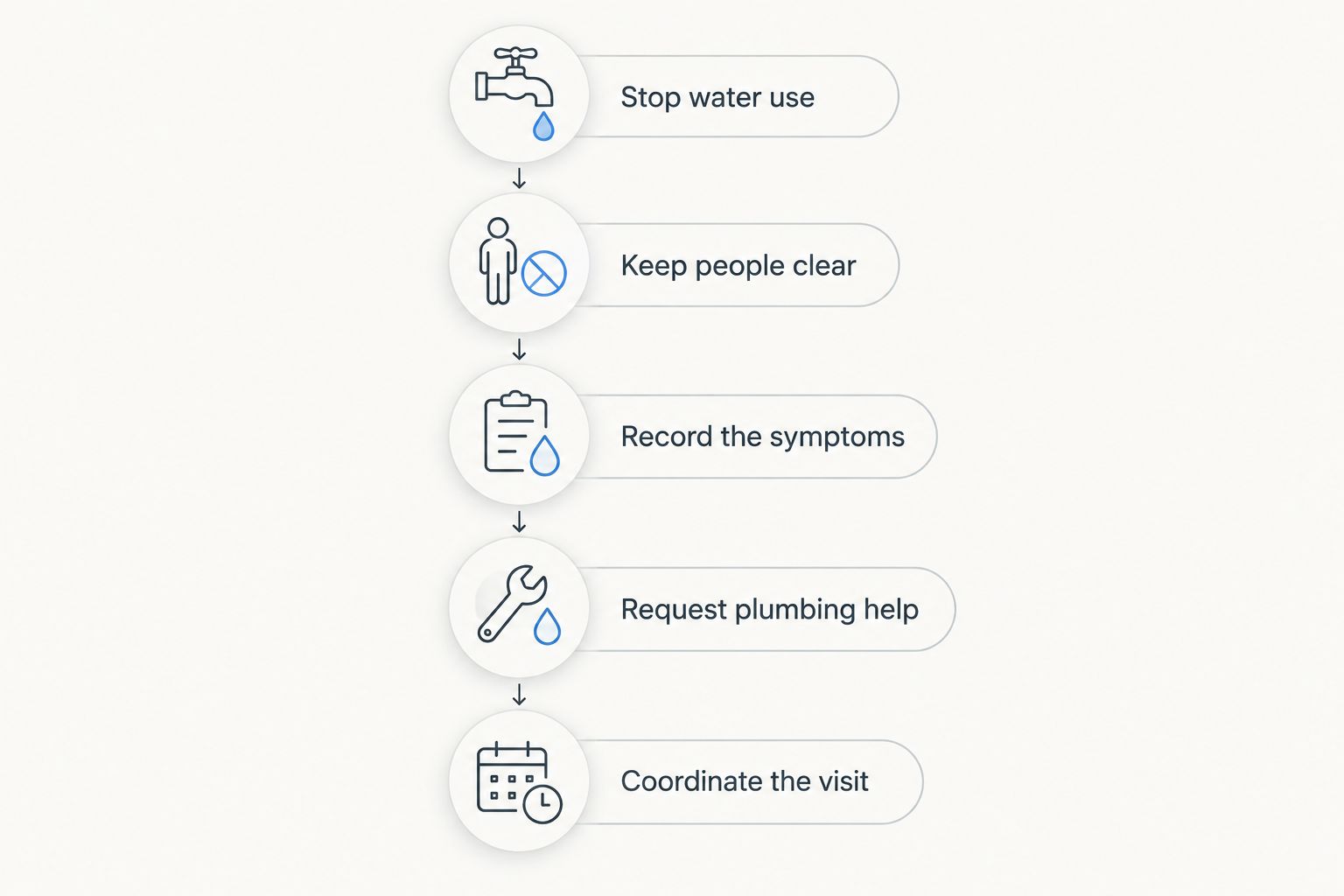
- Stop water use. Stop flushing and using fixtures that feed the affected drainage system. Pause a washing machine or dishwasher if it discharges into the backed-up system and you can do so safely.
- Keep people clear. Keep occupants and pets away from sewage, overflowing fixtures, and wet areas near electrical equipment. Do not enter standing water to reach a switch or appliance.
- Record the symptoms. Note which fixture backed up first, where water appeared, and what was running beforehand. Take photographs only from a safe, dry position.
- Request plumbing help. Explain whether wastewater is still rising, essential plumbing is unusable, or several fixtures are affected. Ask what should remain out of use while you wait.
- Coordinate the visit. Confirm the property address, who will communicate with the plumber, and how access will be arranged through your existing process.
A water-supply shutoff is not a universal solution to a sewer backup. Closing it stops incoming supply water to the property, but it does not clear a drain obstruction or prevent wastewater arriving from elsewhere in a shared system.
If you cannot safely reach an appliance control or shutoff, leave it alone. Tell the responding professional about the hazard rather than entering contaminated water to operate it.
Why emergency drain cleaning varies
The same complaint can require different work depending on the conditions found at the property. An overflowing fixture establishes urgency; it does not establish the repair method.
- Which fixtures are affected: An isolated sink problem and several backing-up fixtures require different investigation.
- Whether wastewater is contained: Sewage entering a room changes the immediate safety and containment priorities.
- Where the obstruction sits: Accessible fixture plumbing differs from a blockage farther along a shared drain or sewer connection.
- Whether the problem repeats: A recurring backup needs discussion about the underlying cause, not just whether water flows again.
- What access is available: Occupancy, physical access to plumbing, and building layout affect how the work can proceed.
- What has already been tried: Tell the plumber about drain chemicals, previous clearing attempts, and earlier repairs.
Ask for an explanation before agreeing to a particular method. Mechanical clearing, inspection, or additional repair should follow the findings, not a guess based solely on the symptom.
For a 2026 rental-maintenance record, keep these details with the repair notes. They help the next person distinguish a new problem from a repeat complaint without relying on memory.
What should landlords tell the plumber about a backup?
Landlords and property managers should send a concise description that separates observed facts from assumptions. Start with the affected address and unit, then explain what is overflowing, whether it is continuing, and which essential fixtures remain usable.
A useful message describes the sequence: the toilet backed up, water appeared in the shower, and water use has stopped. Calling it a confirmed sewer-line failure before inspection adds a conclusion the observations do not support.
Keep the following details together:
- The first reported symptom and whether it has changed.
- Every affected fixture or area reported so far.
- Any visible wastewater outside the fixtures.
- Known previous backups or recent plumbing work.
- Any chemical drain product already used.
- The person coordinating communication and access.
Ask the plumber what occupants should avoid using while the problem is assessed. Do not create a building-wide instruction from your own assumption about which drains connect.
After the repair, request a plain-language explanation of what was found, what was done, and whether further work is recommended. Worry-less emphasizes clear explanations and practical repair advice, which helps property owners separate the immediate repair from scheduled maintenance decisions.
Can a drain backup wait until morning?
A drain backup should not wait until morning when sewage is entering the property, wastewater continues rising, or essential plumbing cannot be used safely. Stop using the affected system and seek emergency help rather than continuing normal use overnight.
A single contained slow drain with no contamination and a usable alternative is a different situation. Arrange a scheduled assessment and explain any change in symptoms; the time on the clock does not make a contained issue urgent or an active overflow safe.
Should you use drain cleaner before calling a plumber?
Do not add chemical drain cleaner to an active sewage backup or overflowing fixture. It does not establish the cause and can introduce an additional exposure hazard for occupants and anyone working on the drain.
If a product has already been used, tell the plumber its name and when it was added. Do not combine products or try another chemical because the first attempt failed.
What should you check after the drain is cleared?
Ask which fixtures were checked and whether normal use can resume. A drain emptying again is useful, but it does not by itself establish why the blockage developed or whether additional work is needed.
For your 2026 property records, document the reported cause, work completed, and follow-up advice. If the cause remains uncertain or the same problem returns, keep that distinction clear rather than recording the issue as permanently resolved.
FAQ
How do I know whether I need emergency drain cleaning?
You need urgent plumbing assessment when sewage enters the property, wastewater keeps rising, or essential plumbing becomes unsafe to use. Stop using affected fixtures and describe the symptoms when requesting help.
Is a slow kitchen sink an emergency?
A contained slow kitchen sink without overflow, contamination, or related drainage problems usually suits a scheduled repair. Stop using it if necessary and seek urgent help if wastewater begins escaping or other fixtures back up.
Why does my shower fill when I flush the toilet?
Water rising in a shower when a toilet flushes can indicate a shared drainage obstruction. Stop flushing and report both symptoms; the exact location requires assessment.
Should tenants keep using water during a drain backup?
Tenants should stop using fixtures that feed the affected drainage system during an active backup. Property managers should ask the responding plumber which other fixtures or areas need to remain out of use.
Will shutting off the main water stop a sewer backup?
Shutting off the main water supply does not clear a sewer obstruction or stop wastewater coming from elsewhere in a shared system. It stops incoming supply water, so ask for guidance based on the actual source of the problem.
Can Worry-less help with late-night plumbing problems?
Worry-less handles plumbing service calls, including late-night emergencies, as well as scheduled repairs. Confirm availability and explain whether sewage, continuing overflow, or unusable essential plumbing is involved.
Does a cleared drain mean the problem is permanently fixed?
A cleared drain does not prove that the underlying cause has been permanently resolved. Ask what was found, which fixtures were checked, and whether recurring symptoms require further investigation.
One last thing
The most useful detail is often what happened immediately before the backup. A shower rising during a toilet flush tells the plumber more than a general report of a blocked bathroom.
Write that sequence down once, then stop testing. For rental properties, pass the same factual account between the occupant, manager, and plumber so the repair starts with a consistent description rather than competing guesses.