For burst pipe repair, shut off the water if you can reach the valve safely, keep people away from electrical hazards, and contact a plumber before attempting repairs. Stopping the flow limits additional water damage, but a closed valve does not make wet wiring, a sagging ceiling, or the damaged pipe safe.
- Burst pipe repair starts with safe water isolation, not a patch over the break.
- Keep people out of standing water near electrical equipment; do not enter it to reach a valve.
- Worry-less handles plumbing service calls, including late-night emergencies; confirm timing and location when contacting the business.
- For rental properties, report the affected unit, water status, visible damage, and any loss of essential plumbing.
Why this matters: A broken pipe creates separate problems: escaping water, unsafe surroundings, and a plumbing system that needs repair. Treating only the visible leak leaves the other problems unresolved. For your 2026 household or property-maintenance checklist, keep those tasks separate.
Worry-less is a fit for homeowners and property managers seeking plumbing service calls, including late-night emergencies. You can contact Worry-less to describe the problem and confirm the next available service arrangement.
Burst pipe repair: what should you do before the plumber arrives?
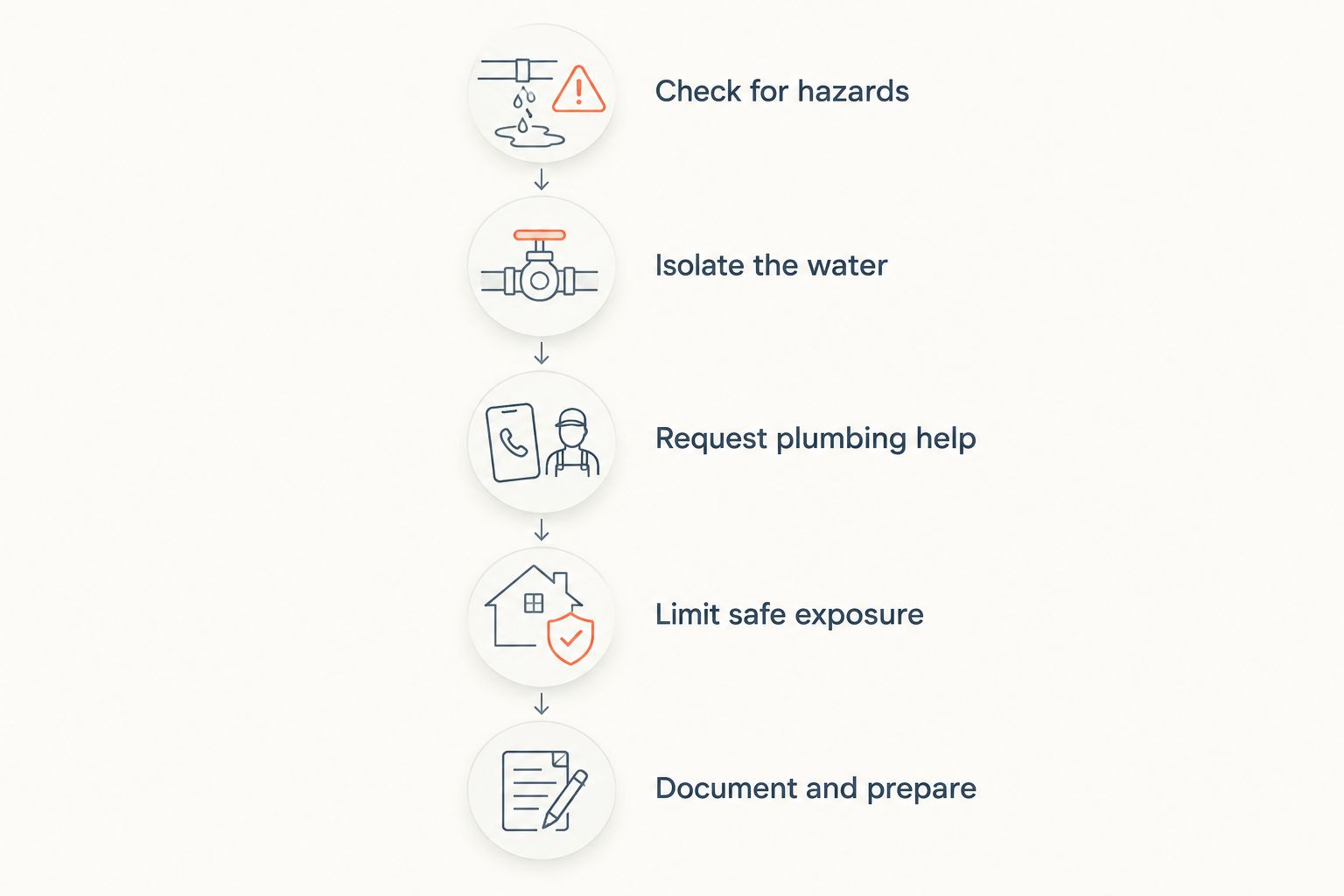
Stop the water only when the route to the shutoff is safe. Then protect people, report the problem, and leave the damaged section undisturbed. Follow this sequence rather than starting with towels or repair tape.
- Check for hazards. Stay out of water near outlets, appliances, electrical panels, or exposed wiring. Keep people away from bulging ceilings and visibly damaged surfaces. If you face an immediate threat to life, leave the area and call emergency services.
- Isolate the water. Use an accessible fixture shutoff for a clearly isolated fixture problem. For a broken supply pipe or an uncertain source, use the property's main water shutoff if you know its location and can reach it safely.
- Request plumbing help. Say that a pipe has burst, whether water is still flowing, and whether you have shut off the supply. Mention electrical hazards, ceiling damage, or affected neighboring units.
- Limit safe exposure. Move belongings away from the wet area only after checking the surroundings. Do not stand beneath a swollen ceiling or enter standing water to retrieve possessions.
- Document and prepare. Photograph visible damage from a safe position, note what happened, and keep the route to the affected area clear. Leave dismantling, testing, and restarting the system to the appropriate professional.
Closing the main valve does not instantly remove water already inside the pipes. Tell the plumber whether the flow stopped, slowed, or continued; that observation helps explain what is happening without requiring you to diagnose the system.
Which shutoff should you use?
The right valve depends on where the failure is and whether you can identify it safely. Do not delay an accessible main shutoff while searching for a smaller valve beside an uncontrolled leak.
| Option | Best for | Main benefit | Limit or caution |
|---|---|---|---|
| Fixture shutoff | A clearly identified fixture or supply connection | Isolates that fixture without stopping all household water | Does not isolate a break upstream of the valve |
| Main water shutoff | A broken supply pipe or uncertain leak source | Stops incoming water to the system it serves | Interrupts water service and can affect other occupants |
| Professional isolation | An inaccessible, stuck, shared, or unfamiliar valve | Avoids forcing equipment or entering an unsafe area | Water remains uncontrolled until safe isolation is arranged |
A typical quarter-turn valve closes with its handle perpendicular to the pipe. A wheel-style shutoff generally closes clockwise. Valve designs differ, so do not force a handle that resists movement or assume an unfamiliar valve controls domestic water.
In a building with shared plumbing, the valve you find might serve more than the affected unit. Tell the property manager or responsible building contact what you are doing, provided that communication does not delay a safe response to active flooding.
If the only apparent shutoff is in a flooded area, stop. Do not enter the water to reach it, and do not touch an electrical panel while wet or standing on a wet surface.
What should you tell the plumber?
Describe observations, not a guessed diagnosis. Saying that water is spraying from a visible split under the sink is more useful than saying the whole plumbing system has failed.
Keep this information together for the call:
- Location: Identify the room, floor, unit, and visible pipe location.
- Water status: Explain whether water is still flowing and which valve you closed.
- Visible damage: Report wet ceilings, walls, flooring, or water entering another unit.
- Safety concerns: Mention nearby electrical equipment, unstable surfaces, or suspected contaminated water.
- Affected use: Explain whether occupants have lost water, toilet use, or access to an essential area.
- Site contact: Identify who can provide information and coordinate the visit.
For a 2026 property-maintenance record, add the time you noticed the problem and any recent work or freezing conditions you actually observed. Do not label freezing, corrosion, or workmanship as the cause unless the repair establishes it.
Worry-less provides burst pipe repair help through plumbing service calls, including late-night emergencies. Confirm the service location, timing, and repair scope directly; an emergency search does not establish an arrival commitment.
What can you safely do while waiting?
Once water is isolated and the area is safe, focus on preventing additional exposure. Move dry belongings away from the wet area and protect the route people use to enter or leave the property.
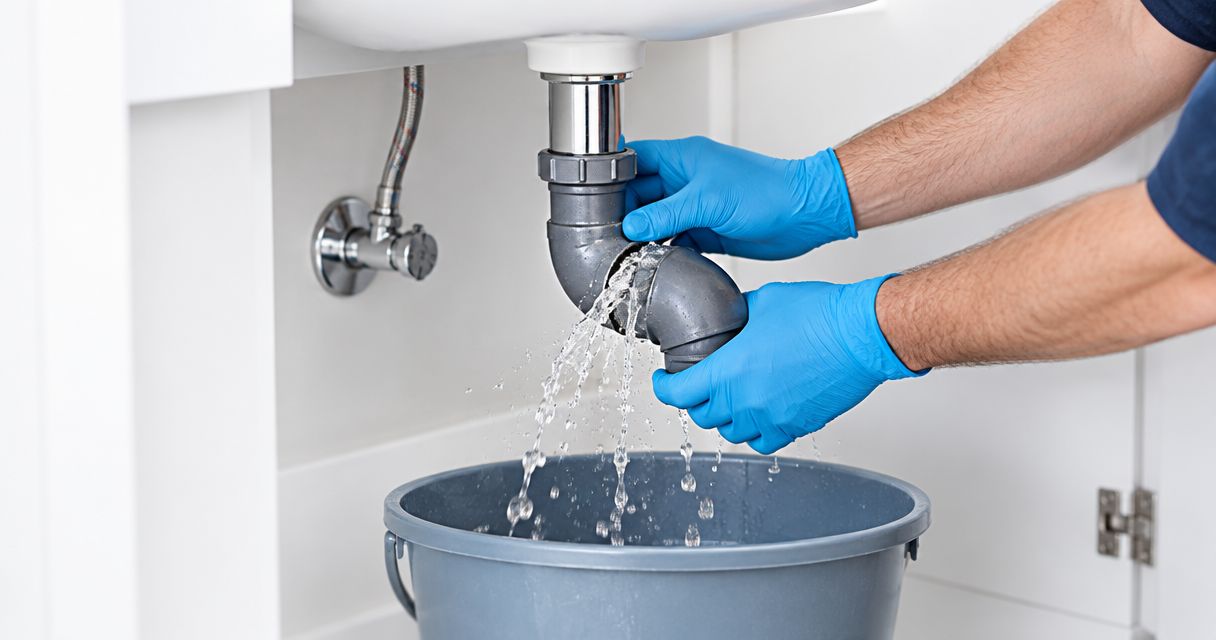
A container beneath residual dripping can help where the floor and ceiling are stable and there is no electrical hazard. It is not a substitute for isolation. Do not climb under a damaged ceiling or leave a container where someone could trip over it.
Avoid plugging in fans, pumps, extension cords, or wet vacuums in the affected area until electrical safety is established. A familiar appliance is still an electrical device, and standing water changes the risk.
Do not reopen the supply simply to see whether the pipe still leaks. That test can release more water into walls, ceilings, or adjoining units. Ask the plumber how and when the system should be tested after repair.
Should you use pipe tape or a temporary clamp?
Pipe tape or a temporary clamp is not a completed burst pipe repair. Suitability depends on the pipe material, the damage, the fitting, and whether the line is safely depressurized.
A temporary patch can also hide the break without addressing adjacent damage. Unless a plumber gives instructions for the specific situation, leave the water off rather than improvising a pressure-bearing repair.
Should you cut into the wall to find the break?
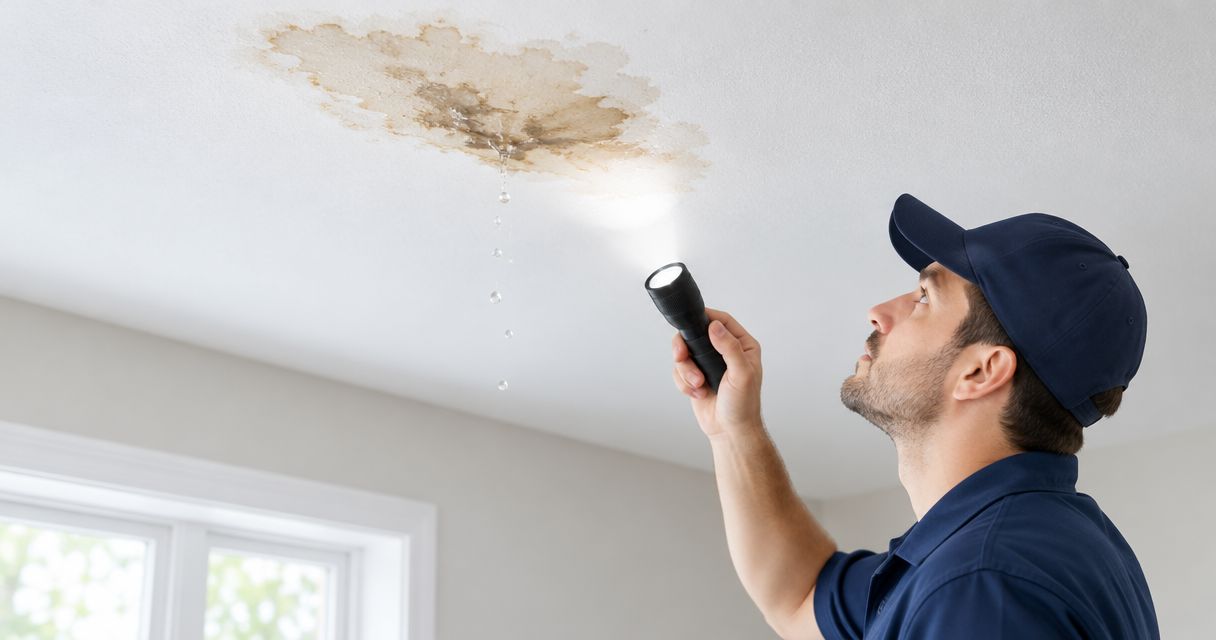
Do not cut into a wet wall or ceiling to search for the pipe. Concealed wiring, unstable materials, and water trapped above the opening create hazards that are difficult to judge from the surface.
Photograph the visible signs instead. Tell the plumber where water first appeared and where it traveled; the wettest visible spot is not proof of the pipe's exact location.
Why burst pipe repair varies
Burst pipe repair is not the same task in every building. The plumber needs to identify the failed section and understand the surrounding system before explaining the repair approach.
- Pipe material and connections: Repair methods must suit the existing pipe and fittings.
- Location and access: An exposed pipe is different from a pipe concealed behind a wall or above a ceiling.
- Extent of damage: A visible split does not establish the condition of adjacent pipe.
- Water isolation: A working, accessible shutoff changes how the repair can proceed.
- Building impact: Shared supplies and water entering another unit add coordination needs.
- Electrical or structural concerns: Unsafe surroundings must be addressed before plumbing access or cleanup.
Ask for a clear explanation of what failed, what work is proposed, and what remains outside the plumbing repair. Repairing the pipe and drying the building are separate tasks; completing one does not establish that the other is finished.
How should landlords and property managers coordinate the repair?
Landlords and property managers need a usable incident summary, not a stream of disconnected messages. Record the affected unit, current water status, visible spread, resident concerns, and the person coordinating communication.
Ask occupants to report what they can see from a safe location. Do not ask a tenant to enter a flooded utility area, operate an unfamiliar shared valve, remove a ceiling panel, or investigate electrical equipment.
If several units share the affected supply, communicate the known interruption and update occupants when there is confirmed information. Do not promise a restoration time before the repair scope is established. Follow the property's existing access arrangements and applicable requirements rather than inventing emergency entry procedures during the incident.
The guide to plumbing repair services for Cincinnati property managers provides a related starting point for organizing ongoing repair needs. Keep the emergency record separate from the follow-up maintenance list so neither gets lost.
For your 2026 rental-property records, document what was repaired and any further work recommended. Include unresolved moisture, damaged finishes, or a shutoff that needs attention; a stopped leak is not a complete maintenance record.
When should emergency work become a scheduled repair?
Request urgent help when water remains uncontrolled, safety is uncertain, or essential plumbing is unavailable. Once the supply is safely isolated and the surroundings are safe, discuss whether the remaining work can be scheduled without creating another problem.
Worry-less offers burst pipe repair service calls alongside convenient scheduled plumbing repairs. Late-night help addresses the immediate event; scheduled work gives you a way to handle identified follow-up repairs with clear explanations and practical repair advice.
Keep the trade-off explicit. Leaving a supply off prevents further flow through that supply, but it also removes water service from whatever it serves. A business, occupied rental, or household without usable plumbing needs that impact considered when arranging the next visit.
Arrange plumbing help
Describe the leak, water status, and affected property; confirm timing and the next repair step.
FAQ
What's the first thing I should do when a pipe bursts?
Check for electrical and ceiling hazards, then shut off the water if you can reach the correct valve safely. Contact a plumber and explain whether water is still flowing.
Can I stay in the house after a pipe bursts?
Do not stay in an area affected by electrical hazards, unstable ceilings, or other immediate dangers. Whether the rest of the home is usable depends on the damage and the loss of essential services.
Will shutting off the main stop a burst pipe leak?
Closing the correct main shutoff stops incoming water to the system it serves. Water already in the pipes can continue to drain, and a shared building can have additional supplies that require professional identification.
Can I fix a burst pipe with tape until morning?
Tape does not establish a safe or lasting burst pipe repair. Keep the affected supply off and ask a plumber about the specific pipe rather than reopening water against an improvised patch.
Should I call a plumber at night if the water is already off?
Contact a plumber to describe the incident and determine the next step, even if the water is off. Explain any unsafe conditions, affected neighboring units, or loss of essential plumbing before discussing timing.
What should I put in a 2026 burst pipe repair record?
Record the discovery time, affected location, water status, visible damage, communications, and completed repair. Keep photographs and note any follow-up work that remains unresolved.
Does repairing the pipe mean the wall is dry?
Repairing the pipe does not establish that the wall is dry. Ask how remaining moisture and damaged materials should be assessed separately from the plumbing repair.
One last thing
Make finding the shutoff a maintenance task, not an emergency discovery. Once the incident is resolved, identify the correct valve and record its location somewhere the responsible household member or property contact can find it.
Add that location check to your 2026 maintenance plan. If the valve was stuck, inaccessible, or unclear during the incident, arrange follow-up attention rather than assuming it will work next time.