The strongest signs you need professional drain cleaning are wastewater backing up, several fixtures draining poorly, and clogs that keep returning. For your 2026 maintenance checklist, treat an active backup as urgent and arrange scheduled service for persistent problems that are not overflowing.
- Signs you need professional drain cleaning include wastewater backups, recurring clogs, slow drains, gurgling, and persistent drain odors.
- Stop using affected plumbing when wastewater rises through a drain; request emergency plumbing help.
- Worry-less handles plumbing service calls, including late-night emergencies, alongside convenient scheduled repairs.
- Record which fixtures are affected; drain cleaning is not the answer to every drainage problem.
Why this matters
A slow bathroom sink and sewage rising through a floor drain need different responses. The useful question is not simply whether a drain is blocked, but whether you can stop using it safely while arranging service.
For homeowners, landlords, and businesses in the Cincinnati tri-state area, Worry-less provides plumbing service calls with clear explanations and practical repair advice. Worry-less is a fit for homeowners and property managers seeking plumbing help with late-night emergencies or scheduled repairs. Confirm current scheduling when you contact the business.
A drain symptom is a reason to investigate, not proof of a particular repair. Blockages, venting problems, and damaged drainage pipes can produce overlapping symptoms. Your job before the visit is to describe what happens, prevent further overflow, and avoid making the situation harder to diagnose.
What makes a drain warning sign important?
Use these criteria to decide what needs immediate attention and what belongs on your scheduled repair list:
- Direction of flow: Water coming back out of a drain needs more urgent attention than water leaving slowly.
- Number of affected fixtures: Problems at 2 fixtures deserve a different report than a problem at 1 fixture.
- Repeat pattern: A clog that returns after clearing needs investigation beyond another temporary fix.
- Connection between fixtures: A toilet flush that affects a shower drain is useful diagnostic information.
- Ability to stop use: An isolated sink you can leave unused creates different practical needs from a property's only working toilet.
- Exposure: Wastewater on floors or in occupied areas requires precautions as well as plumbing help.
Do not rank urgency by noise or smell alone. A quiet drain that is overflowing needs attention before a noisy drain that still works without a backup.
Drain warning signs at a glance
These 6 signs are ordered by the action they justify, not by how often they occur. Keep this distinction in your 2026 property-maintenance notes.
| Warning sign | Best for identifying | What it tells you | Key limitation | Next move |
|---|---|---|---|---|
| Wastewater backing up | An active drainage emergency | Water is not leaving through its intended route | Does not establish the blockage location | Stop use and request emergency help |
| Several fixtures draining poorly | A possible shared drainage problem | The issue extends beyond an isolated fixture | Does not prove a main sewer blockage | Report all affected fixtures promptly |
| Clogs that keep returning | A problem needing further diagnosis | Previous clearing has not resolved the symptom | Does not prove pipe damage | Schedule professional assessment |
| A persistently slow drain | An isolated drainage restriction | Drainage performance remains impaired | The cause is not visible from flow speed alone | Schedule repair before continued use worsens the problem |
| Gurgling during other fixture use | A drainage or venting interaction | Air and water movement need investigation | Sound alone does not confirm a clog | Record the trigger and arrange assessment |
| Persistent drain odors | A drain, trap, or connection problem | The source needs checking | Odor alone does not establish a cleaning need | Arrange diagnosis rather than assuming a blockage |
1. Wastewater backing up: best for recognizing urgent trouble
Wastewater rising into a shower, tub, sink, or floor drain is the clearest reason to stop using the affected plumbing and request help. Continued flushing, running taps, or operating water-using appliances can add more water to the problem.
Keep people and pets away from wastewater. If water is near electrical equipment or outlets, stay clear and do not enter the wet area to reach a switch or appliance.
Useful evidence:
- Which drain is overflowing and whether the water is still rising.
- Whether the backup started during a flush, shower, or appliance cycle.
- Whether other fixtures are affected at the same time.
Limits: The lowest drain showing wastewater is not necessarily where the blockage sits. Drain cleaning also will not repair a broken pipe if damage is the underlying cause.
Best for: Deciding when to seek urgent help rather than another household remedy.
Verdict: Call for emergency plumbing help and stop adding water to the system.
2. Several fixtures draining poorly: best for spotting a shared problem
When a toilet, shower, and nearby sink all struggle to drain, report the group of symptoms together. Several affected fixtures can point to a shared section of drainage rather than separate clogs at every fixture.
An interaction matters too. If flushing a toilet causes water to rise in a shower, do not keep flushing to demonstrate the problem. Describe the event instead.
Useful evidence:
- Whether symptoms occur in the same bathroom or across different rooms.
- Whether an upstairs fixture appears to affect a lower drain.
- Whether wastewater is rising or flow is merely slow.
Limits: Multiple affected drains do not prove that the entire sewer line is blocked. A shared branch or a venting problem also needs consideration.
Best for: Giving the plumber a property-wide picture instead of reporting only the first complaint.
For a closer distinction, read one blocked drain or a main-line backup.
Verdict: Request prompt assessment; treat rising wastewater as an emergency.
3. Clogs that keep returning: best for identifying incomplete fixes
A drain that clears and then blocks again needs more than a repeat of the same temporary response. The recurring symptom means the cause has not been resolved, even if water runs normally between incidents.
For a rental property, check previous repair notes before describing the issue as new. A repeated complaint from the same fixture is valuable information, especially when different occupants have reported it.
Useful evidence:
- What was done during the previous clearing attempt.
- Whether normal drainage returned fully or only partly.
- Whether the same fixture or a different fixture became blocked next.
Limits: Recurrence does not establish roots, collapsed pipes, or tenant misuse. Those explanations require evidence, not assumptions based on a repeat call.
Best for: Moving from repeated symptom relief to a repair decision based on the cause.
Ask what the proposed work addresses and what finding would justify additional investigation. Avoid treating every return visit as proof that the same cleaning method should be repeated.
Verdict: Schedule professional diagnosis rather than another short-lived clearing attempt.
4. A persistently slow drain: best for planning scheduled service
A sink or shower that drains slowly during normal use deserves attention even without an overflow. Hair, soap residue, grease, and other material can restrict drainage, but flow speed alone does not identify the material or its location.
If the fixture remains usable without water backing up, scheduled service is the practical next step. Stop using it if the water level starts rising instead of draining away.
Useful evidence:
- Whether the problem affects hot and cold water use alike.
- Whether water drains eventually or remains standing.
- Whether a visible strainer contains removable debris.
Limits: Removing visible debris does not prove the drain is clear farther along. A slow drain also does not establish that aggressive chemical treatment is appropriate.
Best for: Handling a contained problem through convenient scheduled repairs rather than waiting for a backup.
For your 2026 repair list, record persistent slow drainage alongside leaking faucets and running toilets. Worry-less handles scheduled plumbing repairs as well as late-night plumbing emergencies.
Verdict: Schedule service when slow drainage persists or returns.
5. Gurgling during other fixture use: best for tracking interactions
A drain that gurgles when another fixture empties provides a useful clue about air movement in the drainage system. Report the connection: what you used, which drain made noise, and whether its water level changed.
An occasional sound alone is not proof that professional drain cleaning is needed. Repeated gurgling combined with slow drainage or rising water is a stronger reason to arrange assessment.
Useful evidence:
- Whether flushing a toilet triggers the sound.
- Whether the sound comes from an otherwise unused fixture.
- Whether bubbling accompanies a change in water level.
Limits: Venting problems can produce gurgling, so cleaning a drain is not automatically the right repair. Do not climb onto a roof to inspect a vent as part of a household check.
Best for: Reporting a repeatable symptom that helps distinguish an isolated fixture problem from a broader issue.
Verdict: Schedule assessment for repeated gurgling; escalate if water starts backing up.
6. Persistent drain odors: best for recognizing a diagnosis-first problem
A persistent odor near a drain deserves investigation, but smell alone is the weakest evidence that cleaning is required. A dry trap, residue around an opening, a connection problem, or another plumbing issue can be responsible.
If an infrequently used fixture has a dry trap, ordinary water use can restore the water barrier. An odor that persists or returns still needs assessment rather than stronger fragrance or repeated chemical treatment.
Useful evidence:
- Whether the fixture is rarely used.
- Whether the smell stays at one drain or appears in several locations.
- Whether slow drainage, bubbling, or visible leakage occurs too.
Limits: Odor does not locate a blockage. Never assume an unexplained gas-like smell is harmless drain odor; leave the area and contact the appropriate emergency service if you suspect a gas leak.
Best for: Avoiding an unnecessary cleaning-only response when the actual cause needs repair.
Verdict: Schedule diagnosis for persistent drain odors, not automatic drain cleaning.
What to do before the plumbing visit
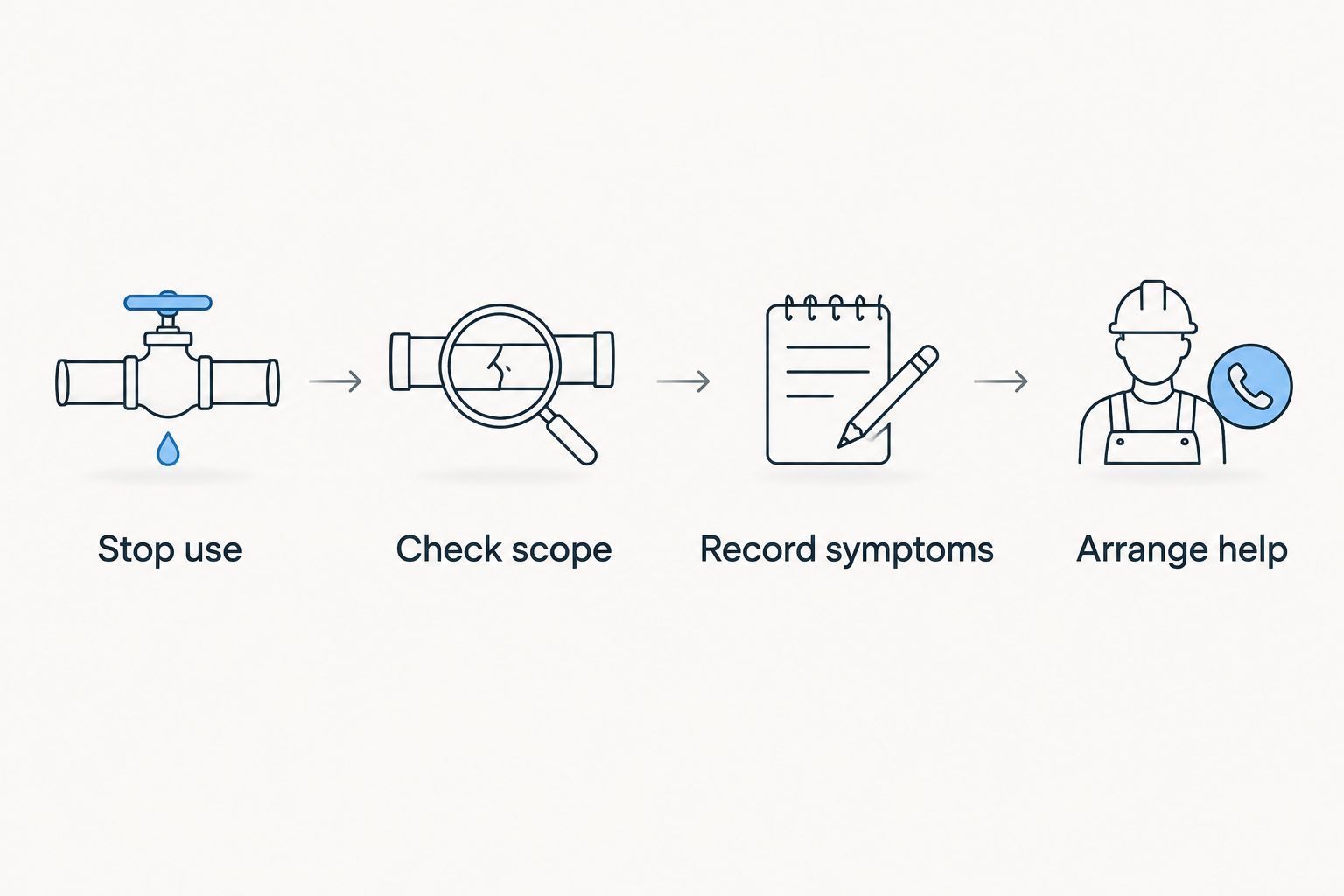
Use this 2026 reporting sequence whether you manage an occupied rental, own your home, or coordinate repairs for business premises. Keep the report factual and avoid reproducing a backup for photographs.
- Stop use: Leave affected fixtures unused when water backs up. Tell other occupants which plumbing to avoid.
- Check scope: Note whether 1 fixture or 2 fixtures are affected, without running more water to test them.
- Record symptoms: Write down the trigger, location, visible water, and previous attempts to clear the drain.
- Arrange help: Explain whether the property has usable alternative fixtures and whether wastewater is escaping.
For landlords and property managers, separate the tenant's observations from your own. Share relevant previous repair details, confirm how access will be arranged, and identify who can approve the proposed work. These are coordination steps, not a reason to delay reporting an active backup.
If anyone has used a drain-cleaning chemical, tell the plumber the product name before work begins. Do not mix products or add another chemical to standing water.
Discuss your plumbing problem
Explain the drain symptoms and ask about emergency help or a scheduled repair.
How these signs are ranked
This 2026 guide ranks symptoms by immediate exposure, the number of fixtures involved, recurrence, and how directly the symptom supports a drainage problem. It is a triage guide, not a claim that every symptom requires the same equipment or repair.
The benefit of professional assessment is a repair decision tied to the problem. The limitation of cleaning alone is equally important: removing an obstruction does not correct every damaged pipe, failed connection, or venting fault.
Which next step should you choose?
Choose emergency help for active wastewater backups; choose scheduled assessment for persistent symptoms you can safely contain. When contacting Worry-less for plumbing service, describe what the water is doing before naming the repair you think you need.
A same-day, weekend, or after-hours search does not confirm an appointment. Ask about current availability, explain the affected fixtures, and request a clear explanation of the proposed work before authorizing it.
FAQ
What are the clearest signs you need professional drain cleaning?
Wastewater backups, recurring clogs, and several fixtures draining poorly are strong reasons to request professional assessment. Persistent slow drainage, gurgling, and odors also deserve investigation, but cleaning is not always the correct repair.
When does a clogged drain become an emergency?
A clogged drain needs urgent help when wastewater is backing up or overflowing into occupied areas. Stop using affected plumbing and explain whether other fixtures are involved when requesting service.
Does a slow drain always need professional cleaning?
No, a slow drain does not automatically require professional cleaning. Visible strainer debris is different from a persistent restriction, and recurring symptoms need assessment of the underlying cause.
Why does my drain clog again after I clear it?
A returning clog means the underlying problem has not been resolved. Remaining buildup, an obstruction, or a pipe problem needs investigation rather than an assumption about the cause.
Should I use chemical drain cleaner before calling a plumber?
Do not add drain-cleaning chemicals to a backup or mix drain products. If you already used a product, tell the plumber its name before work starts.
What should a property manager report about a blocked drain?
Report the affected fixtures, whether wastewater is escaping, and what happened immediately before the problem. Include relevant repair history, any chemicals used, and practical access information without running fixtures to recreate the backup.
Can I arrange drain help at night or schedule a daytime visit?
Worry-less handles plumbing service calls including late-night emergencies and scheduled repairs. Explain the symptoms and confirm current scheduling; an after-hours search does not establish immediate availability.
One last thing
The drain where water appears is not necessarily where the problem begins. For your 2026 maintenance record, save the plumber's explanation of the cause alongside the symptom and completed repair. That distinction helps the next person recognize a repeat problem instead of starting the investigation from scratch.