The plumbing problems that can't wait after hours are an uncontrolled burst pipe, a sewage backup, a concealed leak damaging a ceiling, a leaking water heater, and a toilet overflow you cannot contain. This 2026 guide explains when to seek late-night help from Worry-less, what to do safely while arranging a visit, and which problems belong on a scheduled repair list.
- Plumbing problems that can't wait after hours include uncontrolled leaks, sewage backups, and overflowing fixtures.
- Worry-less handles plumbing service calls, including late-night emergencies; confirm availability when requesting help.
- Stop using backed-up drains, isolate leaking fixtures when safe, and stay away from wet electrical equipment.
- A contained faucet drip usually belongs on a scheduled plumbing repair list, not an emergency call.
Why this matters
The clock does not decide whether a plumbing problem is urgent. Continuing damage, contaminated water, and loss of essential facilities decide it. A faucet dripping into a clear sink is different from water escaping inside a wall, even when both start after dinner.
For Cincinnati-area homeowners, landlords, property managers, and businesses, the immediate decision is the same: can the problem be safely contained until a scheduled visit? In an occupied rental, also establish whether residents have a usable toilet and whether water is affecting another unit. Do not treat a tenant's description of a small leak as proof that the damage is small.
What makes a plumbing problem urgent?
Use these five criteria before comparing the problems below:
- Water control: Can you stop the flow with an accessible, working shutoff without entering an unsafe area?
- Contamination: Is wastewater or sewage entering an occupied space?
- Hidden damage: Is water reaching a ceiling, wall cavity, floor assembly, or another unit?
- Essential use: Does the problem leave occupants without a usable toilet or a safe water supply?
- Physical safety: Is water near electrical equipment, or is a ceiling sagging?
For your 2026 maintenance checklist, separate the immediate containment decision from the permanent repair decision. Closing a valve can stop damage without fixing the failed pipe, connection, or fixture.
After-hours plumbing problems at a glance
The order below helps you identify the situation; it is not a reason to treat a lower-ranked hazard less seriously. Each problem needs its own response.
| Problem | Best action for | Immediate step | Key limitation |
|---|---|---|---|
| Burst pipe or uncontrolled supply leak | Water continuing to escape under pressure | Close a known, accessible shutoff if safe | A valve that will not close leaves the leak uncontrolled |
| Sewage or shared-drain backup | Wastewater returning through drains | Stop using affected plumbing | Clearing one fixture does not establish the cause |
| Concealed leak or wet ceiling | Water spreading through building materials | Keep people clear and stop the source if safely identifiable | The visible stain does not show the full leak path |
| Leaking water heater | Water escaping from the tank or connections | Keep clear of hot water and electrical hazards | Stopping the leak does not establish that the heater is safe |
| Uncontrolled toilet overflow | A toilet spilling water or leaving no usable toilet | Stop flushing and isolate the toilet if safe | A toilet shutoff cannot stop sewage returning through a drain |
1. Burst pipe: best handled by stopping the water first
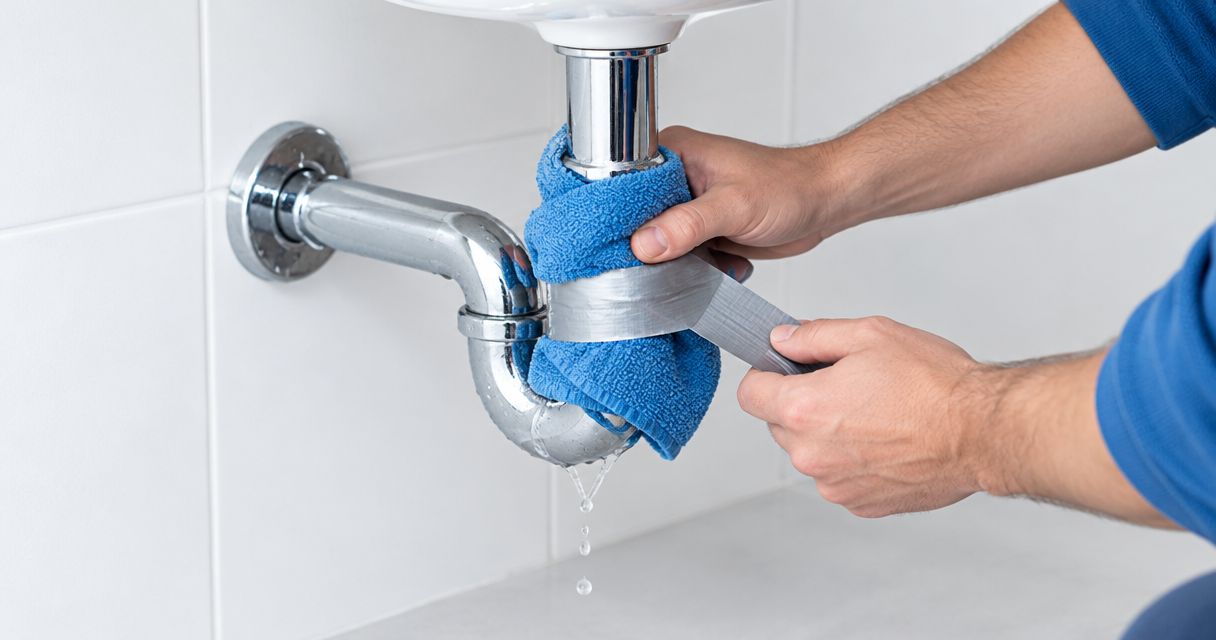
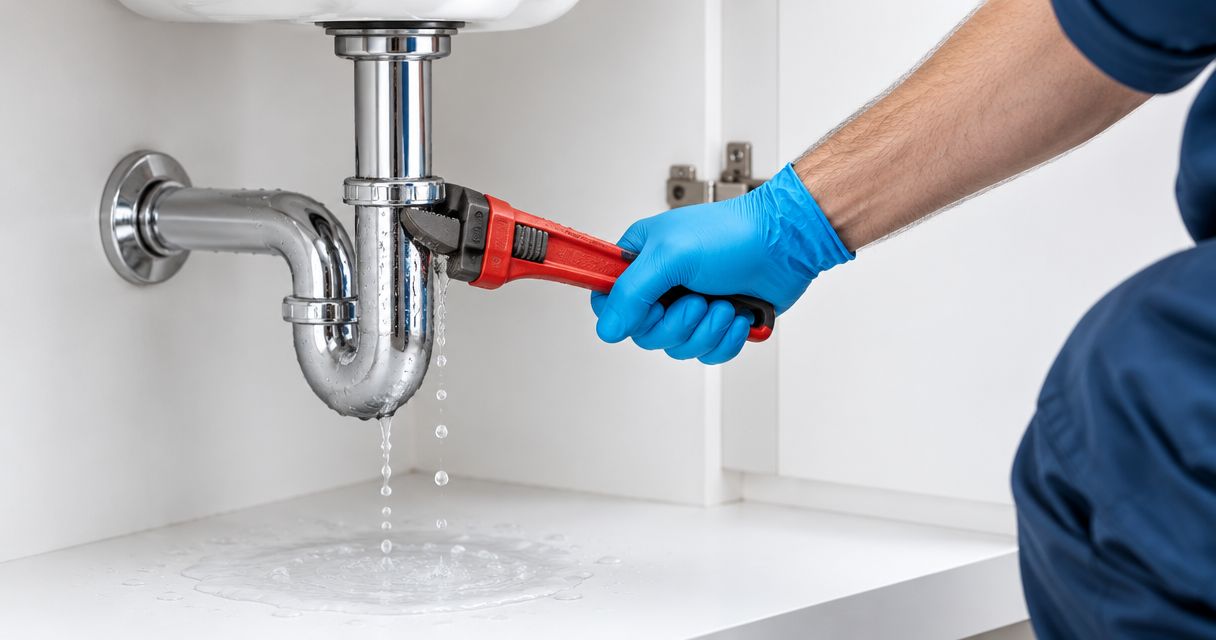
A split pipe, failed supply connector, or separated fitting needs after-hours attention when water keeps escaping. The urgent issue is not the name of the broken part. It is whether the flow is stopped and the affected area is safe.
Close the nearest known shutoff only if you can reach it safely. If that does not isolate the leak, use the building's known main shutoff when accessible; do not force a seized valve or enter standing water to reach one.
Best for: Immediate isolation followed by emergency plumbing repair when the leak remains uncontrolled.
Containment benefits:
- Limits additional water entering the property.
- Gives the plumber a clearer account of what is still leaking.
- Separates the active leak from water already draining out of materials.
Limits and cautions:
- A closed valve is not a pipe repair.
- A shared shutoff can interrupt water elsewhere in the building.
In a rental, report which valve was closed and which units or fixtures lost service. Do not tell occupants to reopen it simply because the floor now looks dry. The burst pipe repair guide explains what information to gather before the visit.
Verdict: Skip waiting when water remains uncontrolled; seek after-hours help.
2. Sewage backup: best handled by stopping drain use
Wastewater rising through a floor drain, shower, or toilet is not an ordinary slow drain. Stop using the affected plumbing and keep people and pets away from contaminated water.
Multiple affected fixtures, or wastewater appearing when another fixture runs, are useful details to report. They help describe the pattern, but they do not prove where the blockage sits. Do not keep flushing or running taps to reproduce the problem.
Best for: Emergency drain assessment when wastewater returns indoors or essential fixtures cannot be used.
Immediate-action benefits:
- Avoids adding more wastewater to the affected drainage system.
- Reduces unnecessary contact with contaminated surfaces.
- Gives the plumber a useful description of connected symptoms.
Limits and cautions:
- Stopping water use does not remove the obstruction.
- A temporarily receding water level does not prove the drain is clear.
For a business, take the affected restroom out of use rather than asking customers or staff to test it. For a rental building, identify which units report symptoms without assuming every unit shares the same blockage.
Verdict: Skip waiting when sewage is entering the property or backing up repeatedly.
3. Concealed leak: best handled by protecting the affected area
Water dripping through a ceiling, spreading beneath flooring, or appearing inside a wall needs prompt attention when the source is active. A small visible opening can be the exit point for water traveling from somewhere else.
Keep people away from a bulging or sagging ceiling. Do not puncture it, stand beneath it, or open electrical fixtures to investigate. If water is near wiring, outlets, or electrical equipment, keep clear and seek appropriate professional help.
Best for: After-hours assessment of an active hidden leak, especially between occupied floors.
Immediate-action benefits:
- Keeps occupants away from visibly damaged areas.
- Helps identify which spaces are affected before repair access begins.
- Supports coordination between upstairs and downstairs occupants.
Limits and cautions:
- A stain alone does not identify a plumbing source.
- Drying the visible surface does not establish that hidden materials are dry.
Ask whether an upstairs fixture was running when the leak appeared, but do not restart it as a test. An old, dry stain with no new moisture is different from a ceiling that is currently dripping or changing shape.
Verdict: Skip waiting for an active concealed leak or a sagging ceiling; keep the area clear.
4. Leaking water heater: best handled without touching wet equipment
A water heater leaking onto the floor needs prompt assessment when water is spreading, the source cannot be isolated, or electrical components are exposed to moisture. Water around the heater does not, by itself, establish whether the tank, a connection, or another nearby source is responsible.
Keep away from hot discharge and wet electrical controls. Do not plug a relief outlet, remove covers, or operate unfamiliar controls. If you smell gas, leave the area and contact the gas utility or emergency services from a safe location.
Best for: Prompt plumbing assessment of active water loss around a water heater.
Immediate-action benefits:
- Avoids handling potentially hot water or wet equipment.
- Preserves useful observations about where water first appeared.
- Helps separate the leak report from a separate loss-of-hot-water complaint.
Limits and cautions:
- A stopped leak does not confirm safe operation.
- Loss of hot water alone is different from an uncontrolled water leak.
For a property manager, report whether the heater serves one unit or shared facilities if that information is known. Describe the water location rather than announcing that the tank has failed before inspection.
Verdict: Skip waiting when water is spreading or a safety hazard is present; do not investigate wet controls.
5. Toilet overflow: best handled by distinguishing supply from drainage
An overflowing toilet needs immediate action, but the next step depends on where the water comes from. A toilet continuing to fill is different from wastewater rising through the bowl because the drainage system is backing up.
Stop flushing. Close the toilet's accessible supply valve if safe, without forcing it; understand that this stops incoming supply water, not wastewater returning from the drain. If other fixtures are backing up, stop using them too.
Best for: Urgent containment of an overflowing toilet or assessment when an occupied property has no usable toilet.
Immediate-action benefits:
- Prevents repeated flushing from adding more water.
- Helps distinguish a fixture problem from a broader drainage problem.
- Establishes whether occupants still have essential bathroom access.
Limits and cautions:
- Closing the supply valve does not clear a blockage.
- A running toilet contained within the bowl is not the same as an overflow.
A home with another working toilet and a safely isolated fixture has different scheduling needs from an occupied rental with no usable toilet. Report that distinction when requesting service rather than relying on the word emergency alone.
Verdict: Skip waiting for an uncontrolled overflow or loss of the only usable toilet.
How these problems are ranked
This 2026 guide ranks response needs by the five criteria above: control, contamination, hidden damage, essential use, and physical safety. It is a triage guide, not a diagnosis or a comparison of plumbing companies. A lower-listed problem takes priority whenever it presents the greater immediate hazard.
Which response should you choose?
Choose after-hours help when you cannot safely contain the problem, wastewater is entering the property, or essential facilities are unusable. Choose scheduled repair when the fault is contained, the area is safe, and occupants can use necessary plumbing without restarting the problem.
Worry-less provides plumbing service calls, including late-night emergencies, alongside convenient scheduled repairs and practical repair explanations. Worry-less is a fit for homeowners and property managers seeking help with either urgent plumbing problems or planned repairs. Confirm current availability and explain the actual conditions before arranging a visit.
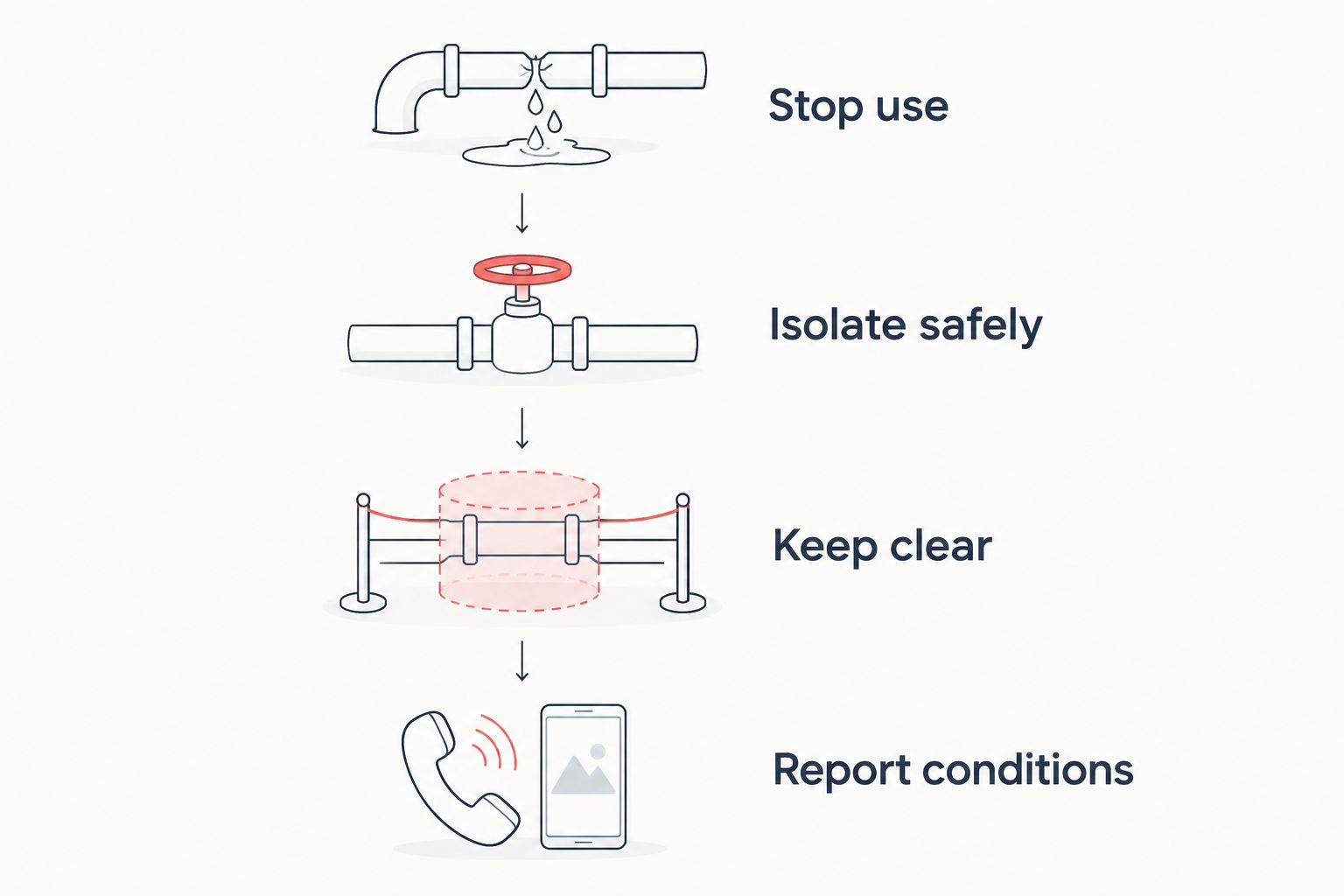
For your 2026 response plan, use this sequence:
- Stop use: Stop flushing or running fixtures involved in a backup.
- Isolate safely: Close only a known, accessible valve when conditions are safe.
- Keep clear: Avoid sewage, sagging ceilings, hot discharge, and wet electrical equipment.
- Report conditions: Explain what continues to happen and what essential facilities remain usable.
A contained faucet drip, an isolated leaking fixture, or a slow drain without backup still deserves repair. Schedule the work rather than repeatedly checking whether it has become an emergency. This gives recurring faults attention without treating every maintenance request as an overnight callout.
What landlords and property managers should report
Keep the first report short and factual. Identify the property, affected space, current water behavior, any safe action already taken, and whether occupants have usable plumbing.
For a reusable 2026 reporting template, request 3 observations: where water appears, whether it is still flowing, and which fixtures are affected. Ask for 1 photo per affected room, taken only from a safe position. Keep 2 contact numbers available when possible: the person coordinating the repair and the person who can describe current conditions.
These are reporting prompts, not a reason to delay help. Do not ask a tenant to enter standing water, approach a damaged ceiling, or dismantle plumbing to complete the report. Record access arrangements separately and confirm them with the people involved.
FAQ
What plumbing problems can't wait until morning?
Uncontrolled leaks, sewage backups, active concealed leaks, hazardous water-heater leaks, and uncontrolled toilet overflows need prompt action. After-hours help is appropriate when you cannot safely contain the problem or essential plumbing is unusable.
Can a burst pipe wait if I turn the water off?
A successfully isolated burst pipe is more controlled, but it still needs repair. Seek urgent guidance if water continues escaping, electrical hazards exist, or shutting off the supply leaves occupants without essential water service.
Is a dripping faucet an after-hours plumbing emergency?
A faucet dripping into a clear, functioning sink usually belongs on a scheduled repair list. Water escaping into a cabinet, wall, or floor changes the urgency because it is no longer contained by the fixture.
Should I keep flushing a blocked toilet to see if it clears?
No, stop flushing a blocked or overflowing toilet. Repeated flushing adds water, and closing the supply valve will not stop wastewater backing up through the drain.
What should a landlord ask a tenant during a plumbing emergency?
Ask where water appears, whether it is still flowing, which fixtures are affected, and whether a usable toilet remains. Request photos only from a safe position and do not ask the tenant to investigate electrical or ceiling hazards.
Does an after-hours plumbing search guarantee someone can come immediately?
No, an after-hours search does not establish current availability or arrival time. When contacting Worry-less for emergency plumbing help, describe the conditions and confirm the next available visit.
One last thing
A leak that stops when a fixture is unused is contained by behavior, not repaired. Note exactly what use restarts it, then leave that fixture out of service until assessed. For landlords and property managers, that detail is more useful than a message saying the leak has disappeared.