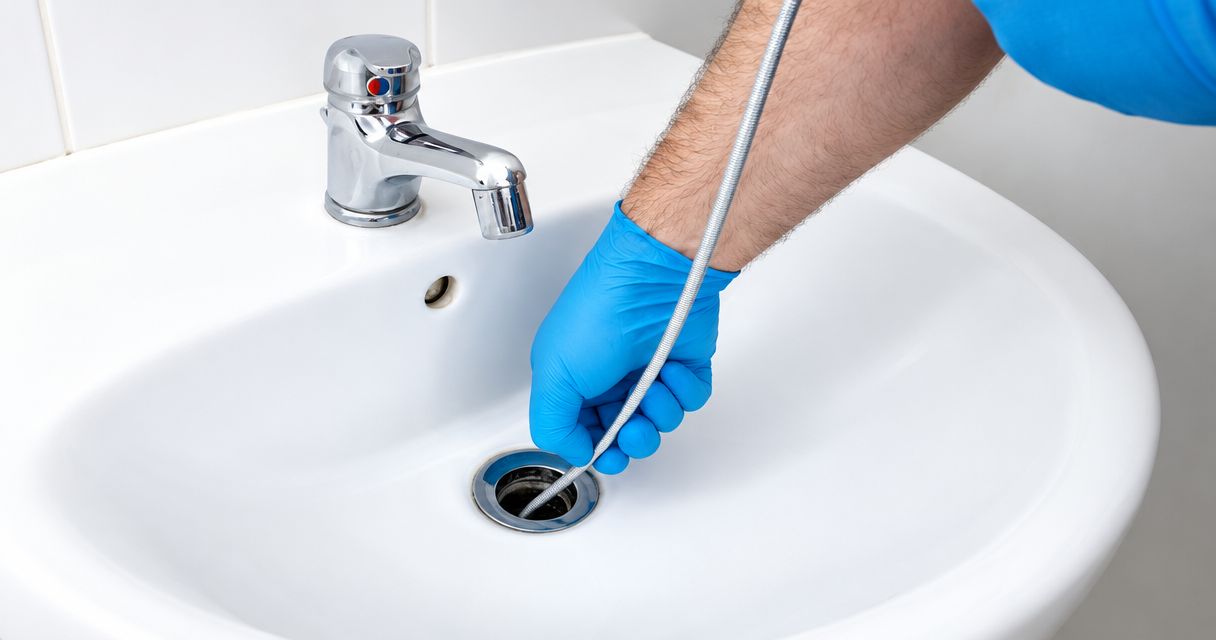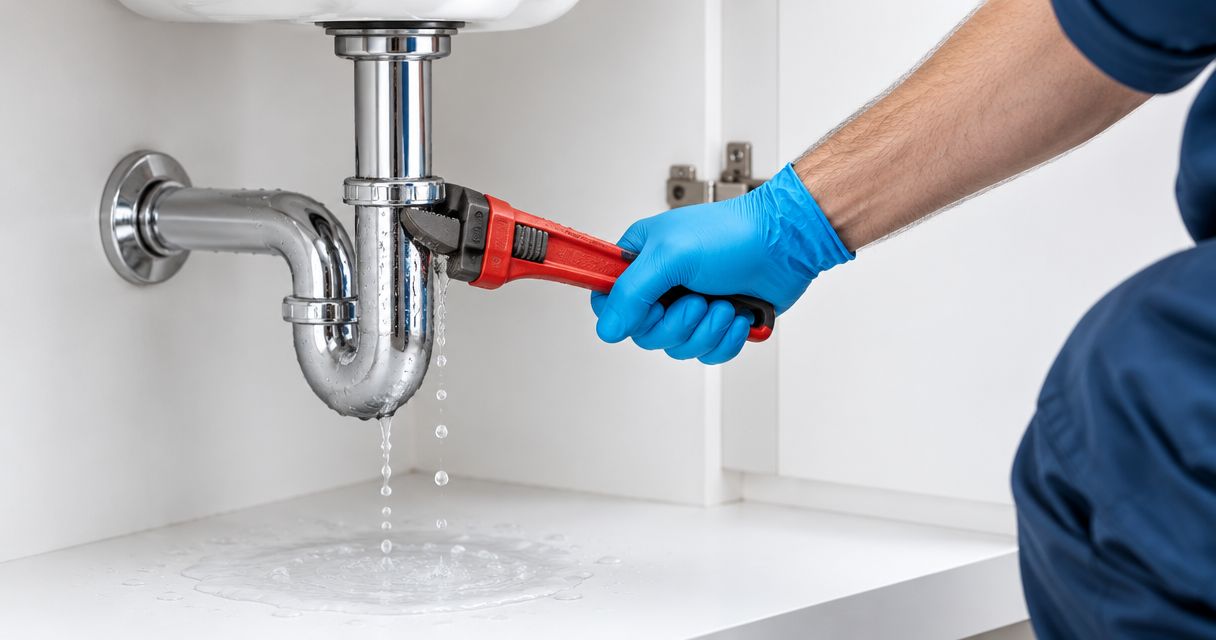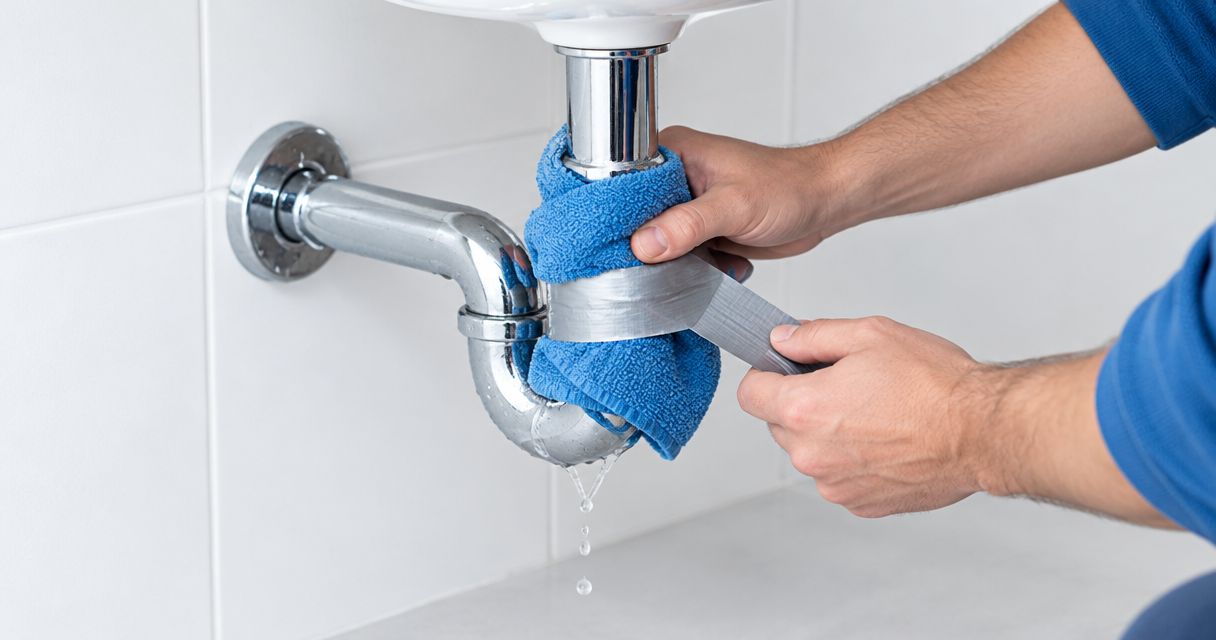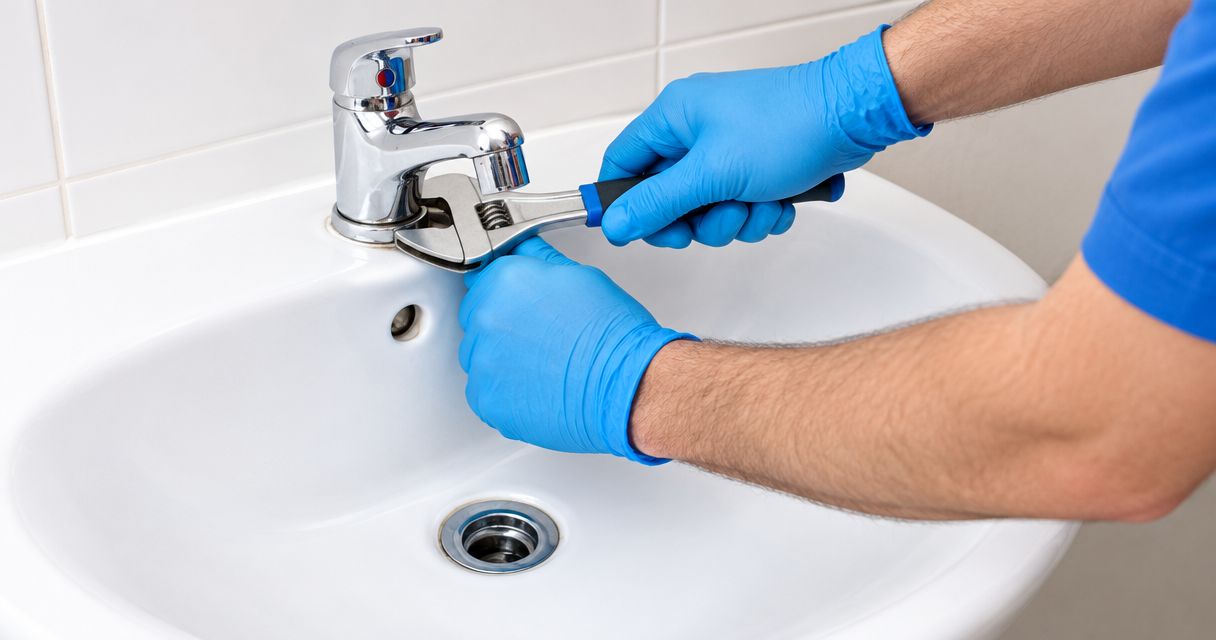
Best overall: diagnose the leak before replacing the faucet. Best for rental maintenance: group contained faucet faults into a scheduled repair visit. These five common faucet repair problems can be candidates for a single visit, but completion depends on the diagnosis, compatible parts and working shutoffs—not the symptom alone.
- Common faucet repair problems include dripping spouts, base leaks, weak flow, stiff handles and faulty pull-down sprayers.
- Worry-less handles faucet repair service calls, with scheduled repairs and help for late-night plumbing emergencies.
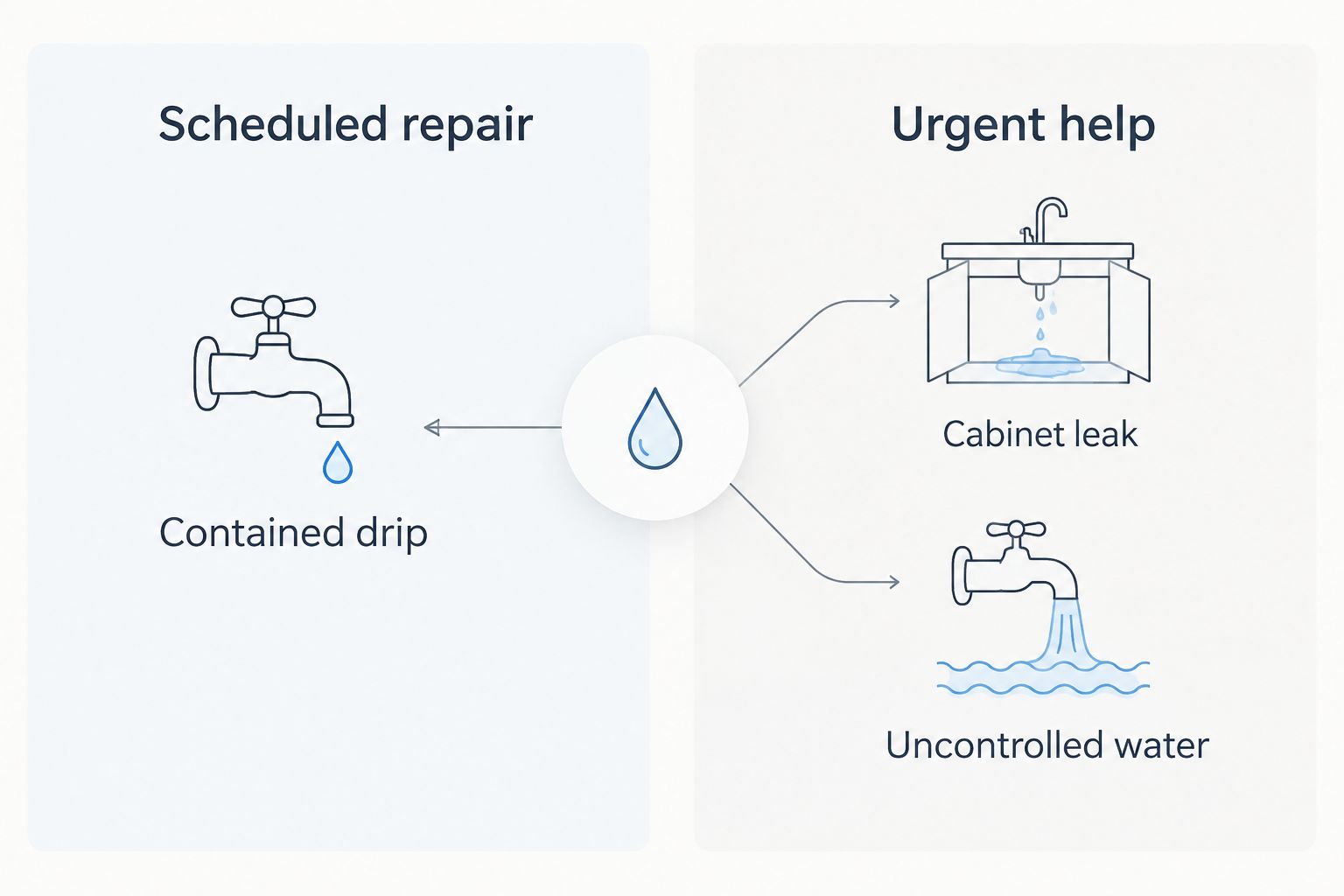
- Uncontrolled water needs urgent attention; a contained drip generally belongs on the scheduled repair list.
- Send fixture photos and describe the leak location before booking; compatible parts affect whether repair finishes in one visit.
For homeowners, landlords and businesses in the Cincinnati tri-state area, Worry-less provides plumbing service calls, including late-night emergency help. Describe the problem when you inquire and confirm the timing available for your property.
Why this matters
A faucet symptom is not a diagnosis. Water around a faucet base can come from an internal seal, a splash or a connection underneath; replacing the wrong component leaves the actual problem untouched.
For your 2026 maintenance plan, separate damage prevention from fixture inconvenience. A slow drip into the sink needs repair, but water escaping into a cabinet demands a different response. In an occupied rental or business restroom, also report whether another usable fixture remains.
Worry-less is a practical fit for homeowners and property managers seeking faucet repair with clear explanations and practical repair advice. The useful decision is whether to schedule a contained fault or request urgent help for water you cannot control.
What makes the best faucet repair approach
Judge the repair by these criteria before deciding to replace the whole fixture:
- Correct diagnosis: Identify where water first appears and whether the symptom happens with the faucet on, off or both.
- Repairable condition: Check the faucet body, connections and surrounding sink area—not just the moving part.
- Compatible parts: Match the replacement component to the fixture rather than choosing by appearance alone.
- Safe isolation: Establish whether the water supply can be shut off without forcing a stuck valve.
- Verified operation: Check flow, handle movement and leaks after the repair, including underneath the sink.
These criteria apply equally to a homeowner's kitchen and a property manager's maintenance list. A quick component change is not a complete repair unless the original symptom stops and the connections remain dry.
Common faucet repair problems at a glance
The order below starts with familiar fixture-level complaints. It is a troubleshooting guide, not an urgency ranking: an uncontrolled leak takes priority over every contained fault in the table.
| Problem | Best repair fit | What the repair addresses | Key limitation |
|---|---|---|---|
| Dripping spout | Targeted internal repair | A cartridge, washer or other sealing component that no longer closes properly | A damaged faucet body changes the repair decision |
| Water around the base | Leak tracing and seal repair | The actual source above or below the sink | Water can travel away from its source |
| Weak or uneven flow | Aerator or outlet cleaning | Debris or deposits restricting the outlet | Supply or internal restrictions require further diagnosis |
| Stiff or loose handle | Handle or cartridge repair | Loose hardware, worn parts or difficult movement | Tightening alone does not fix internal wear |
| Faulty pull-down sprayer | Hose, connection or spray-head repair | Leaks, poor switching or retraction trouble | Proprietary components must match the fixture |
1. Dripping spout: targeted repair for a faucet that will not close
A faucet that drips from the spout after you turn it off often has a sealing problem inside. Depending on its design, the plumber checks components such as a cartridge, washer or valve seat before deciding what needs replacement.
Best for: A faucet with an otherwise sound body and a repeatable drip when closed. Report whether the drip continues after residual water has drained from the spout.
Dripping-spout repair pros
- Addresses the internal closing mechanism rather than hiding the symptom.
- Preserves an existing faucet when the remaining components are serviceable.
- Gives the plumber a clear symptom to reproduce and test.
Dripping-spout repair cons
- Similar-looking faucets can require different internal parts.
- Corrosion or damage can make a component-only repair unsuitable.
For a rental, record which fixture drips and whether the handles still shut off normally. Do not ask the occupant to tighten the handle harder; excessive force is not a repair and can damage components.
A contained drip into a draining sink usually suits a scheduled visit. Verdict: Choose targeted repair when the faucet body is sound; do not replace the entire fixture solely because it drips.
2. Water around the base: trace the source before replacing seals
Water pooling where the faucet meets the sink needs observation before disassembly. It can originate at a spout seal, the faucet body or another connection, and splashing can resemble a leak.
Best for: A repeatable puddle around the faucet or moisture that appears underneath during use. Dry the accessible area, operate the fixture briefly if safe, and note where the first moisture appears.
Base-leak repair pros
- Separates an actual plumbing leak from water left by normal use.
- Directs repair toward the leaking connection or seal.
- Includes an opportunity to inspect the cabinet for ongoing moisture.
Base-leak repair cons
- Water can travel along the faucet or a hose before becoming visible.
- A mounting-area leak and a supply leak need different repairs.
The guide to water leaking around the base of a faucet explains why location alone does not identify the failed part.
For property managers, ask for 2 photos when safe: one of the fixture above the sink and one of the accessible area below. Keep electrical items away from wet areas, and do not reach into a wet cabinet containing electrical equipment.
Verdict: Choose source tracing first; replacing a visible seal without identifying the leak is not a reliable repair plan.
3. Weak or uneven flow: check the outlet before blaming supply pipes
A clogged aerator can turn a normal stream into a weak, uneven or spraying flow. The plumber checks the outlet and compares the symptom with other fixtures before deciding whether the restriction is local or farther upstream.
Best for: One faucet with poor flow while nearby fixtures operate normally. Explain whether the problem affects hot water, cold water or both.
Outlet-cleaning pros
- Addresses debris at the point where water leaves the faucet.
- Avoids treating every weak stream as a whole-property supply problem.
- Provides a straightforward before-and-after flow check.
Outlet-cleaning cons
- Cleaning the aerator does not resolve a restricted cartridge or supply connection.
- Repeated debris calls for investigation rather than repeated cleaning alone.
Add a simple fixture comparison to your 2026 maintenance notes. Report whether 1 faucet is affected or whether the problem occurs throughout the property; that distinction helps direct the inspection without pretending to diagnose it remotely.
Do not force a stuck aerator with an unsuitable tool. Scratched finishes and distorted parts add a second problem to the original complaint.
Verdict: Choose an outlet check first for an isolated weak stream; request broader diagnosis when several fixtures are affected.
4. Stiff or loose handle: repair the mechanism, not just the feel
A loose handle can result from loose fastening hardware or worn components. A stiff handle can involve the cartridge or other internal parts, so tightening or forcing it does not solve every case.
Best for: A handle that wobbles, catches or requires unusual effort while the faucet body remains intact. Tell the plumber whether the handle still controls the water reliably.
Handle-repair pros
- Can restore usable control without replacing a serviceable faucet.
- Allows inspection of both the external fastening and internal mechanism.
- Addresses a complaint that occupants can describe clearly.
Handle-repair cons
- Tightening hardware does not correct a damaged cartridge.
- Corroded fasteners can complicate disassembly.
In a shared restroom or rental, distinguish inconvenience from loss of control. A handle that feels loose is different from one that spins without stopping the water; the latter needs immediate attention to shutting off the supply safely.
Avoid gluing a loose handle or applying extra force. Either action makes proper diagnosis and disassembly harder.
Verdict: Choose inspection of the handle and internal mechanism together; skip repeated tightening when the looseness returns.
5. Faulty pull-down sprayer: inspect the hose and connections
A pull-down faucet adds a hose, spray head and retraction arrangement to the fixture. A leak during extension, failure to switch spray modes or poor retraction can involve different components.
Best for: A kitchen faucet whose main symptom follows use of the pull-down head. Report whether it leaks while docked, extended or both.
Sprayer-repair pros
- Separates hose leaks from spray-head and connection faults.
- Can preserve the main faucet when its body and controls remain serviceable.
- Includes a movement test, not just a stationary leak check.
Sprayer-repair cons
- Replacement heads and hoses must be compatible with the faucet.
- A working spray head does not rule out a concealed hose leak.
Check whether stored items obstruct the hose without disconnecting plumbing. Remove accessible clutter from a dry cabinet, then let the plumber inspect connections, hose condition and retraction components.
Ask for testing with the head extended and returned to its holder. A leak that appears only during movement can be missed when the faucet stays docked.
Verdict: Choose component repair when the fault is isolated; consider replacement when damage extends beyond the sprayer assembly.
Scheduled repair or urgent plumbing help?
Use 3 checks before deciding how to describe the call: Is water contained? Can the supply be isolated safely? Is the affected fixture still usable?
- Contained drip: Water stays inside the basin, the drain works and the faucet can be turned off. Arrange scheduled repair.
- Cabinet leak: Water reaches the cabinet or floor. Stop using the fixture and isolate its supply if you can do so safely.
- Uncontrolled water: Water continues escaping and cannot be isolated safely. Request urgent plumbing help and explain that the flow is uncontrolled.
For late-night problems, Worry-less provides emergency plumbing help; confirm current availability when you inquire. Do not treat an after-hours or same-day search result as a promised arrival time.
How this repair list is ranked
This 2026 guide ranks common complaints by their usefulness for fixture-level troubleshooting, not by measured frequency or guaranteed repair speed. Each recommendation follows the same criteria: identify the source, assess condition, match parts, isolate safely and verify operation.
The default is targeted repair when the faucet remains serviceable. Replacement becomes a separate decision when damage, repeated faults or incompatible components make that approach unsuitable.
Help the plumber prepare for one visit
For a scheduled faucet repair in 2026, send the location, symptom and any readable manufacturer information before the appointment. Photos help, but they do not replace inspection or guarantee that the correct component is identified remotely.
For a rental property, distinguish what the tenant observed from what anyone has diagnosed. Agree on access arrangements with the occupant and report any known shutoff problem; do not assume the plumber provides a particular access or account-management service.
Include other known plumbing faults when booking rather than adding them after arrival. The plumber can confirm what fits the appointment and what requires separate work.
Which faucet repair approach should you choose?
Choose diagnosis followed by the smallest suitable repair—not automatic faucet replacement. For your 2026 repair plan, schedule contained problems before they become harder to coordinate, and seek urgent help when water escapes beyond the fixture or cannot be controlled.
Worry-less handles scheduled plumbing repairs as well as late-night emergency calls. State the symptoms clearly and ask what preparation will help the visit; no responsible booking description turns an unknown fault into a guaranteed one-visit repair.
FAQ
What are the most common faucet repair problems?
Common faucet repair problems include dripping spouts, leaks around the base, weak flow, stiff or loose handles, and faulty pull-down sprayers. Each symptom needs diagnosis because different components can produce similar complaints.
Can a plumber fix a faucet in one visit?
A faucet repair can be completed in one visit when the fault is identifiable, compatible components are on hand and the water can be isolated safely. Damaged connections, concealed problems or a component that must be sourced can require additional work.
Should I repair or replace a dripping faucet?
Repair is a sensible first option when the faucet body is sound and the failed component can be replaced. Ask about replacement when damage or repeated faults make another component repair unsuitable.
Is a leaking faucet an emergency at night?
A faucet leak needs urgent attention when water escapes into the property or cannot be stopped safely. A contained drip into a functioning sink generally suits scheduled repair, provided conditions do not worsen.
Why is only one faucet losing water pressure?
Poor flow at one faucet can come from its aerator, cartridge or supply connections. Comparing hot and cold flow and checking nearby fixtures helps the plumber decide where to investigate.
What should a landlord send before booking faucet repair?
Send the fixture location, a clear symptom description, accessible photos and any readable manufacturer information. Also report known shutoff problems and coordinate access with the occupant without assuming a particular service procedure.
Can I keep using a faucet that leaks underneath?
Stop using a faucet that leaks underneath until the source is assessed. Isolate its water supply if safe, keep electrical items away from moisture and request plumbing help if water continues escaping.
One last thing
A faucet repair is not finished when the spout looks dry. Ask for a final check underneath the sink while the faucet runs and, for a pull-down model, while the hose moves. That check tests the connections that normal countertop observation misses.