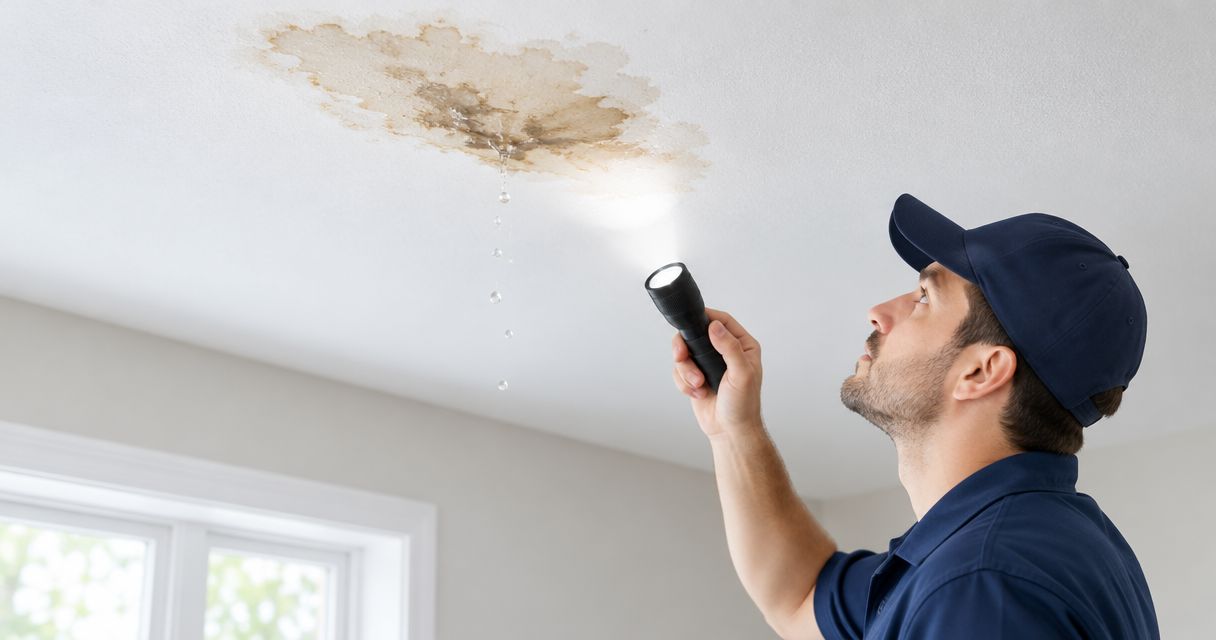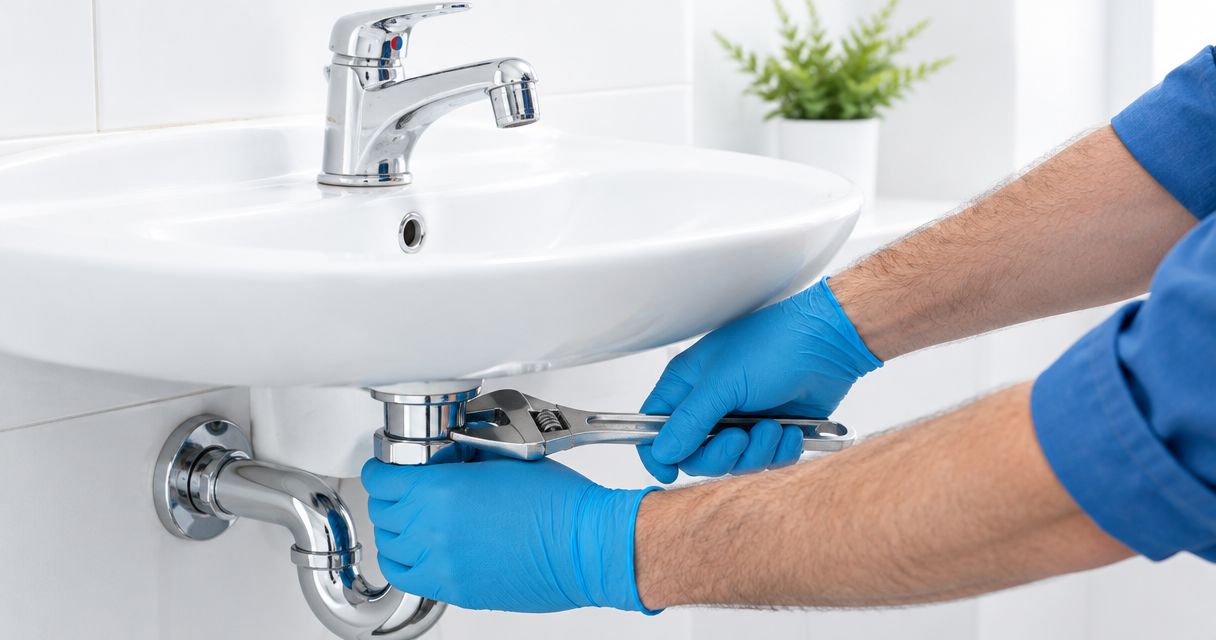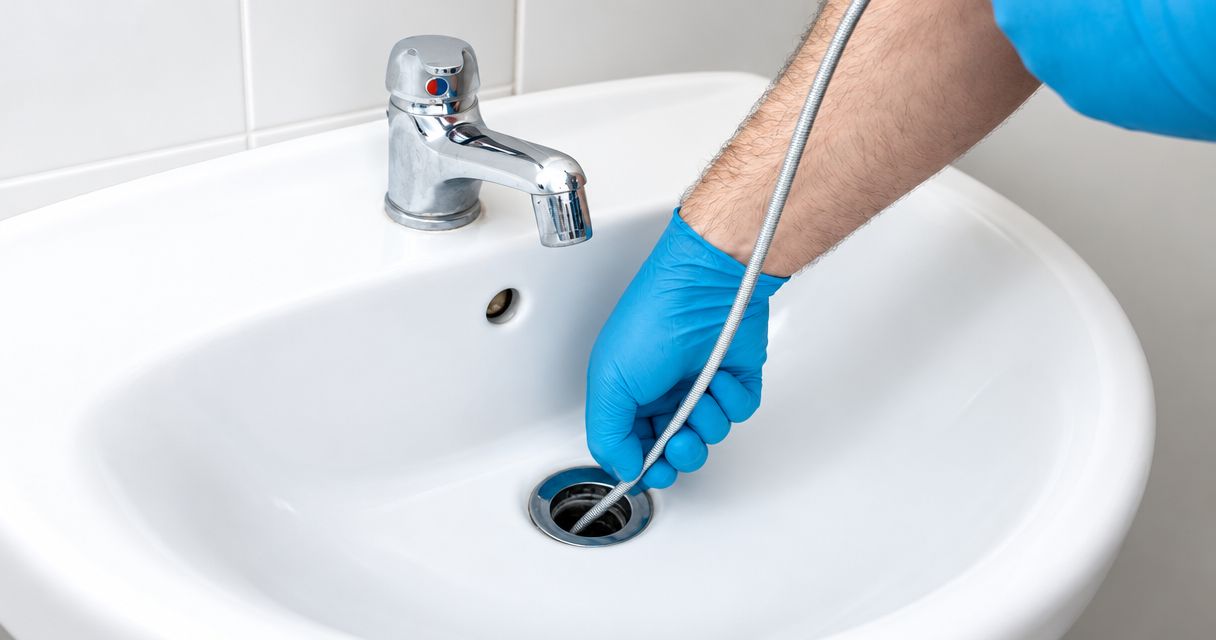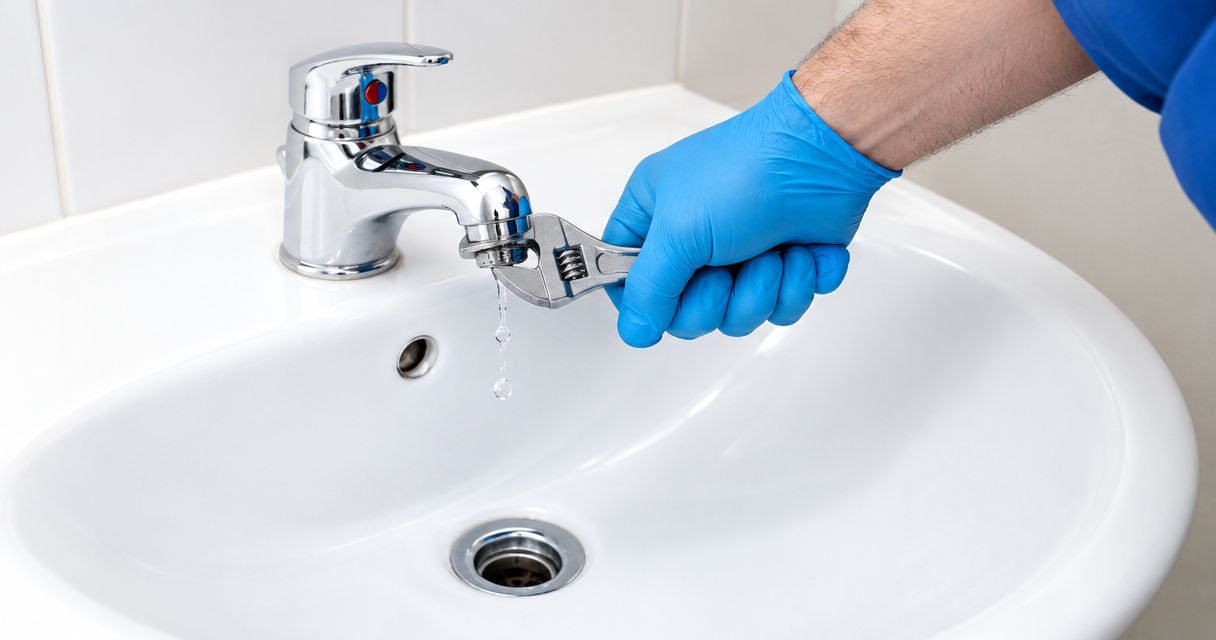
A landlord should repair a dripping faucet when the fault is confined to a replaceable part and the faucet body is sound. Replace it when the body is cracked, corrosion prevents a dependable repair, or repeated failures make another repair impractical. Before authorizing either option, have the plumber confirm whether water is escaping from the spout, faucet base, or supply connections—the right fix depends on the source.
- Choose faucet repair service for a localized fault in an otherwise sound faucet.
- Replace a faucet with a cracked body, unserviceable parts, or repeated failures after correct repairs.
- An uncontrolled water leak needs urgent attention; a contained spout drip usually suits scheduled plumbing repairs.
- Worry-less handles plumbing service calls, including late-night emergencies; confirm scheduling when you make contact.
Should a landlord repair or replace a dripping faucet?
Repair a sound faucet with an identifiable, serviceable fault; replace a faucet that cannot support a dependable repair. A drip alone does not establish that replacement is necessary. Ask for the failed component and the condition of the surrounding faucet before approving the work.
For rental maintenance, include the fixture assessment in your plumbing repairs for Cincinnati property managers planning rather than treating every dripping tap as an automatic replacement.
| Decision | Best for | Main advantage | Main drawback |
|---|---|---|---|
| Repair | A sound faucet with a serviceable cartridge, washer, seal, or valve component | Keeps a usable fixture in service | Does not correct unrelated wear elsewhere in the faucet |
| Replace | A damaged body, unserviceable assembly, or recurring failures after appropriate repairs | Removes the failing faucet assembly | Requires checking fit, connections, and installation conditions |
Use this decision test for your 2026 maintenance approvals: can the plumber identify the fault, obtain the correct component, and leave the fixture operating properly? If not, ask what replacement would resolve that another repair would leave untouched.
Why this matters
A dripping faucet creates two separate decisions: how quickly to respond and what work to authorize. Mixing them up leads to poor instructions. A faucet that needs replacement is not automatically an emergency, while a repairable connection can still require urgent attention if water is escaping into a cabinet.
For landlords and property managers, the useful outcome is a working fixture and a clear maintenance record. Record the diagnosis, the work approved, and the result—not simply that a plumber attended.
Worry-less is suited to homeowners and rental-property managers seeking scheduled plumbing repairs or help with late-night plumbing emergencies. Ask for a clear explanation of the fault and practical repair advice, then choose the work that addresses the actual problem.
Repair: when the faucet itself is still usable
Repair is the practical choice when the plumber can trace the drip to a serviceable component and the rest of the fixture remains sound. Depending on the faucet design, that component can be a cartridge, washer, seal, or valve assembly. The correct part must match the fixture; similar-looking components are not proof of compatibility.
A worn internal seal does not, by itself, mean the entire faucet has reached the end of its useful service. Equally, installing a fresh component does not fix a cracked body or damaged mating surface.
Ask the plumber to explain:
- The failure: Which component is allowing water through or leaking externally?
- The repair: Can that component be replaced without leaving another known fault?
- The condition: Are the body, handles, mounting, and connections serviceable?
- The check: What operation and leak checks will confirm the work is complete?
For your 2026 repair records, keep the faucet identification and replacement-part details when available. That information gives the next person a starting point if a problem returns, without requiring the tenant to identify the fixture themselves.
Best for: a localized fault in a faucet that otherwise works properly. The limitation is scope: repairing one failed part does not renew every component in the assembly.
Replace: when another repair leaves the main problem
Replacement is appropriate when the faucet body is cracked, significant deterioration prevents a dependable repair, or the necessary service parts cannot be obtained. Repeated problems also justify reassessment, but the plumber should establish why earlier work failed rather than assume that every repeat drip requires replacement.
A replacement decision should answer a specific question: what defect will removing the faucet resolve? If the leak actually comes from a supply connector or shutoff valve, replacing the faucet alone does not address that separate fault.
Before approving replacement, confirm the mounting arrangement, sink openings, connection requirements, and clearance around the fixture. A faucet that looks suitable in a photograph still needs to fit the existing installation.
For an occupied rental, ask what the work involves and whether any separate plumbing issue needs attention. Coordinate the visit with the occupant through your established arrangements; do not assume the replacement is a simple swap before the installation has been assessed.
Best for: a faucet assembly that cannot be restored dependably through a targeted repair. The drawback is that replacement introduces installation work and does not automatically correct problems outside the fixture.
Why faucet repair decisions vary
The right decision depends on the condition and installation, not just how irritating the drip sounds. These factors change the scope of a faucet repair service:
- Leak location: A drip from the spout points to a different investigation than water at the base or beneath the sink.
- Body condition: Cracks, deterioration, and damaged sealing surfaces affect whether a repair can hold.
- Part identification: A serviceable faucet still needs the correct matching component.
- Repair history: A repeated failure deserves a diagnosis of the cause, not another unexplained part change.
- Installation condition: Mounting, connectors, and shutoff valves can require attention independently of the faucet.
- Water containment: Water staying in the basin presents a different immediate concern from water reaching cabinetry or flooring.
A useful approval request describes these conditions in plain language. You should be able to understand what the proposed work fixes and what remains outside its scope.
What should you do before booking faucet repair service?
Start with observation, not disassembly. You do not need a tenant to remove a handle or reach into a wet cabinet to provide a useful report. A description and photographs taken from a safe position can help explain what needs inspection.
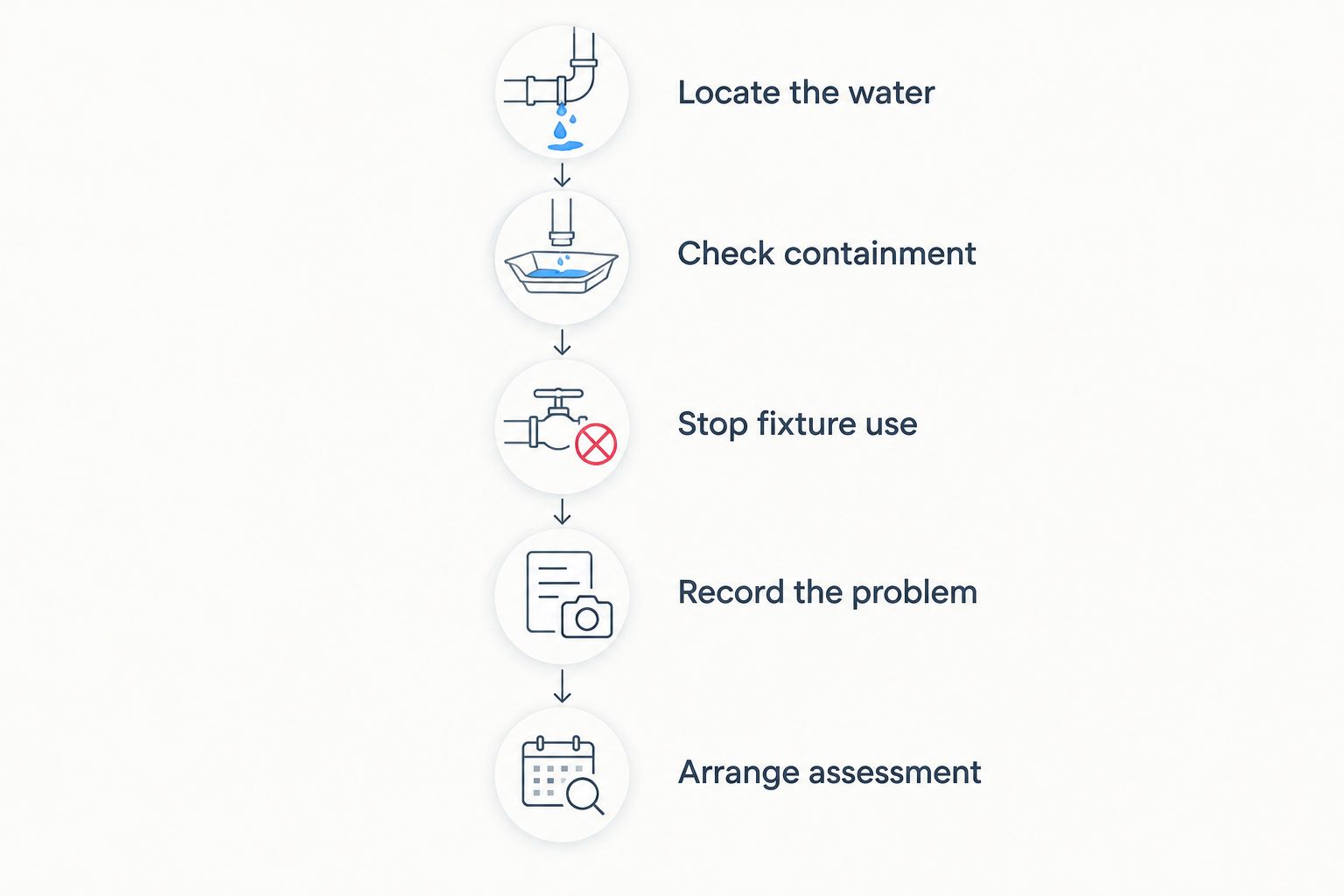
- Locate the water. Establish whether the drip comes from the spout, the faucet base, or somewhere beneath the sink. Ask whether it occurs with the faucet off, during use, or afterward.
- Check containment. Determine whether water stays inside the basin or reaches the cabinet, floor, or another area. Keep people away from wet electrical equipment.
- Stop fixture use. Stop using a fixture that is spreading water. If its shutoff valves are accessible and safe to operate, use them gently; do not force a stuck or damaged valve.
- Record the problem. Photograph the fixture and visible water, and note previous work. Do not disturb connections merely to produce a better picture.
- Arrange assessment. Explain the leak location, whether water is controlled, and whether the fixture is usable. Ask for repair and replacement recommendations tied to the diagnosis.
This sequence helps distinguish a scheduled maintenance request from an active leak that needs urgent attention. It does not replace an on-site assessment or make a concealed leak safe.
When does a dripping faucet need an emergency plumber?
An uncontrolled leak, water reaching electrical equipment, or water spreading into building materials calls for urgent action. A contained spout drip without overflow or water escaping elsewhere generally belongs in scheduled repair planning. Do not classify the problem by the sound of the drip alone.
If water is near outlets, appliances, or electrical equipment, keep clear rather than reaching through the wet area. Do not enter standing water to operate electrical controls. Seek appropriate emergency help when there is an immediate electrical hazard.
A tenant reporting water beneath a sink has described a leak location, not a confirmed faucet failure. The source could be a connection, valve, drain component, or the faucet itself. Give the plumber that distinction instead of booking a replacement based on an assumption.
Worry-less offers plumbing service calls including late-night emergencies. You can use the Worry-less website to start an inquiry; confirm whether a visit can be arranged and explain whether the water is controlled. An after-hours inquiry is not a confirmed arrival time.
What should a landlord ask the plumber before approving work?
Ask for a diagnosis and a defined scope before choosing between repair and replacement. A recommendation is useful when it connects the observed fault to the proposed work. The explanation should also identify any separate issue that would remain afterward.
Use these questions during your 2026 maintenance coordination:
- Where is the water escaping, and what has failed?
- Is the faucet body sound enough for a dependable repair?
- Can you identify the correct service component?
- What would replacement resolve that repair would not?
- Are the shutoff valves or supply connections a separate issue?
- What checks will you perform before returning the fixture to use?
If the recommendation changes during the visit, ask what newly discovered condition caused the change. That keeps authorization tied to evidence rather than a vague description of the faucet as old.
How should a property manager document the completed repair?
Close the maintenance request with the diagnosis, work completed, and checks performed. Keep the distinction between the faucet and nearby plumbing clear. A repaired supply connection and a replaced faucet are different maintenance events.
Ask whether the spout shuts off properly, the controls operate normally, and the visible connections remain dry during testing. The record should identify any unresolved issue rather than imply that an entire sink installation was renewed.
For your 2026 property records, retain identifying details for the installed fixture or service part when available. Keep photographs focused on the work area and avoid capturing tenants' personal belongings unnecessarily.
Give the occupant clear instructions about returning the fixture to use and reporting any further water. Do not describe the problem as permanently solved beyond what the completed work and checks establish.
Can a dripping faucet wait until a scheduled visit?
A contained spout drip generally suits a scheduled visit when water drains normally and no leak is reaching the surrounding area. Arrange the repair rather than leaving the request open indefinitely. A change in where the water goes changes the urgency.
For an occupied rental, ask the occupant to report water beneath the sink, overflow, or loss of control immediately. Avoid asking for repeated hands-on tests that spread water or involve dismantling the fixture.
Does a repeat leak mean the faucet must be replaced?
A repeat leak requires a fresh diagnosis, not automatic replacement. The earlier repair could have addressed a different fault, or the current leak could come from another component. Review the previous work before approving the same repair again.
Replacement becomes the stronger choice when the assessment identifies a damaged assembly, unserviceable parts, or a recurring defect that a targeted repair cannot resolve. The explanation matters more than the number of visits alone.
FAQ
Should I repair or replace a dripping faucet in a rental property?
Repair a dripping faucet when the fault is localized and the faucet body is sound. Replace it when damage, unserviceable components, or recurring faults prevent a dependable repair.
Is a dripping faucet a plumbing emergency?
A contained spout drip generally suits scheduled repair, while uncontrolled water or water reaching electrical equipment requires urgent attention. Decide urgency by where the water goes, not just whether the faucet drips.
What should I tell a faucet repair service when I book?
Tell the faucet repair service where water appears, whether it leaks with the faucet off, and whether the water is contained. Include any previous repair details and photographs taken safely.
Can I ask my tenant to turn off the faucet supply valves?
Only ask someone to use a valve when it is safely accessible and they can operate it without force. A stuck, damaged, or leaking valve needs professional attention; do not require the tenant to attempt plumbing work.
Will replacing the faucet fix water under the sink?
Replacing the faucet fixes water under the sink only when the faucet is the source. Supply connections, shutoff valves, and drain components can leak independently and need their own diagnosis.
Can Worry-less help with late-night plumbing problems?
Worry-less handles plumbing service calls, including late-night emergencies, as well as scheduled repairs. Confirm scheduling directly and explain whether water is controlled; do not assume an immediate arrival.
What should I keep in a rental-property faucet repair record?
Keep the reported symptoms, diagnosis, approved work, and completion checks. Retain fixture or replacement-part identification when available so a future repair starts with useful information.
One last thing
A leak that stops when you close a supply valve still needs diagnosis. Stopping the water controls the immediate problem; it does not establish which component failed or complete the repair. Keep the maintenance request open until the faulty part has been addressed and the fixture has been checked in use.
For your 2026 maintenance checklist, make that distinction explicit: water controlled, work approved, repair completed, fixture checked. It keeps an overnight containment step from being mistaken for a finished job.