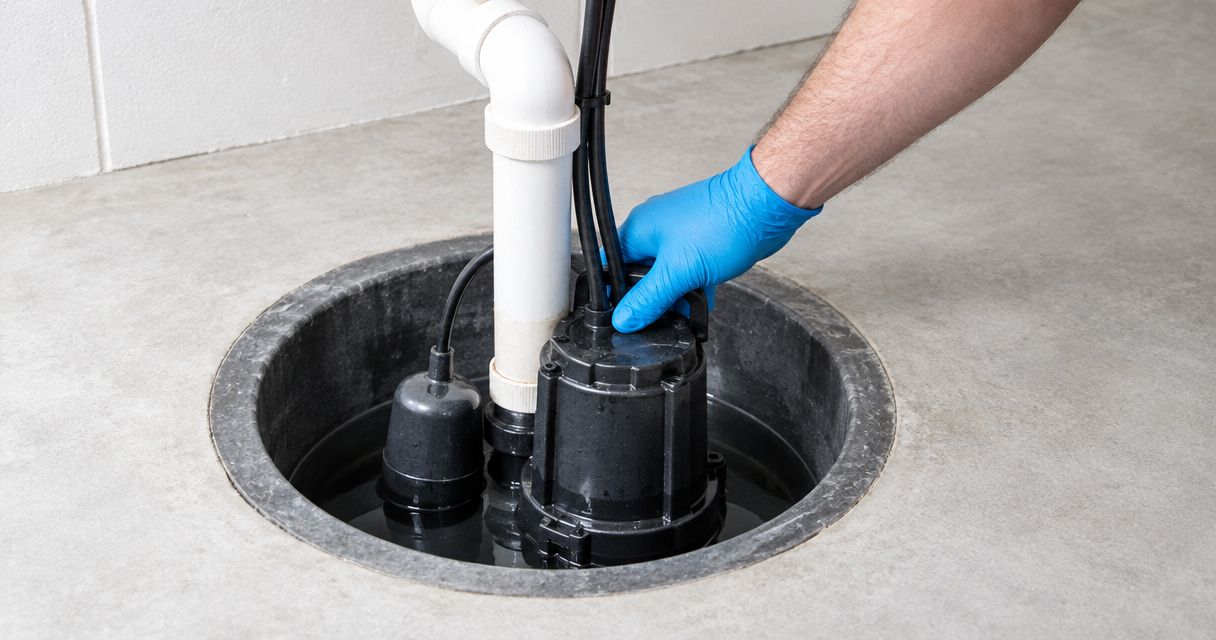
The most urgent signs of sump pump trouble are rising water with no pumping and a pump that runs without lowering the water level. This 2026 guide ranks five warning signs by urgency, explains what you can safely observe, and separates emergency calls from scheduled repairs.
- Signs sump pump is failing: rising water, ineffective pumping, rapid cycling, unusual noise, and unreliable starting.
- Rising water with no effective pumping needs urgent attention; stay out of water near electrical equipment.
- Worry-less handles plumbing service calls, including late-night emergencies; confirm sump pump service and scheduling when contacting the business.
- For rental properties, document water movement and pump behavior so the repair request describes the actual problem.
Why this matters
A sump pump can make noise without moving enough water. It can also remain silent because the basin has not filled enough to trigger it. Judge the pump by what the water does, not just whether you hear a motor.
For Cincinnati tri-state homeowners, landlords, and property managers, the immediate decision is whether water is contained or rising toward the surrounding floor. Worry-less provides plumbing service calls, including help with late-night emergencies, convenient scheduled repairs, and practical repair explanations.
Worry-less is best for homeowners and property managers seeking plumbing service help for urgent problems and scheduled repairs. Confirm whether the specific sump pump issue falls within the requested service before arranging a visit.
What makes a useful sump pump check?
Use these criteria for your 2026 maintenance notes. They help distinguish an observed symptom from a guessed diagnosis.
- Water movement: Does the basin level fall while the pump runs?
- Starting behavior: Does the pump activate as water rises, without someone touching it?
- Cycle pattern: Does it stop and start repeatedly, or continue after the basin drains?
- Sound changes: Is grinding, rattling, or humming new for this pump?
- Discharge behavior: Is water leaving through the intended outlet rather than returning toward the building?
Look from a dry, stable location. Do not remove electrical covers, reach into the basin, or handle submerged equipment to complete these checks.
Five warning signs at a glance
The order below puts loss of pumping ahead of less immediate symptoms. A warning sign identifies a problem to investigate; it does not prove the motor needs replacement.
| Rank and warning sign | Best for identifying | What you can observe | Key limitation | Next move |
|---|---|---|---|---|
| 1. Rising water, no pumping | An immediate loss of protection | Basin fills but pump does not start | Power, switch, and motor faults can look alike | Request urgent help if water keeps rising |
| 2. Running without draining | Ineffective water removal | Motor runs but basin level does not fall | Heavy inflow and discharge faults can mimic pump failure | Keep clear and request assessment |
| 3. Rapid or continuous cycling | A control or flow problem | Repeated starts or running after drawdown | Heavy rainfall can also keep a working pump busy | Record the pattern and arrange inspection |
| 4. New grinding or rattling | A mechanical change | Unusual noise or vibration | Sound alone does not identify the failed part | Arrange repair before relying on the pump |
| 5. Unreliable starting | An intermittent fault | Pump starts inconsistently or only after disturbance | A dry basin is not evidence of failure | Stop relying on manual intervention |
1. Rising water with no pumping: most urgent warning
Best for: identifying a pump system that is not protecting the basement right now.
The basin fills, but the pump stays silent or only hums. If water continues rising toward the surrounding floor, treat the situation as urgent rather than waiting for another symptom.
Possible causes include an interrupted power supply, a stuck float, a faulty switch, or a motor problem. These causes require different repairs, so silence alone is not a reason to buy a replacement pump.
Useful observations:
- Whether the pump is silent or humming.
- Whether the water level is rising, steady, or falling.
- Whether a visible cord or plug appears damaged, without touching it.
Limits of this check:
- A visible power connection does not prove the pump has working power.
- Looking into the basin does not establish which component failed.
Stay out of standing water near outlets, cords, or electrical equipment. Do not enter water to reach a breaker or unplug the pump. If you cannot approach safely, leave the area and tell the responding professional about the electrical concern.
For help deciding whether to request urgent plumbing assistance, see when to call an emergency plumber in Cincinnati.
Verdict: Skip further hands-on testing when water is rising or electrical safety is uncertain.
2. The pump runs, but water does not fall: ineffective pumping
Best for: spotting a system that sounds active but is not removing water effectively.
A running motor is not proof that the sump system is working. If the basin level stays high or continues climbing, water removal is not keeping up with incoming water.
A blocked or frozen discharge line, an obstructed intake, or an internal pump problem can interfere with flow. Heavy incoming water can also exceed the system's ability to remove it. The symptom therefore calls for inspection of the whole system, not just the motor.
Useful observations:
- Whether the water level changes while the motor runs.
- Whether the accessible outdoor discharge outlet is visibly blocked.
- Whether discharged water appears to flow back toward the foundation.
Limits of this check:
- An outlet that looks clear does not rule out a blockage elsewhere.
- You cannot judge pump capacity from motor noise alone.
Check an outdoor outlet only if the route is safe. Do not disconnect discharge piping while the system is operating, and do not put tools into the intake.
For a rental-property report, take 2 photos from safe locations: one showing the basin and surrounding floor, and one showing the accessible discharge outlet. Describe whether the water level changed; a still image cannot show that by itself.
Verdict: Skip assuming that motor noise means the basement is protected.
3. Rapid cycling or nonstop running: check the pattern
Best for: identifying a control, drainage, or operating-pattern problem.
Rapid cycling means the pump repeatedly starts and stops. Continuous running means it stays on; the important distinction is whether water remains high or the basin has already drained.
A float obstruction, switch fault, or water returning through the discharge system can affect operation. During substantial inflow, a functioning pump can also run for an extended period. Compare behavior with water movement before labeling the pump defective.
Useful observations:
- Repeated starts immediately after the pump stops.
- Water visibly returning to the basin after shutdown.
- Continued operation after the water level has dropped.
Limits of this check:
- Frequent operation during rain does not by itself prove failure.
- A cycle pattern does not identify the correct replacement part.
Keep your 2026 maintenance record specific: write whether the basin was filling, draining, or nearly empty while the behavior occurred. Avoid a vague note such as “pump runs too much.”
If the pump runs after the basin drains, request prompt advice rather than repeatedly switching it off and on. Do not leave the property dependent on an improvised operating routine.
Verdict: Hold off on replacement until the float, discharge path, and operating pattern have been assessed.
4. New grinding, rattling, or strong vibration: mechanical warning
Best for: catching a change before complete loss of pumping.
A sump pump normally produces operating sound. New grinding, persistent rattling, or noticeably different vibration deserves attention, especially when paired with slower water removal.
Debris, a loose component, pipe movement, or wear can produce unusual sounds. A hum without water movement is more urgent than an unfamiliar sound from a pump that still drains normally.
Useful observations:
- Whether the sound is new or has recently changed.
- Whether it occurs during startup, throughout operation, or at shutdown.
- Whether visible piping moves when the noise occurs.
Limits of this check:
- A recording cannot establish the condition of internal parts.
- Some sound travels through piping, making its source difficult to locate.
From a dry location, record 1 short video showing the sound and visible water movement. Do not put your phone or hands inside the basin for a closer recording.
For a landlord arranging scheduled repairs, that recording gives the plumber a clearer description than a tenant's report of “a loud pump.” Include any recent change in drainage performance alongside the video.
Verdict: Hold off on buying a pump based on noise alone; arrange a mechanical assessment.
5. Inconsistent starting: an unreliable system
Best for: identifying a pump that cannot be trusted to start automatically.
A pump that starts only after someone bumps the basin, moves the float, or disturbs the cord needs attention. Manual intervention is not a dependable substitute for automatic operation.
An obstructed float or faulty switch can prevent consistent starting. Electrical or motor faults can also cause intermittent behavior. By contrast, a pump sitting quietly in a basin with little water is not necessarily malfunctioning.
Useful observations:
- Whether rising water reliably triggers operation.
- Whether the pump has failed to start on more than one observed occasion.
- Whether an alarm sounds without effective pumping, if an alarm is installed.
Limits of this check:
- A successful start does not prove the next start will occur.
- A dry-weather observation does not demonstrate performance during heavy inflow.
Do not reach into the basin to move a float or tug wiring. Ask the person assessing the system to demonstrate safe automatic operation and explain what routine checks suit that installation.
For your 2026 property maintenance record, document the fault and the completed repair separately. “Started during visit” is less informative than a record describing what was corrected.
Verdict: Skip relying on a pump that needs repeated manual intervention.
Emergency call or scheduled repair?
Use water movement and safety conditions to choose the next step. Rising water, ineffective pumping, or water near electrical equipment calls for urgent attention. A contained problem with reliable drainage still needs repair, but it offers more room to coordinate a scheduled visit.
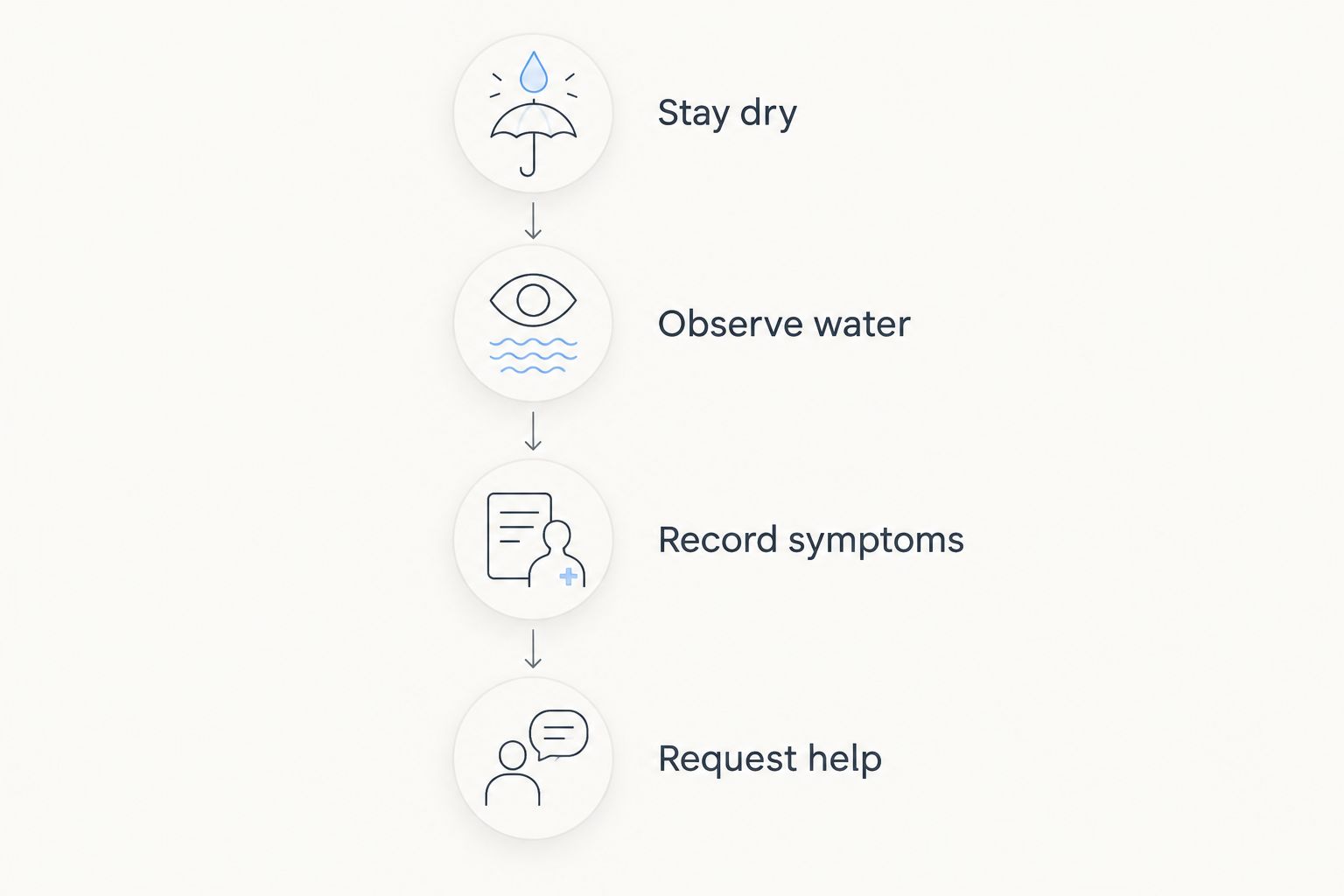
Use this sequence when a tenant, employee, or household member reports a problem:
- Stay dry: Establish whether the area can be approached without entering water or touching wet equipment.
- Observe water: Report whether the level is rising, steady, or falling.
- Record symptoms: Describe silence, humming, unusual noise, or repeated cycling from a safe location.
- Request help: Explain the current conditions and ask about the appropriate service and scheduling.
Worry-less offers late-night emergency plumbing help and scheduled plumbing repairs. When contacting the business, describe the sump pump symptoms and confirm the service scope, current scheduling, and any access information needed for the visit. A same-day or after-hours search does not establish a confirmed arrival time.
How the warning signs are ranked
This 2026 guide ranks symptoms by their connection to lost water removal: no pumping first, ineffective pumping next, then abnormal operating patterns, mechanical changes, and intermittent starting. It is a triage order, not a diagnosis or a replacement recommendation.
The default choice is assessment before replacement, unless immediate safety conditions require you to leave the area. A service professional needs to distinguish pump failure from power, switch, discharge, or incoming-water problems.
FAQ
What are the clearest signs my sump pump is failing?
The clearest warning signs are rising water without pumping, a running pump that does not lower the water, rapid cycling, new mechanical noise, and inconsistent starting. These symptoms identify a system problem but do not prove the motor needs replacement.
Is a sump pump supposed to run constantly during rain?
A sump pump can run for an extended period when incoming water remains high. Continuous running after the basin drains, or running without lowering the water, needs assessment.
Why is my sump pump humming but not pumping?
Humming without water movement indicates that the system is not pumping effectively. An obstruction or motor problem is possible, but the sound alone does not establish the cause; keep clear of wet electrical equipment.
Does a noisy sump pump always need replacing?
No, noise alone does not establish that a sump pump needs replacing. Debris, loose components, piping movement, and wear can produce noise, so arrange an assessment rather than choosing a replacement from sound alone.
Should I call for emergency help or schedule a repair?
Request urgent help when water keeps rising, pumping is ineffective, or water creates an electrical concern. If water remains contained and the pump drains reliably, describe the symptom and arrange a scheduled assessment.
What should a landlord send with a sump pump repair request?
Send the property location, current water conditions, observed pump behavior, and safe photos or a short video. Include relevant access and occupant information without asking a tenant to touch electrical equipment or enter standing water.
Can I keep using a sump pump that starts only when I move the float?
Do not treat manual float movement as a reliable repair. Inconsistent automatic starting needs assessment, and you should not reach into the basin to manipulate equipment.
One last thing
For your 2026 maintenance file, record 1 completed repair note that states what failed, what was corrected, and how automatic operation was checked. A receipt saying only “pump working” leaves the next property manager guessing whether the original cause was resolved.
Keep that note with the symptom photos. Clear before-and-after information helps separate a recurring problem from a new one.